


Unwanted Habits, Unhelpful Distractions & Addictions Counselling London
Addiction Counselling London Some rituals can end up as our go-to behaviour and our behaviour itself can become addictive. We all have subtle addictions as well as more obvious ones - on a spectrum from mild, moderate to intense. Our obsessions, compulsions can also become normalised, have a grip on us and soon become addictive behaviours. Invariably, it's not our "addiction" that's our problem - that's more a symptom of how we cope with our problem. A habit becomes an addiction when we can't stop doing it, then becomes a craving. Most of us are addicted to something. (It could be said that when we overdo our behaviours, we become enslaved, and they become addictive.) It is said we live in an addictive society, that most of us, no matter what our intelligence, wealth, profession or status, have one or two minor personal triggers, obsessions, "addictions" or addictive learned behaviours (e.g. technology, sugar, coffee, social media) yet when specific behaviours or addictions become prioritised, dominant or overused, that life without the feelings we get from our "high" may not seem very worthwhile, we can develop addictive triggers with addiction-like effects - impulsive, compulsive, dependency tendencies. An addiction can manifest in any behaviour that gives us pleasure or relief, that we crave for, yet suffer negative consequences and have trouble giving it up. And some of us describe ourselves as an "addict" for anything we do (see also Letting Go Of Our Attachments, Over-Identifications) - any activity (from the frivolous to the serious), which may not always be an accurate description and can trivialise what for some people can be distressing. Whether or not we identify with the diagnostic label of "addiction", we may acknowledge we have an addiction problem because of an addictive relationship to certain things and the addiction-like effects, destructive things we can get up to (see also What Is Addiction?). It can feel at times as if something is controlling our life - and it's not quite ourself. We may have an emotional attachment to our specific addiction, as if we are bonded to our addiction (often ignoring our primary feelings - struggling to take responsibility for our feelings), when what we do no longer serves a healthy function in our life as if distracting away from our self and takes over as a way of coping. This affects our ordinary life and functions, procrastination, our general wellbeing, losing interest in ordinary pleasures. We may want to live a more meaningful, fulfilled life. Our habit, obsession or addiction may have become central to our life. We may ask "Do I have control over it or does it have control over me?" and have allowed our addiction to have a life of its own, losing our self in the process. We may swap one for another, where one addiction becomes a gateway for a different addiction. Unhappy or anxious without our "fix", we may start to have an addiction problem and seek addiction help, so we can feel more self-control, be more present, have time for other important aspects of our life we may have neglected.
What May Be The Purpose Of Our Addictive Behaviour, Addiction How does our addictive behaviour serve us, what does it give us, what's its purpose (maybe distracting us from pain to remove our self, giving us comfort - see also Our Addiction Associations, Addiction Triggers). We don't choose to become an "addict". An addiction can serve a valid purpose in our life that we don' always know how to meet or have other positive solutions for. Our addictive behaviour might not be effective, but never-the-less serves a purpose for us in the moment - for the short term. (For some, our unhealthy habits, addictions can make us recognise we exist - it makes ourself see ourself.) Addiction can also be a symptom of something else - emptiness, depression, stress, fear, anxiety, traumas, shame or guilt.
Range Of Unhelpful Habits, Distractions, Addictions Counselling London
Alcohol Problem
Internet, Computer, Technology & Communication "Addiction"
- Sex Addiction - Pornography Problem, Porn Addiction, Online Sex, Internet Sex & Cybersex Addiction, Masturbation Addiction
- Online Chat Addiction, Text Chat Room Addiction & Internet Dating Addiction Counselling London
- Technology Addiction & Gadget Addiction Counselling London
- Internet Overuse, Internet Addiction & Computer Addiction
- Mobile Addiction Counselling In London, Email, Text, Telephone Addiction, Nomophobia
- Social Media Addiction Counselling London
- Addicted To Games - Computer Games Addiction, Online Games Addiction, Video Game Addiction & Computer Gaming Addiction Help
Other Obsessions, Compulsions Or "Addictions"
- Stress Eating, Emotional Eating, Comfort Eating, Binge Eating Help, Compulsive Eating Counselling, Food Addiction Therapy
- Fitness, Gym & Exercise Addiction
- Compulsive Shopping, Compulsive Spending, Shopping Addiction & Shopaholism - Shopaholics, Shopping Addicts, Addicted To Buying, Online Auction Addiction, Credit Card Addiction
- Gambling Problems, Compulsive Gambling, Online Gambling Addiction
- Money Obsessed - Addicted To Money, Money Addiction, Money Obsession, Trading Addiction, Counselling London
- Work-Life Balance, Workaholism, Addicted To Work & Work Addiction
- Busyness addiction, addiction to activities
- Worry addiction
- Stress addiction
- Perfectionism Counselling London
- Addicted to beauty, glamour
- Approval addiction
- Addicted to self criticism, self-blame
- Addiction to fixing others, addicted to pleasing others
- Romance addiction, love addiction, serial yet uncommitted relationships, addiction to conflict, bad relationships
- Addictive Element To Certain Attachment Styles
- Caretaking, codependency
- Emotional affairs, limerence
- Emotional addiction
- Addiction to talking
- Addicted to gossip
- Addicted to dramas
- Addicted to anger
- Addiction to shame, self-blame
- Addiction to pain, suffering
- Addicted to sleep
- Procrastination
- Clutter, messiness
- Addiction to spirituality
- Addicted to meditation
- Religious Activities - Obsession With Religion, Religious Addiction
From Curiosity Or Pleasure To A Problem

"Deserving Our Reward Or Punishment" Sometimes we can confuse what's loving to us as indulging in things. What gradually developed into a harmless pattern may now be ingrained, hold us back and has slowly become problematic. We may initially turn to our familiar routine to get over life's humps, feel comfortable or secure. What was once our guilty pleasure, we may have allowed to hook us in. Things may have got out of balance, and we may have become too dependent on our "habit of choice". We may do something good or feel good and turn to our habit or addiction as a reward, "After all I deserve it". We may do something "wrong" or feel bad and turn to our habit or addiction to cheer us up or because we believe we deserve to feel bad by punishing ourself. We may even have a mediocre or "normal" day and turn to our habit or addiction because it's simply available or possible - we got through the day and deserve our regular "treat" or "fix" to keep us going. Responding to the reward pathways in our brain, what began as something in the background, can now have become something we believe we can't do without. To get us going we may turn to our familiar "crutch" or "treat". It can be as if our habit or addiction has now become more our lifestyle, as if that is who we are, and changing this, if that is our choice, may be challenging. We may have begun to prioritise and organise our life around our habit or addiction. Pressurised or experiencing the world as an alienating place, we may want to escape into our own world with our crutch, seeking peace of mind. Some of us may be anxious or depressed and, as a reaction, latch on to our unhelpful habit or addiction (the latching on may also be related to very early bonding patterns). Ironically we may now have become more anxious and depressed. We may be seeking addiction help and wondering what addiction treatment can be offered.
What We Do With Our Feelings Inside we may be experiencing an internal battle and discomfort, where a part of us (our caring, rational mind) definitely wants to stop, and other indulgent part (our trickster mind or internal rebel, saboteur) definitely doesn't (see also Power Struggles Inside Our Head). Sometimes we can be very disciplined, yet on other occasions - abandon ship, as if we want to change but a part of us doesn't want to. There may be an unconscious part of us, maybe our inner rebel, who has to be in reaction, carrying the voice of a resistant, defiant, rebellious child about stopping our addiction - "You will not tell me, make me, I can do whatever I want", "No one tells me what to do - even myself". Feelings may lurk, build up inside and we turn to our habit or addiction for a release, as this is the only way of releasing things. Distressed, irritable, restless, anxious, pressurised, empty, guilty or depressed, there may be healthier ways to relieve our stress, release pressure, soothe ourselves, fill the gap, etc. We may have bypassed our feelings - some of them chaotic. In the habit of numbing our unwanted moods, or unbearable feelings (e.g. fear, anxiety, anger, depression, guilt and shame or just life itself), we may convince ourselves that we can only enjoy things (or escape from things) when we adapt by turning to our habit of choice (sometimes fuelled by a fear of missing out - FOMO). We may struggle to trust we are always in the right place at the right time, embracing the moment, so we turn to our impulsive or compulsive behaviour, temporarily filling our void, to release or alter our mood, especailly if we believe safer ways are unavailable. We may experience an initial thrill, "rush" or "buzz", temporary "high" and want to "zone out” or cut off, yet may have allowed other sources of satisfaction to be ignored. We can have an immediate or insatiable need to fill our void by turning to our habit or addiction, so taking care of our underlying needs in different ways may now be important. There may be a part of us that feels contaminated by our addiction, and no longer want this to control us. Yet stressed and tired - our circular behaviour may continue (see also Our Painbody). And when we feel anxious, we may repress or displace our anxiety, control our difficult feelings through turning to an unwanted habit or addiction. By now, we may have allowed things to reach a stage we are no longer comfortable with, abandoned ourself (or our body) and now seek addiction help, therapy for addiction. (See also Feelings, Emotions, Emotional Health - Counselling London)
Minimising, Ignoring, Masking Our Addiction Problem Our habit of choice or addiction can be like a familiar anchor - keeping us in one place, yet we can become stuck or stagnant, in limbo, gradually closing ourself in yet minimise our addiction problem. Under an illusion that there are no consequences, we may become convinced we have our prop to fall back on, hoping our addiction problem will go away. What started off as a need to take our tension away, calm our nerves or be in a good mood, may mask what we need to face. Having difficulty coping with day to day emotions, we can get into the familiar habit of getting a quick fix to relax, overlooking healthier and longer term options - anything to hide our vulnerability and keep things at a distance. Turning to our particular habit or addiction can help us forget problems, or who we are for a while, blanking things out. Our interests, activities and passions may have slowly fallen away, as we allow the false promises of our unwanted habits or addictions to take over, which can give us an illusion of being in control, needing others less. We may turn to our habit or addiction as an easy option to simply close down other difficult aspects of our life, dull our senses, avoid, escape or block our pain and we may at times begin experiencing some despair. We may have a feeling of dread when we are unable to indulge in our favourite habit. Some of us may switch from one compulsive habit to another. Now seeking addiction help some of us can watch us doing what we are doing, yet can't stop, we may not even know why we are doing it. Inside we usually know what's enough.
From Enjoyable Distraction, Prop, To Emerging Addiction Problem Pursuing, indulging in the pleasures in life is important to us (some may give us an instant kick, others - a release), yet when they become excessive, they may adversely affect us developing fulfilling relationships with others, or indeed how we are with our self. What we do with our time, resources and energy may have slowly changed. Gradually other things become secondary. What starts off as a distraction, need for comfort or to feel better (e.g. to take our stress away, temporarily fill our boredom and emptiness or to block out things we don't want to think about) may creep up on us and become a coping strategy, rendering us dependent and trapped. Our short term "fix" may have developed into a long-term problem. Our habit or addiction can slowly suck us in, as if this has become our template, and we may be considering treatment for addiction. Lost or swallowed up by our pernicious habit or addiction, we may now have an addiction problem we no longer want to ignore. We may have got into a hole, deeper than we realise. Our initial behaviour may gradually or rapidly be turning into a more serious addiction problem. As our joy and pleasure diminishes, we may have a sense of wasting our life, beginning to feel ashamed and bury our shame by doing what we do, more. (Ironically it can be the effects of earlier shame that drives us to addictive behaviour in the first place.) Other important things get sidelined. We may not want to connect that the effects of our habit or addiction affects other struggles we have, covered up with our "distraction" in order to remove our self. Slowly, we may become less and less in control of our life, dependent on our habit or addiction for becoming temporarily happy. Choosing healthier distractions, freeing up the rest of our life might be important.

Possible Effects On Us Turning inwards, our addiction may begin to crowd out the rest of our life (or double life), where locked into something as if caught in our own cocoon or bubble, we may not even recognise our self at times, have lost our sense of identity, drive towards growth. We may have forgotten, don't know how to, or be unwilling to regulate what we do. Our (almost default) behaviour may become compulsive or obsessive, as we become preoccupied by thinking about when next we will indulge in our habit or addiction. Our self-esteem diminishes. We can become worn out by it all and by now we may feel we are wasting so much of our life. Along the way we may have relinquished our choice, deciding not to take control or responsibility as our self-harm escalates. We may have become disconnected from our diminishing values. Crossing certain lines, missing out or wasting opportunities, putting things off, not completing things, we may end up lying to us and others. In a fog, a red mist may glaze over us. Our sense of reality may become distorted. We may have begun to reach, or be at a point of crisis, seeking addiction treatment or addiction therapy. (See also Increasingly negative consequences)
Insanity is doing the same thing over and over again and expecting different results.Rita Mae Brown

Possible Effects On Others Self-obsessed, others around us may show their concern (indicating there is a good chance we have an addiction problem), yet we dismiss or ignore this too. We may conceal, minimise or deny the effects of what we are doing. Our behaviour starts to affect not only us but also ripples on to others, and we may deny or rationalise our addiction problem, twisting logic to suit our behaviour, as the quality of life around us deteriorates. All the different sorts of relationships, connections, we have, may gradually erode. We can find our way round restrictions that we or others have imposed to try and stop us. We may minimise the time or money we spend. Secrets develop. We may hide what we do or stash things away. We may try to deceive not only others, but even us. If we are in a relationship we may choose our addiction over our relationship and our partner may feel rejected and tell us that we care more about our habit or addiction, than we do about them, which puts the relationship under strain. Prioritising our habit or addiction we may have stopped looking after our self (see Neglect) or others in ways we would really like to. Instead of opening up to others, addressing our addiction problem, we turn to our habit or addiction again. Another part of us may now be seeking therapy for addiction, addiction treatment.
Having A Partner With An Unhelpful Habit Or Addiction Addiction counselling and psychotherapy for addictions can also help men and women in a relationship with someone who has an addiction problem, receiving addiction treatment. We may try to help or rescue our partner, loved one, becoming their caretaker, yet this doesn't seem to work. We may have a partner, who we respect, yet they have a self-destructive addiction, and we don't respect this part of them which doesn't respect themselves and it may not be acceptable to us that their addictive behaviour they are no longer respecting, valuing us as a couple. Taking loving action for ourselves and our partner may include supporting personal responsibility in each of us. And being with someone we care about, love, who has an addiction problem, may leave us with stark, courageous choices, decisions - do we support our partner and care for them towards getting them straight, their recovery, or do we leave.
Neglect Alongside our relationship and friends, we may have neglected ourself and our own responsibilities, emotionally abandoned ourselves, obligations or social engagements, even our work or sleep may suffer. Our quality of life may slowly erode. Self critical and judging ourself inside we can become addicted to things outside of ourself to release our tension, using these to release it. We may want to learn how to embrace our essential goodness - our self-caring, compassion, gentleness, tenderness, strong vulnerability. In doing so we are able to define our goodness internally, instead of externally. Hooked on our habit of choice or addiction we may have neglected our personal care needs, looking after our self, including exercise, our diet, appearance, personal cleanliness, surroundings, passions, interests and general wellbeing. We may have chosen to avoid taking responsibility for our feelings. Choosing to seek the courage to do this with compassion may be our challenge, and a further challenge may be seeking addiction help which may point to childhood wounds and coming to terms with our past.

Gradually Spiralling Downwards What was once normal behaviour, may have developed a pattern (e.g. frequency, more is better), which in the early stages may not be destructive or harmful. However, our pattern may have become less flexible over time, as if the joy and pleasure of what we do diminishes. Our pattern may have moved on to becoming a habit, that we usually or always do, which has now become difficult to change or stop. (Sometimes the next thing we know we find ourselves caught in it.) We may carry an air of resignation - "I've been doing it so long now, I might as well continue". Another part of us may half-heartedly make promises to stop, though mean it at the time yet we slip. Our behaviour may have become more masochistic (but at least we can feel something), compulsive as if we are compelled, that we have to or must do what we do. That if we don't, we may become agitated, distressed or frantic. We may have become fixated upon our habit or addiction. At this point our relationships may become damaged. And when what we do becomes problematic, slowly damaging to our emotional and physical health, finances, etc, our behaviour may now have become an addiction (see also High-Low Addiction Model - From Temporary Pleasure To Fallout). Treatment for addiction may be something we are now looking for.
Avoiding your triggers isn't healing. Healing happens when you're triggered and you're able to move throughVienna Pharaon
the pain, the pattern, and the story, and walk your way to a different ending.
Our Addiction Associations, Addiction Triggers Our rituals, obsessions, habits, addictions serve a purpose. Therefore, before we go with what's wrong with an addiction, what's right about it, as many of our addiction triggers are good things so why would we want to give them up and lose these benefits? And there can be a wide range of unacknowledged unconscious reactions, emotions, needs, reasons or "buttons that get pressed" for why we do what we do, primarily to avoid feelings, often associated with wanting to take away or change uncomfortable feelings (see also "Addictive Behaviour" Patterns). We all have our special times of the day, rituals, personal triggers that develop into habits of learnt behaviour and these triggers can become like repetition compulsions, resulting in a physiological response, towards our go-to addiction as if a switch goes off in our head, as we react, forming unwanted habits or addictions. The addiction counselling can also explore the build-up to our triggers, our impulse control (just a 5 second breathing connection can begin to make a difference) and how we can decouple our addiction rituals from our triggers and what we associate our behavioural habits with:
- Triggers to our senses - "seductive" look, smell, taste, touch, sound
- Others do it so why can't we
- Feeling good, bad or indifferent, to cheer us up, chasing a feeling, a stimulus "I'll do it anyway"
- Need to escape (often from our mind)
- To do something different (e.g. from everyday routine, worries, ruminations)
- To take our mind off things as stress release, pressure release, tension release. Response to stress, fear, anxiety, distress, work stress
- To unwind, just to let go
- Gives us time out, permission, to not think about anything, or do anything, to simply zone out
- To blank something out so we don't dwell on things
- Our space, familiarity, safety. Our "go to place", regular prop (or secret) in our life we can turn to.
- Like a familiar "friend", our special time with our habit/addiction, certain times, moments (e.g. Friday night)
- Running down time to make the day go, boredom as a distraction, killing time (see also Supportive, Unsupportive Distractions).
- A gap, the unknown
- Feeling under stimulated, over stimulated
- Emptiness inside, insatiable hunger or longing for something. Aloneness, loneliness, sense of alienation.
- Experiencing a "hole in our soul"
- Response to feeling needy
- Needy or hungry for love
- To loosen, help overcome our inhibitions, insecurities, nerves
- A desire to change our state - transition between moods, wanting to shift moods, e.g. relaxed mode, adrenalin filled. Mood swings (to increase some moods, take away other moods). Blocking out, dulling our awareness, moods.
- Primitive desire for immediate gratification without thought or consequence, press the "sod it" button
- As a reward, relief, when things are going well, we feel good, deserve it
- Having achieved something, not achieved anything
- Need for a high, desire for ecstasy
- Anticipation, excitement, elation, celebration
- Potential or real conflict
- Coping with social situations. Nerves or to feel more confident socially (maybe sexually).
- Low esteem, lacking confidence, validation, approval
- Avoiding things & as a procrastination tool to put other things off, or fully live our life
- Holding on to the belief that nothing really matters to us, maybe we are invincible (or if in a relationship, that our obsession/addiction won't be "found out")
- Inner disturbance, discontentment
- Brushing our problems under the carpet, bottled up feelings
- An unacknowledged, wounded part of us, old traumas
- Our own pain, hurt
- Guilt, shame & loathing, self-hatred, remorse "I feel bad, so I might as well do it"
- As a punishment
- Triggered memories in our earlier life related to our habit, addiction now
- Impact of previous abuse
- A crutch
- To contact or avoid our dark, shadow side
- Feeling out of control
- Self-neglect
- As a form of self-sabotage
- Lost or stuck, in limbo
- Numbness (so at least by turning to our habit or addiction, we may feel something)
- In a different zone, trance like state, where time slips by
- Feeling trapped (e.g. in our work, relationship, life)
- Tiredness, lost vitality
- Confusion
- To get out of our head, so we're less overwhelmed
- Gnawing sense of dissatisfaction, disappointment, resentment
- To discharge frustration, anger at the world or ourself
- When things get too much, becoming emotionally overwhelmed
- In a vulnerable space
- Believing we are losing our sanity
- Sadness, to hide our low feelings, depression, despair
- Unprocessed loss, grief, bereavement
- Fear of death or grieving someone, something
- Helplessness, wondering how this can be happening to us
- Mourning missed opportunities, deep grief, loss for aspects of our life
- Existential concerns, e.g. "What's the point?"
- Hopelessness
- Stuck in old ways not working any more
- Disappointment in ourselves
- Relationship problems, conflicts, disappointment in our relationship, marriage. Fear of intimacy or rejection
- Family or friendship issues
- As a way of avoiding responsibility
- Lost sense of self
- Need for solace, comfort, self-medication to console, soothe ourself (see also Our First Relationship - Early Connections & Bonding Patterns)
- Past or current deprivation, impact of our past, early attachment issues, non-responsiveness, empathic breaks & frustrations in our early life
- Worried if we gave up our obsession, habit, addiction, what would replace it, so this becomes our excuse to continue (see also Afraid Of Finding Out More About Ourself)
- Uncomfortable or restless & irritable when trying to stop
- Early unconscious processes
- ADHD, autism
What We Did Back Then With Our Pain Deep feelings may have been unseen, ignored or misunderstood when younger - even from the beginnings of our life, which may reverberate now (see also Non-Responsiveness, Empathic Breaks & Frustrations In Our Early Life). Since childhood we may have learnt that our pain can be avoided (see Unhealed Wounds - Counselling London) if we pay a price for it. And we continue this in adulthood, struggling to respond to the depths of suffering and love. The addiction therapy can explore this with you.

What We Do Now With Our Pain Our unwanted habit or addiction may temporarily protect us from anguish, yet at the same time reinforce our sense of inadequacy, trying to avoid our anguish, pain, or deny our painful feelings, by paying a price for the effects of our unwanted habits or addictions. Deep inside we may experience a sadness that palpably aches, which drives us on, yet deceives us. Beating ourself up, self-hatred at times may be our companion and our forgiveness may be in short supply. Counselling for addiction can be a space to discuss these painful feelings, the effects on our painbody, explore whether we are willing to remain in the dark, reach for the light.
Familiar Addiction Experiences

Trying To Stop, Cut Down Or Control Use - The Two Sides Of Us Sometimes it can be as if we have two personalities. Inside of us we may hear a concerned voice, which the addict part of us chooses to ignore what's really best for us - finding reasons to carry on. We may want to change or stop, believing this at the time, yet struggle to do so, no longer trusting our thoughts, actions. We may compartmentalise things, as if a part of us wants to stop, believing this at the time and another part believes they never can stop. "Will I or won't I" may be a familiar dilemma. It can be as if those two parts of us have separate logic, beliefs, even identities. We may have trouble controlling doing what we do, setting limits and boundaries. Some may simply automatically turn to their unhelpful habit - no question. Others may seek justification. We may hear ourself going "No", yet another part of us says "Yes" (finding ways to get round our "No"), and we do it as if we have two sides of our personality - responsible and in control and suddenly this other side of us who isn't in control, maybe irresponsible taking over as we watch this happening, almost powerless. It can be as if a switch inside of us turns on. We may have had previous unsuccessful attempts to stop, manage our habit or addiction, become a shadow of our former selves. Before we know it, we can become hooked. It can be as if there is a tug of war in our head as our thoughts creep in. We can become so close to not doing what we do, that the line is very fine. Yet, as we become preoccupied, thinking, plotting, imagining, planning our rituals and routines, we get aroused again through our emotional triggers. "I need a hit" may be our immediate reaction. Falling back into our old habit we may have an attitude of "I won't do it for long", "Just this once", "Can I get away with it, or slip it in with no one noticing", "I might as well continue because I have already started", "I'll start afresh tomorrow" - and on it goes. In the privacy of our own world, confused or angry, we may vow "No more", and mean it at the time. Deceiving ourselves and others can become soul destroying. "Never again" we say, yet, at the back of our mind something stirs within. Scared, we revert back to what we are used to - pursuing our "solution" yet again. We may deny we have an addiction problem, yet in the cold light of the day we know we do. Yet shored up by the fantasies we have to hold onto, it can be as if there are two sides of us: the addict side with "magical" or distorted thinking with its own set of values, (holding on to believing things contrary to our own values), and our healthy side, with our different set of personal values. These different sides of us may have and different ways of relating. Seeking treatment for addiction, addiction therapy, we may sense deep in our gut that something is wrong, that we need to listen, respond to this, and take it seriously.

On Autopilot - Our Will Captured By Desire Daydreaming, we can go off to a space, as if we are on an autopilot, hypnotised, absorbed in a trance, untouchable. Our strong will to stop or do anything else may have become captured by our habit or addiction. We may have tried half-heartedly to overcome addiction. As our free will diminishes, caught by our desire for more, it can be as if we experience our self no longer of our own volition. (A characteristic of compulsive addiction can be that it triggers greater feeling of desire but not enjoyment.) Underneath our desire may live deep loss, grief. Trapped in our own almost automatic behaviour, watching ourself doing what we do it can be as if we have no choice. Deep inside we may know that what we do won't make us better and may now be ready for addiction help. Some of us may want to fight our need for instant gratification, insatiable urges, desires ("I want it and I want it now"). Learning to ride these ways may be challenging. Acknowledging them, allowing them to pass, diverting them towards something else so we no longer bypass our conscious choice, others may want to express our desires towards what nourishes us, is meaningful.
Between stimulus and response there is a space. In that space is our power to choose our response.Viktor E. Frankl
In our response lies our growth and our freedom.
Addiction Cycle We may have tried stopping, dealing with addiction or seek treatment for addiction before. Meanwhile the unwanted, unbearable feelings are still there, and in fact may be getting worse, as we become more disconnected, developing all-or-nothing thinking and our self-worth plummets. Our sense of frustration, loneliness and emptiness deepens, as we turn again to something outside of us to fill it. Wanting something, we believe we have to have it, and fuelled by our rekindled hope, anticipation, we may be temporarily gratified, turning to our habit of choice as a compensation. We may have a temporary pause until the next time, and on it goes. (See also High-Low Addiction Model - From Temporary Pleasure To Fallout)
Increasingly negative consequences may include spending much time (and usually money) preoccupied thinking about our habit of choice, slowly deteriorating physical, mental health, or relationships beginning to suffer. We may become manipulative, where love, and our treasured values may be eroded, including those of a spiritual nature. We may hit a wall and pass through it. Darkness may come upon us. Ironically the very feelings we are trying to escape from, e.g. alienation, loneliness, depression, can render us more out of control and the same feelings becoming more painful. Things can get left or get on top of us, we may cut off, finding it hard to speak about what we are going through with others. Disgust, despair, guilt, shame and anger at what we are doing may be familiar reactions, as we struggle to rationalise our behaviour, refusing to believe the effects on us and others. The more we indulge, the more guilty we can become. Turning to our familiar habit or addiction we may say "I've got the guilt now, what do I care, so I might as well do it anyway". It can be as if our behaviour has become harmful or destructive, unmanageable and now has control over us. Our relationships by now may become destroyed. Addiction therapy can be a space to talk about these things.
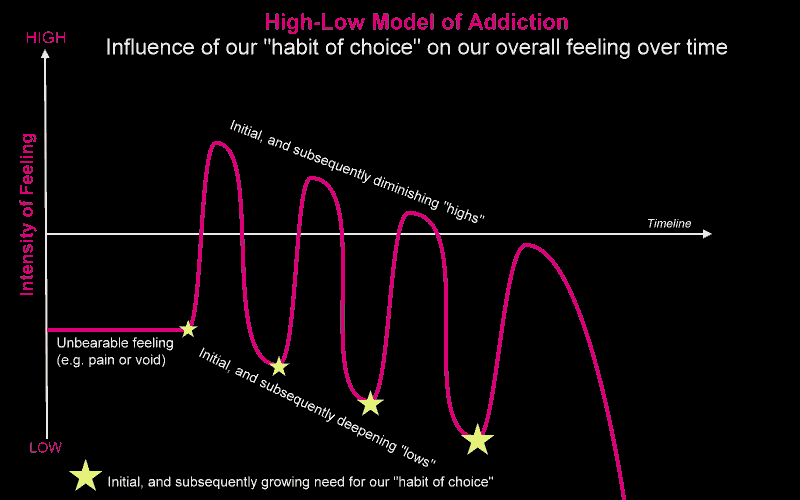
High-Low Addiction Model - From Temporary Pleasure To Fallout Neurotransmitters carry communication from our brain throughout our body. For example, when we get anxious epinephrine can be released. It is understandable that we want to induce pleasant feelings. With many of these habits, so called "addictions" and actual addictions, it is no coincidence, that we say we can get a "high", as chemicals, like dopamine, serotonin are released in the body, which can become intoxicating. We can get an adrenaline rush and temporary emotional release, which can end up being used as a way to soothe our pain, and our brain can get used to this habitual response, setting up a dependency (see also Addiction Cycle). Responding to and managing our anxiety differently may be challenging. It can be as if we are enacting a "pleasure principle" - that in our repeated activities, compelled to seeking pleasure we may end up further away from pleasure, suffering more. As the brain adapts to our addiction of choice, we believe the only way to feel good again is to get another high - and this is followed by a deeper low, depression, anxiety - often the very feelings we are fleeing from (see also Gradually Spiralling Downwards), often compounded by our guilt, shame. (One characteristic of compulsive addiction can be that it triggers greater feeling of desire but not enjoyment.) As our tolerance increases our body re-calibrates to the higher level, as we feed our "habit of choice" more and more, to take us out of that deeper low, yet usually become progressively worse, as our craving, urges and insatiable neediness increases. We may have become "attached" to our artificial high and low and struggle to disengage from this pattern, fearing disappointment. The following addiction treatment model summarises what we can end up doing to us over time.
Beliefs We May Hold On To When our unwanted habit or addiction becomes a problem, we may tell ourselves, that:
- We can't handle our pain
- We are unworthy, unlovable
- We can control how others treat us, feel about us
- Others are our source of love
- Our habit or addiction is more important than people
- We can do what we want, regardless of others
- We are too afraid to face problems
- We don't have to face things we don't want to
- We don't need others
"Addictive Behaviour" Patterns Many professionals would agree that there are certain commonalities in addictive patterns, which may include: preoccupation, some loss of control, impulsiveness, compulsiveness, increase in severity, persistence, feeling powerless, looking for solutions for our addiction problems outside of ourself, avoiding or denying painful feelings, maybe an underlying sense of toxic shame, self-hatred or loathing (see also Our Addiction Associations, Addiction Triggers), which feeds our addiction, and it turn further feeds our self-loathing. Some professionals would argue that no one chooses an addiction, yet we still have choice with what we do with it. We may struggle to listen and attend to our emotional needs (turning to something rather than someone to change our mood), understand how our personal reward system works, turn to healthier natural rewards, develop strategies to walk away from, what is damaging and dangerous to us, replace old rituals, habits with supportive ones, embrace our whole life.
Searching For Something Something may be missing and we may be unsure what this is (sometimes it may be a lack of peace and control in our life, maybe a nostalgia for what was, or to search for a level of nurture, connection, missing in our early life). We may have placed all our desires (and need for a high) into our unwanted habit or addiction. Yet empty inside, many of us may be searching for something else, and we may not know how to find this or trust that we can, through any other means. We may also have existential concerns, a longing for something. Yet as long as we believe that something outside can fill us - a person, a substance, a process, we will be seeking love in unrewarding places. It is our soul self that, our essence that is love that we may have been searching for. Addiction counselling and psychotherapy can be alongside you and support you in getting in touch with what else you may be searching for. (See also Longing & Yearning)
What Is An Addiction
What Is Addiction? There are many schools of thought, ideologies as to what is addiction, types of addiction, and also different treatments for addiction (see also Predispositions & Addiction Labels). One way of describing addiction is habitual behaviour intended to protect against pain. Another definition is that addiction give us a temporary plesure, relief, yet harms us in the long term because of our inability to give it up as we suffer the consequences. There are conflicting ideas and no scientific consensus as to what is addiction and dependency, with multiple viewpoints (see also Models Of Addiction). It is described as a disease, behavioural or learnt condition, the result of environmental influences or a social construct. Some professionals have very wide definitions of what is an addiction, covering many behaviours (e.g. that an addiction is doing anything we can't stop, things out of our control, anything that is used to avoid feelings, having an addictive relationship to something), and others restrict signs of addiction to narrowly defined criteria, e.g. overuse or the level of social engagement with others. Some professionals acknowledge we can be addicted to either substances or activities, to physical addiction/dependence - where our body develops increased tolerance and there are withdrawal symptoms, or to psychological addictions - where there is an emotional or mental dependence on a substance or behaviour. It is argued that anything can become an addiction, dependent on our intent - that if our attempt is to avoid responsibility for our feelings and learning from them, we will find addictive ways of avoiding them. The effects of our unhelpful habits, addiction may have become overwhelming, excessive or inappropriate out of control, interfering with our daily life may now be our concern. Sex addiction, pornography addiction is viewed in some circles as an impulse control disorder, whereas gaming and gambling are viewed as behavioural addictions. Certain addictions are often called process addictions, like sex and romance addiction, anger, caretaking, obsessive thinking, controlling behaviour, workaholism, religious addiction. Other addictions, like alcohol, drugs, nicotine, caffeine, food, are called substance addictions. Others argue there is a third category - emotional addiction, letting an emotion run our life and linked to this some talk of a dopamine addiction. Some professionals view certain behaviours and compulsions as distinct, either an addiction or compulsive behaviour (sex addiction, pornography being one example). Some see the behaviour only as addictive, that we are addicted to a behaviour. Others view the addiction problem as being about impulsiveness (impulse control) or that it is our biology, instincts that drive us. Struggling to control the priority, frequency, intensity, duration, obsession of our habits, continuing to do this despite negative consequences is another indicator of addiction. Some view that the process of mood alteration is the addictive element (as if a chemical addiction), linked to the excitement we get from dopamine and endorphins - chemicals acting as a desire and reward system in our brain when we experience pleasurable activities, that we want to return to again and again, cemented by the neural pathways in our brain which can enslave us - that there is a physiological response centre in our brain that gets "switched on" when seeking comfort, reward (see also Body, Feelings, Mind Connection, Self-Regulation). Addiction treatments therefore vary. Our addiction serves a purpose that we don't know how else to meet. It's not the external activity that is addictive, it is our internal relationship to it.
Predispositions & Addiction Labels Stuck with a label of "addict", our humaneness can be overlooked. Our habit, addiction may manifest in our life, but they are not our self, our essence (see also Identifying, Disidentifying & Integrating All Aspects Of Us). Whether there is a biological basis or genetic component (an "addiction gene") or such a predisposition - moving from one addiction to another, as "addictive personality" (having a persistent, lifelong state of being either excited or depressed through childhood conditioning), is another question and beliefs are diverse about the impact of genetics and environment. The role of nurture, stressful early years, trauma may enhance our attachment to our addiction as a substitute for the lack of connection, nurture, we missed back then (see also What Is An Addiction). Giving people "labels, classifications" can also be unhelpful (we may become typecast, put in a box) because they don't allow us to take personal responsibility, no longer abandoning ourself, regain control, have hope where the belief "once an addict - always an addict" can be challenged. Addiction models, treatments vary.
Models Of Addiction Addiction can be viewed through different lens:
Disease Model, Chemical/Biological Model (Can Also Be Described As The Medical Model) Through neuro-scientific research, the medical model focuses on inhibiting the reward pathways in our brain or what has been described as the addictive brain. It's defined as a primary brain disorder by the American Society Of Addictive Medicine. (Pharmaceutical companies offer medication to treat the biological brain.) Certain addictions, e.g. alcohol, drugs, are viewed as disease, because the chemical/biological issue is primary and can be associated with genetic, neurological and environmental sources of origin influencing behavioural factors. (For some, this inherited disease way of thinking can rule out the impact of alienation and emotional suffering through pressures on individuals to strive, acquire, rather than caring, interconnectedness. Some believe this model stops us exploring its underlying purpose (e.g. comfort, pain distraction), or taking responsibility for our addition, behaviours, that we can end up victimising ourselves. The so called disease may be acquired because we have no solution to our life problems, purpose.)
Social Context The ease of availability of things (e.g. food, alcohol, pornography - that things can be addictive given the right circumstances) and lack of understanding of their potential effects.
Psychological Model This model tends to focus on tackling our triggers, behavioural addictions, through behavioural regulation.
Biopsychosocial Model Alongside including aspects of the traditional models above, the focused approach considers the combination of addictive ingredients - our temperament, genetic potential, early developmental emotional cultural environment, the complexities of each individual with a comprehensive treatment plan.
Overcoming An Addiction

At a crossroads, we may now want to overcome our addiction or unwanted habit (see also At A Crossroads In Life - Making Decisions, Making Choices, Torn Between Choices) Addiction recovery can end when we find our truth (see also Guidance, Truth), and usually take place when we turn our life around/drastically and wholeheartedly reduce, manage, or ultimately stop, find alternatives from turning to our "drug of choice", so our underlying feelings, pre-existing issues can be addressed. This invariably means radically changing certain aspects of our life. Placing our habit towards the centre of our life, our addiction may have become our external anchor at the cost of anchoring, centring our self and the addiction counselling and psychotherapy addresses this when we are willing to give full attention to our preoccupations with out of control cravings, dependency and compulsions, habits, addictions, unbearable feelings. This takes commitment and honesty so we can create a space to sit with these feelings, without running away, maybe taking the long way home, and then begin to look at different ways of acting on our thoughts, feelings, why we do what we do, so we take charge and regain control of and live our fully rounded life. As for our cravings coming from just thoughts, it can help to remind ourselves, that we are not our thoughts. So when we observe the thought, the craving can lose its power over us, when we acknowledge the thought, yet create a sense of attachment from the thought. Before we can address our addiction, we will need to get to know the part of us who resists change.
Role & Approach Of Addiction Counselling In addiction treatment, stopping our addictive behaviour - regulating it, having practical responses, prevention strategies (e.g. developing little disciplines, having healthy distractions), and exploring what's driving our addition are all important, yet may not be enough. Stopping our addiction is just the first step towards a recovery and the therapy addresses our own personal journey. Before we look at turning our life around, changing, controlling our impulses, we need to look at the value, purpose for our addiction and almost certainly need to embrace, accept the other part of us, who is in resistance to change. It is often our compulsivity, habit or addiction that has a regulating, soothing function for our stress, past traumas and to manage any emotional disturbance. Stopping our unwanted behaviours, addictions to rituals, may be premature if we don't address replacing/adding new resources, healthier trigger responses in order to healthily regulate our emotions and make better decisions about our behaviour. For some of us, before we abstain, we may need to develop our loving adult - a mature wiser loving self, who needs to on board, so we don't abandon ourself. The relationship with our habit, addiction is closely associated with how at times we feel out of control on the inside, the relationship with ourself and this (our human beingness) is profoundly explored in the addiction counselling. For some, this deep exploration (maybe painful at times) facilitates real change in our life. Whatever problem we are trying to resolve, we may need to come to the realisation, experience, of how this happened, e.g. as our additive behaviour soothes our emotional pain, we may need to focus on where this pain comes from. So our addiction behaviour may not be a problem - more how we cope with our problem, where it's not our addiction that's the issue - it's more a symptom of our problem underneath (yet so far we may not be able to address our problems without also turning to our habit). If our addiction gives us a sense of control, power, we need to work through why we lack control, power in our life. And similarly with comfort we may need to trace how our discomfort arose. If we lack a meaningful sense of who we are, what happened to us and how did it happen, may be a useful enquiry. Challenging what are we holding on to and what are willing to let go, can facilitate lasting change. We may need to learn to be in the present moment (whether or not it's pleasant), find our way back to our self, experience, accept and have compassion for our Self.
Some people may be seeking/needing an addiction recovery program Inside of us we may have two contradictory parts - the addictive part we may feel stuck, hopeless, doomed, and the other part of us, who has some value, wants to stop, and sees the possibility of healing, and the addiction therapy can explore these two parts of us. Some of us may benefit from a more structured program to assist recovery. The therapy initially addresses our cycle of addiction and how our behaviour may well need to change (and explore how we can be less reactive, more proactive), focusing on the function of our habit, addiction (see also Our Addiction Associations, Addiction Triggers) and later down the line its causes, where some powerful (often unconscious) feelings for why we do what we do and how we may have fallen into things may be in play. The addiction therapy offers a secure base, containing space to allow for this. The addiction counselling also acknowledges that self-discipline and strong will are not enough in order to make a fresh start, that we may also need to honestly accept we have a problem, acknowledge aspects of our inner worth take care of our mind, body, feelings & spirit. These aspects of our personality support us in making positive changes through a personal program of radical change or recovery, addressing the mental component of our habit, addiction (our addictive thinking, twisted logic, rationalisations, justifications, denial), the physical component (our health, diet, exercise, etc.), the emotional component (e.g. alienation, meaninglessness, shame), the spiritual component (where our value system has been sacrificed). The therapist is unable to rescue us, "fix" us and our addiction recovery journey is ours alone where each person's cause and consequences are different as may be their route to recovery - some people just stop straight away and others take more gradual approach through harm reduction, reducing things in stages. If this is what works for us, the addiction counselling also offers support in creating and drawing up our own workable structures through a personalised change or recovery plan, establishing new rituals, so we take charge, feel safe within the world, get control back into our life, look after our body, mind, environment - a program which may include some of the following areas:
Education
- High-low model of addiction
- How through pursuing pleasure, the neurological pathways in our brain build a psychological dependency which becomes our coping mechanism in life (and we may need to change those neuro pathways in our brain - what fires together, wires together, so where we put our attention, our energy flows)
- Exploration of negative beliefs, thinking patterns
- How the circular behaviour pattern that the cause of our addiction or habit becomes the consequence of our unhealed pain & the consequence of our unhealed pain feeds our addiction. This in turn compounds more of the emotions we are trying to take away, e.g. emptiness, loneliness, anxiety, pain, shame, depression that we are trying to avoid
- Naming the likely & actual negative consequences of our addictive behaviour
- Recognition of unhealed emotional pain, confidence & esteem issues
- Exploration of these two aspects of us - the addict part of us & the part of us that wants to stop, fully live
Our Personal Process - Honest Review Of The Effects Of What We Are Doing
- Challenging our beliefs that by stopping our habits or addiction everything will be fine
- Exploring the implications now & going forward of doing what we are doing
- Working towards acknowledging there is a problem, we have an addiction or whatever we want to call it
- Engaging therapy with a stress & anxiety program. Discussing the disadvantages & benefits of self-disclosure to others about our anxiety & stress in helping us to face up to what's happening for us.
- Effects at a deeper level to our psyche, soul
Coming Off, Abstaining, Stopping, Unhelpful Behaviours, Containing Them
- Acknowledging in the addict part of us our addictive thinking, rationalisations, twisted logic, etc.
- Acknowledging what we are compensating for, the pay-off, so called benefits of the "addict part of us" of doing what we are doing, this part of us that doesn't want to stop. Mourning this loss.
- Acknowledging the part of us that is ready to stop. Being clear why it matters to us to stop.
- Engaging our willingness in this part of us that wants to change as an act of faith
- Practising alternative responses to our addictive triggers
- Having, making choices, taking charge, exploration of hopelessness, hope
- Implementing a plan for how we manage critical times, can abstain, stop our habit of choice including developing ways in letting go of our addictive reactions, urges, compulsions by disengaging, accepting life's disappointments without the need for artificial highs or lows
- Containing our behaviour by establishing what helps, makes us feel safe & secure & having our own plan so we pause, take a break allowing the anaesthetic of addiction to wear off
- Changing our behaviours, lifestyle which now support us alongside our relapse prevention plan
- Utilising peer support, helplines, supportive online resources (see also Difficulties Being In Touch With & Asking For What We Need In A Relationship, How To Know, Name & Respect Our Needs - Speaking Up For Ourselves & Letting Others, Our Partner Know What Works Best For Us)
- Tracking our progress honestly in writing & sharing this with trusted others
- Responding to any wobbles, possible "relapses"
- Reminding ourself that tomorrow is a new day, practising forgiveness without colluding
Drafting, Establishing Our Own Realistic Relapse Recovery Plan Which We Are Willing To Own
- Protecting what keeps us safe & secure
- Having strategies for planning in advance things to do
- Creating a weekly timetable
- Making gradual positive changes rather than expect immediate perfection, "cure"
- When we cut down, stop, taking care of what & how we boldly tell others, asking for help when we need to
- Recognising the power of our cravings, our triggers, developing alternative response strategies, e.g. like a wave, learning to surf our cravings, triggers, having resilient, loving self-talk
- Having our own relapse prevention plan, acknowledging that relapses aren't failures
Lifestyle, Behavioural Changes
- Reviewing, naming areas where our current life isn't working any more
- Making concrete changes to our behaviour & unhelpful lifestyle, building an alternative lifestyle, creating a new fabric to our life
- Building, maintaining supportive habits, routines, rituals, patterns
- Doing things which challenge, nourish, support us
- Developing ways to live a more balanced life
- Choosing to respond to our impulses, urges differently, transforming them if they come from uncomfortable thoughts that feel bad as opposed to joyous thoughts that feel good
- Creating a conducive home life
- Having positive role models
- Re-engaging in our passions, putting our energy into things we would previously put into our "addiction", creative activities, taking up new interests (e.g. pottery, puzzling, photography, poetry, book club, film club, meeting group, joining a choir, dancing group)
- Having "healthy" distractions
- Soothing and comforting ourself in healthy ways
- Making healthy connections
- Giving ourselves different treats, rewards, that aren't related to our addiction
- Getting involved in groupwork where peer support & accountability are available
Supportive Tools, Strategies, Actions
- Having strategies of responding to our addiction triggers (e.g. instant gratification)
- Getting to fully know ourself, ways we connect with ourself, ground, anchor ourself, so we don't lose ourself
- Being more present - in the moment
- Participating & taking control in getting our life back - taking charge of it, moving towards what we want our life to be
- Engaging our curiosity, building up knowledge
- Enlisting positive social support
- No longer spending our time with others who can't support or understand us - letting go of damaging friendships. Developing, consciously choosing to build and make meaningful connections, friendships, with supportive others & considering whether to self-disclose our emotions
- Changing our daily routine & environment that takes us away from things we've associated with our addictive behaviours, using boundaries, including practising exit strategies from red flags or high risk situations
- Establishing healthy distractions, interests - diverting ourself from our discomfort
- Engaging in volunteering
- Developing curiosity for ourselves, others, the world
- Developing our resilience so we don't have to rely on our addiction
- Developing our inner strength, personal will, aligned with love
- Regulating, updating & utilising our recovery plan and timetable
Body
- Valuing, respecting & taking care of our body in terms of exercise, complementary health treatments (e.g. acupuncture), diet, appearance, posture, sleep
- Consciously practice being embodied, centred, anchored, inhabiting our body, having substance, connected to our inner centre, core, walking, playing sports, dancing, singing, doing yoga, tai-chi, pilates, mindfulness, etc.
- Being in touch with our senses & how we experience the world
- Paying attention to the way our body non-verbally speaks, our demeanour, body language, how we carry, express ourself - embody, form ourself in our body
- Moving our body
- Nurturing our physical wellbeing - body vitality & breathing
- Being in touch with our body, feelings, mind connection
Mind, Thoughts & Beliefs
- Addressing our addictive thinking, rationalisations, twisted logic, denials
- Addressing the addict part of us with false beliefs system that we can't handle our pain, we are unlovable or unworthy, others are our source of love or that we can somehow have control over how others feel about us or treat us
- Understanding our thought processes & how the mind works
- Protecting our mind wondering in unproductive ways
- Utilising other tools that protect us, help us hold a safe space in our mind - a place of safety
- Checking & choosing where our mind goes
- Creating, maintaining healthy thoughts
- Developing good self-talk, affirmations that speak to us
- Holding hope that different perspectives are possible
- Reminding ourself of our intention
- Having our own distinct boundaries
- Developing different supportive attitudes
- Exploring what does and doesn't give us peace of mind
- Viewing suffering & love as two sides of the same coin
- Distinguishing between cravings, impulses that come from uncomfortable thoughts that feel bad & thoughts, feelings, actions that come from feeling good
- Changing the established circular neural pathways in our brain, envisioning our desired future
- Aligning our power with our love
Esteem, Confidence, Boundaries
- Validating, valuing, appreciating, affirming, liking, accepting ourself - giving what we want
- Asking for what we need
- Establishing our boundaries, resilience
- No longer automatically pleasing, fixing others
- Acknowledging our intrinsic worth, values
Feelings, Emotions (see also What We Do With Our Feelings)
- Being in touch with our own emotional health, wellbeing, growth, resilience, connection & improving our emotional connection with others
- Talking about, naming, expressing our feelings in the therapy & with supportive others
- Being honest, taking responsibility for our wounded self, being willing to reveal ourself fully
- Alongside our supportive tools, strategies, actions, exploring ways which work for us so we can endure, respond to suffering, loss, grief, underlying feelings, alienation, meaninglessness, anger
- Exploring our hidden pain, demons, sense of shame, emptiness, loneliness, depression, which our habits, addiction masks & perpetuates (see also What We Did Back Then With Our Pain)
- Healing our inner child
- Developing ways to manage, respond to contradictory feelings
- Learning to manage our anxieties so we can work with them
- Being willing to surrender, let go, yet feel empowered
- Responding to possible loss & grief, when we give up, let go of our habit or addiction, as if we've lost an old, dependable, best friend
- Being in touch with, developing our compassionate, loving self in order to take care of our wounded self
- Finding our own light through the darkness & feel more alive
- Building, maintaining a healthy emotional life
- Exploring what deadens us, enlivens us
- Exploring what keeps us internally safe & secure
- Learning to self soothe, sit with our feelings, loneliness
Spiritual Life
- Creating & being in touch with our inner sanctuary, our own anchor points with our own, distinct boundaries - a place of safety we can go to, return to
- Being in touch with our Self, alongside our body, feelings, mind
- Honouring our self & others
- Getting in touch with our values, what gives our life meaning to what we really value in life, what we care about, our desires, passion - building a life of meaning & purpose
- Gradually opening up a space for stillness, self reflection
- Exploring what it actually is we are longing, seeking, yearning, searching for - whether it is something lost or we've never had
- Exploring any supportive meditation, spiritual connections, religious support
Specific Questions About Addiction Therapy, Addiction Treatment Questions Some of us may have an addiction problem and seek addiction help, treatment for addiction, and have a range of questions, e.g.:
- Treatment of addiction - what is the treatment for addiction?
- Therapy for addiction - how does addiction therapy differ from addiction treatment?
- Help with addiction - what sort of addiction help is available?
- Addicts treatment - am I an addict? What is the help for addicts?
- Addiction recovery treatment - what does addiction recovery treatment entail?
- Overcoming addiction - how to overcome addiction?
- Addictions counselling - is there a difference between addiction counselling, addiction psychotherapy & addiction therapy
- Dealing with addiction - how to control addiction?
- Private addiction treatment - what is private addiction treatment?
FAQs about the addiction Counselling London practice based in Kings Cross, Camden:
- What is the frequency of addiction counselling in London, Kings Cross?
- How many addiction counselling in London sessions do I need?
- How much does addiction counselling London cost?
- Must I visit your London counselling practice in Camden or do you offer Skype counselling, online counselling or Telephone counselling?
- What are the advantages and disadvantages of offering online counselling, Skype counselling or in-person counselling in London, Camden, Kings Cross
- Do you only offer addiction counselling in London, Camden or Kings Cross?
- What times do you offer addiction counselling in London, Kings Cross or Camden?
- How do I contact a counsellor in London, Camden, or near Kings Cross?
- How effective is addiction counselling in London, Kings Cross, Camden?
- What can I expect from the initial session of counselling London?
- What to expect from the other addiction counselling London sessions?
- What is the typical duration of the London counselling services in Camden, Kings Cross

