


Confidence Counselling & Self-Esteem Counselling London

The Shadow Blocking Our Light Our self-esteem is about the way we feel about ourselves - the value and worthiness we perceive we feel and have about ourself out in the world, affecting how comfortable we are in our own skin, how happy we are with who we see in the mirror. Whereas confidence is more about how we feel about our abilities to do and achieve things in certain situations. Our self-confidence & self-esteem are closely linked. They affect each other. We may have ill-feelings towards ourself and easily punctured, once we start putting ourself down or writing us off (often through a familiar script), we can set off into a spiral of depression and consequently lack confidence. As our self-esteem & energy plummets, so too does our confidence to interact & mix with others, which can be paralysing at times. We may fear the ground will swallow us up. We may want to switch off, bury our head in the sand. We can seem invisible, like an outsider to others (and us) at times, as if we are disconnected, lost, that the world is moving, happening around us, yet we are static or powerless. We can feel so low and bad about our self which can be soul-destroying. There can be an uncomfortable gap between how we are inside, how we would like to be, and how we show ourself to others. This can affect our demeanour, standing tall (see also How We Feel About Our Ever-Changing Body). Some of us may get easily anxious in social situations or want to examine our relationships with others. Preoccupied, we may worry how to be with others in case we say the wrong thing. We may also be overly concerned how others see us. Even when things are OK & going well, we don't trust this. "It won't last" may be our mantra. Undermining ourself, believing and reinforcing we are inferior, not good enough, hopeless, we may even sabotage things or turn to unhelpful habits or addictions. We may have moments of clarity, when we can see a light in a dark tunnel and lose it again, as if we are caught somewhere between an unsatisfactory past or fearful future (see also Stuck, Fixed Somewhere Between The Past, Present Or Future), yet struggle to live in the light of the moment. Our waves of insecurity, lack of or low confidence problem, can be like our shadow, blocking out our light, inhibiting the fullness of our personality to shine through. The confidence counselling & self-esteem therapy may also explore any biological, hormonal component, including menopause, alongside the impact of our early childhood environment & conditioning, what we tell ourself, any shame we carry, our early, unconscious beliefs, our rituals, sensitivities, what makes us feel confident, worthy and happy about who we are (see also Healthy Side Of Being Self(ish)), how we can love, appreciate our own life, and what promotes our own wellbeing, elevated moods, the right to be us. We may be seeking an extra layer of confidence, self-assuredness, and the therapy for self esteem can support us in this, exploring ways we feel and how any unhelpful beliefs about ourselves and others can be changed.

An Outsider, Invisible At Times With Others Some of us may feel like an empty shell inside. Where and how to place ourself, speak our truth with others may be a dilemma. Caught in a double bind, some of us may have a tendency to make ourselves almost invisible to others, yet another part of us would also like to be seen, noticed (see also Social Anxiety Or Social Phobia). We may feel shy, unassertive or introverted at times, avoid conflict by agreeing with things. We would rather avoid asking for what we want, stating our needs, even in our relationship. Ignoring our own feelings yet tending to others' feelings, we may tirelessly try to agree with others, maybe for worrying about not being liked, fear of rejection, abandonment or of getting into any conflict. In the company of others we can feel like an outsider, invisible, on our own, alone, uncomfortable with this, maybe alarmed at times, with a sense of panic, as if we need someone to help us out. We may give in to others rather than stand on our own feet in our own ground, own truth. Maybe feeling like a lone wolf, we would rather ignore our own emotions, what's important to us, struggling to express these, yet attend to those of others. Frequently analysing things, we may shut down, believing we have nothing valuable to say, with a stream of negative thoughts running through our mind, and would like to be more vocal, in control, feeling less paralysed, inhibited at times, so we are being the person we want to be, in touch with who we are and more comfortable relating with others. Confidence counselling can explore how we can feel at ease with ourself (and others), being resilient, more comfortable in our own body and what inhibits us, so we can live our life to its full potential. (See also Turning Loneliness In On Our Self Or Out Into The World)
Effects of Low Confidence Low confidence affects our self-esteem, often causing problems with:
- Authority
- Anxiety, including panic attacks
- Becoming tongue-tied
- Assertiveness
- Conflict
- Making decisions, procrastination
- Motivation & sense of our own power
- Comparing us with others
- Relationships
Effects of Low Self-Esteem Low self-esteem can lead to fear of:
- Others
- Not being in control
- Being overly sensitive - our buttons easily pressed
- What people think (maybe believing people are always looking at us)
- Loss, rejection, abandonment
- Confrontation, conflict, anger
- Being judged, criticised, blamed (ironically, this is what we do to us)
- Humiliation, exposure
- Being seen as a fake or found out as not being any good
- Being inadequate, unworthy
- Failure, making mistakes or even having success
- Telling people how we really feel
- Asking for what we want
- Taking risks
- Fully living
- Doing what really matters to us
- Being real
- Receiving love because we feel unlovable
What Is Self-Confidence? Having confidence means that despite uncertainty, life's challenges and risk we experience the capacity to trust ourselves, others and the world.
Difference Between Professional Confidence & Personal Confidence Valuing both who we are and what we do creates deep levels of inner confidence. We all know others who can appear very professionally confident, yet when it comes to personal relationships, appear very insecure. Personal confidence is totally different to professional confidence in that personal confidence is about who we are and professional confidence is about what we do. Disidentifying our work identity from who we are may support us.
What Is Work Confidence? However, professional confidence comes with practice over time, when the more we learn and practise skills, gain experience, the better we become at it and the more confident we may feel regarding these skills. Over enough time and practice anyone can become confident in their ability to perform. Some people define themselves by their performance, believing that what they do defines who they are (see also Being & Doing - Dilemmas We May Hold). When we believe this, we will lack personal confidence, no matter how professionally successful we are, because we have attached our self-worth to external success and this creates inner stress compounded by constantly judging our performance or seeking others' approval.
What Is Personal Confidence? Gaining personal confidence is never too late - learning to value our qualities, getting to know our true self - who we really are, our essential inner qualities and basic goodness, the ones we were born with (e.g. our ability to love, be kind, caring, compassionate, empathic, our own creativity, unique talents, form of intelligence, carefreeness, sense of humour, our smile, laughter - all that is uniquely us). (Some of these qualities may have been lost since childhood - see also Connecting To The Innocence Of Our Childhood - Our Child Within)
What Is Self-Esteem Our esteem is not fixed and can fluctuate in certain moods, situations. (Our work for example may give us a professional self-esteem, yet we may lack esteem in other areas of our life, e.g. how we deal with separation, loss, rejection, abandonment.) Self esteem comes from the inside - how we see ourself (not how others see us), is about knowing we matter, are worthy, have confidence in our abilities, opinions, how much we value ourselves and our ability to receive a level of constructive criticism without feeing it's a personal attack, knowing what we like, approve of, and includes our self-compassion how in touch we are with love. These qualities allow us to view mistakes, setbacks as opportunities for growth, reach our potential, enhancing our ability to look on the bright side. We can evaluate our self in positive or negative ways, e.g. accepting ourselves (or compare ourselves adversely with others - want to be/look like them), have confidence in our own abilities (or lack this), not worry about what others think (or frequently worry about this), have a pessimistic / optimistic attitude or negative one. Most low self-esteem problems are closely linked to struggles accepting & believing our competences, the fullness of who we are. This can lead to:

- Lack of confidence or low self-confidence
- Limiting beliefs, mindsets
- Unhelpful self-beliefs related to our esteem
- Negative thoughts, self-talk
- Sense of hopelessness, pointlessness
- Emotional insecurity
- Some almost feeling guilty for existing
- Self-doubt
- Lack of faith
- Self-worth issues
- Believing we are no good, not good enough
- Self-criticism, self-judgement, self-blame, self-comparison
- Self-loathing, self-hatred
- Disappointment
- Depression, which can further lower our esteem
- A poor self-image
- Experiencing our self as much younger than we are
- Self-obsession
- Being self-absorbed & self-centred
- Withdrawal & isolation
- Manufacturing puffed-up esteem, super-confidence, yet feeling deep shame
- Becoming secretive
- Procrastination & difficulties making decisions
- Envy & jealousy
- Developing "inferiority complex"
- Impostor syndrome (FOBFO)
- Struggling to say how we really feel
- Difficulties being in touch with & asking for what we need in a relationship, how to know, name & respect our needs - speaking up for ourselves & letting others, our partner know what works best for us
- Over-reliance on validation, approval from others
- Struggling to be authentic
- Becoming like a victim, martyr, self-pity
- Problems with our esteem & confidence in relationships
- Struggling to receive love
Nobody has the right to make you feel inferior without your consent.Eleanor Roosevelt
Behaviour Patterns Being loving to ourself and sharing love with others may influence our behaviour. (A pattern of behaviour may include how we greet people, e.g. depending on whether our intent is to give or get, when we greet someone we intend to be welcoming or wait for other to welcome us - hoping others will make us feel safe.) As if living our life from some fixed script - narrative of our own making, we can go around for years as if we are somehow not good enough or the "ugly duckling" in some way or victimise ourself. We may have learnt to go along with things, what others want, yet not be happy with that. Along the way we may be forsaking who we are, maybe putting ourselves down before someone else does. Fearing criticism or rejection (yet may be doing this to ourselves), some of us opt to please others (often saying "Yes" without really meaning it), maybe frustratingly at the cost of our own needs & wants. Allowing ourself to be disliked can be courageously healing. In our relationships we may allow ourself to be undermined. We may respond by becoming compliant, meek & mild (e.g. agreeing with everyone, apologising, avoiding things & being indecisive) to aggressive, which can catch us or others out (e.g. overbearing, physically abusive, dominating, bullying, raging at anyone who disagrees & short fuse or a foul temper). With our esteem low we may end up sabotaging things, including our relationship. We may want to link our behaviour to what's happening inside. When we take things too personally (or become overly sensitive), we may react by blaming ourselves. We may also want to review our communication style. How we behave and underlying factors may need to be explored further.
Keeping Things Inside In some situations we can switch between these two extremities: meek & mild in the outside world (as if butter wouldn't melt in our mouth) - belligerent & exploding with frustration & flashes of anger behind closed doors, often misdirecting it at our partner (see also Confidence, Esteem, Insecurity, Anxiety & Fear In Relationship Or Marriage). Some of us choose not to show our frustration & anger to anyone - keeping it all inside. Some of us can get easily anxious if things aren't going well. Struggling to meet our own needs, we can become needy of others, and we can behave in destructive ways. We may feel envious or rageful towards people we believe are superior to us, or jealous of the attention they receive.
On The Sidelines & Being An Includer Things may happen around us, and struggling to get involved, speak up for ourselves about not just the big issues, but the small things. It can be as if we are watching life go by, without participating in ways we would like. We may struggle to speak, because we believe we sound boring. We might like to observe others, maybe living the life we would like. Others may wear a mask, struggling to fully live, as if we haven't fully chosen our life. Keeping things inside, we may turn to our familiar unhelpful habits or addictions. We may often feel alone, lonely, so when we're not invited or left out, this can trigger feelings of hurt, rejection. There may be not much we can do about this, other than accept the situation and how we feel. Yet it feels good to be included, so what we can do, is try our best to be an includer by not rejecting ourselves and consciously including others. This may include stepping beyond our introvert side, taking more risks. (See also Social Anxiety Or Social Phobia)
Doubt is not a pleasant condition, but certainty is absurd.Voltaire
Healthy Side Of Doubt No matter how successful we are, we have all had moments of second-guessing, self-doubt, whether through experiencing failure, mistakes we made, facing loss, rejection, abandonment, punctured ego. And acknowledging, accepting our uncertainty, not knowing things, can release our self-doubt. Some view self-doubt, questioning things, as a sign of weakness, yet it can also be seen as strength (as can vulnerability), coupled with holding our hope & faith. When we have self-doubt, a little scepticism, it can help stop us being so impulsive, maybe rushing into reactions before considering things, what we perceive, alongside all other options. Our doubt enables us to slow down, observe & reflect, review our perceptions, aligned with our values, allow for something "other" to emerge, hold ambivalence, work things through, test things out. Our self-doubt can carry wisdom, be part of our humanity, authenticity, and can enable us to be in touch with our beliefs, values and what matters, keeping our feet on the ground, allowing for life's uncertainties, before we jump in. Our self-doubt enables us to be open to new ideas, deliberate what is the best decision we can make and then to decide act upon it. Sometimes a wind of change can blow our way and catching this may be important. On occasions our self-doubt can feed our insecurity, be unhealthy, hold us back (compounded if we let our past mistakes, failures make us doubt our future abilities). Doubting ourself or our decisions, over-ruminating, can over-complicate things.
If we wait to overcome obstacles - even looking for them at times, we will never start anything.

Stuck In Self-Doubt Waves of self-doubt can blow in and blow out, yet some of us may be stuck in them. (As if frozen inside, some may experience a paralysis - putting things off.) In our moments of self-doubt we may hold on to limiting beliefs or question our ability and underestimate our self, believe we are not good enough and won't do things right. However, it can be counterproductive to continuously question ourselves, ruminate, e.g. what we've said, should have said, etc. Fuelled by anxiety, we may also worry about change, uncertainty, future scenarios, worrying about what might go wrong, trying to forecast only the negative consequences. We may get knocked down easily, finding it hard to shake things off, pick ourselves up. Riddled with self-doubt, it can be torturous. We may hold self-defeating thoughts, become depressed. When we start to believe or accept all our doubts, even though much of what we think may be irrelevant, we can allow them to influence our decisions or sabotage us, rendering us fearful. This can affect our ability to plan, prepare, have clarity, be creative and act especially if we believe we are an impostor in some way (and this can be linked to our attachment style). We may have lost our firm belief in ourself, our intuition, our qualities, abilities and potential, what we can do, our self-worth. Our hope may diminish and we may feel lonely inside. We may allow previous experiences, wounds, or failures to make us doubt our future ability. Our doubt ("You can't/haven't done this/that") can pick holes where there aren't any, overshadowing our confidence, especially if we tend to be a bit of a perfectionist. Our familiar response to challenges may include "Will I, won't I?", "I'm not sure", "Maybe", "I can't", "I should", and we can end up procrastinating (see also The "Should", "Shouldn't", "Ought", "Must", "Never", "Always" Beliefs). Doubting ourself can trickle in and become fixed or end up controlling us. "Don't tempt fate" may be our motto. It can be as if we live our life with a handbrake on, can end up convinced, that before we even start anything, we shouldn't even bother - "what's the point?". When we are captured by our doubt, we can't believe any possible solutions, because we believe our thought - see also Obsessive Thoughts, Obsessive Thinking, Overthinking, Fixating, Overanalysing Things, Paying Attention To Detail - Can't See The Forest For The Trees. (Some of us may have a sense of impending doom, dread, tend to catastrophise, awfulise.) We may have become self-critical, judgemental. When our self-talk is negative we make our doubts our reality (as if they define who we are), and they become self-fulfilling prophecies impacting on our ability to achieve things. Doubting our own competence, qualities and capabilities we may have given this thought more weight than we need to, underestimating ourselves, as our doubts get the better of us over our curiosity, loving will as opposed to critical will. Over-thinking, over-analysing things through fear can inhibit us taking loving action.
Leap, and the net will appear.John Burroughs
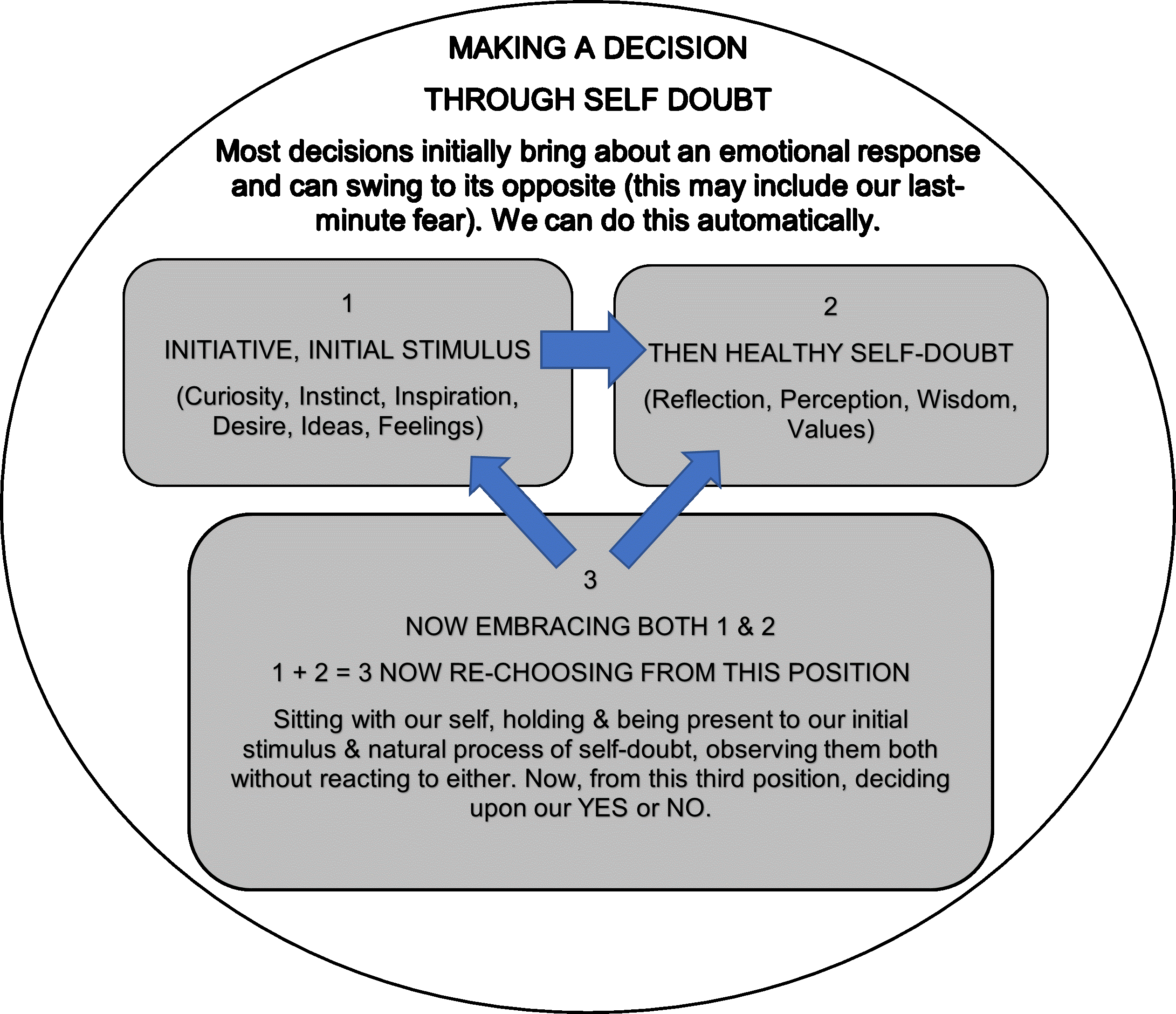
Overriding Self-Doubt Sometimes our self-doubt can insidiously creep in through the back door. Others may be constantly analysing, ruminating what we are doing and want to overcome self-doubts, so we no longer let our doubt overwhelm us, undermine our self-esteem, success, sense of worth. And when we are in this space, we may not feel good enough - compounded when we are stressed. Viewing our doubts as just thoughts, we may want to utilise ways of not feeding our unhelpful thoughts, doubts, stepping through them, mixing in the healthier ingredients of life and move forward with more confident thoughts (and maybe trusting our intuition more). Our self-encouragement, acknowledging our achievements however small (and trusting our procedural memory that if we have done it before we can do it again) may be in short supply, which stops us thriving & taking action in the world (we may only know by taking action). The counselling for self-doubt includes exploring our old narrative, need for validation, approval. In each moment we may be faced with choosing fear or love and the counselling for self-doubt can explore this further. Having faith in ourself, getting in touch with our positive determination, self-validation, affirmations, what we appreciate, the desired, positive outcome we envision may also support us. Tackling our doubts head-on, disidentifying from them, making the choice to trust ourself, be in the moment & taking different, positive action - just having a go, may be our challenge. (Some find that faking it till we make it works for them.) Self-esteem counselling & confidence therapy can support us in building positive self-belief, without self-deception, having belief in ourself when others don't, being resilient, standing up for ourself without giving in, moving towards our own self-trust and encouragement - turning adversity into an advantage, exploring our attitudes (e.g. how can I make this happen?) and what inspires us, so other possibilities open up, that we can do whatever we choose, practice envisioning the life we want to live. Making choices can be challenging for us. Listening to what our body tells us when making decisions can help us alongside respecting the decision we've made. Most decisions initially bring about an emotional response, and then swing to its opposite (this may include our last-minute fear). We can do this automatically. This is a natural process, yet can be confusing, especially in a world, where we are supposed to be definite, but in fact we may be ambivalent. We may have carried out our research, weighed up both the pros and cons, yet still struggle to make a decision. What goes on in our head, our thoughts, beliefs, self-critical voices, moods, can affect our procrastinating. Even when we manage to start a task, we may experience constant negative feelings, which stop us. Holding conflicting thoughts & feelings may hamper our ability to make choices & act. Yet utilising our original desire we can choose whether to get going and complete things, learning to do things differently. Re-choosing things, moment by moment, may assist. (See also Procrastination Counselling & Psychotherapy)
Limiting Ourselves We may find it hard to look inside ourselves and struggle with finding our courage to do certain things.
- We may limit ourselves by living from certain personal fears, relationship fears
- We may be holding onto limiting beliefs, mindsets (see also Unhelpful Self-Beliefs Related To Our Esteem)
- We may avoid trying new things in case we make a fool of ourself
- We may avoid speaking up for fear of being wrong, rejected
- We may stay focused in our head
- We may avoid growing as a person in case we find out something about ourself we don't like
- We may stay stuck in a job we don't like through fear of failure
- We may stay stuck in unloving relationship through fear of being alone
Mistrust From past experience we may have good reasons not to trust (see also Our Painbody), which can be explored in the counselling. When we are anxious we may be overly focused on ourself tending to mistrust not only us, but others, suspecting them more.

Being Untrustworthy, Breaking Our Trust, Breaking Our Promises We've all broken other people's trust in us, and once broken trust is challenging to restore. Making the effort to mend broken trust through owning up to our actions and making amends, may help. And going forward, we can endeavour to honour the promises we've made in order to gain people's trust. Breaking trust or our promises can be an innocent mistake or be connected to our procrastination, self-sabotage or a form of manipulation.
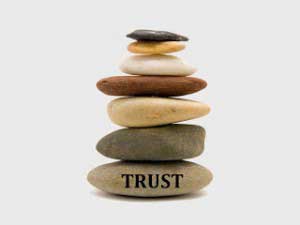
Self-Trust, Putting Trust In Us Most of us find it hard to trust others, unless we trust ourselves (including our natural intuition, instincts, gut reactions). Our lack of trust (or self-doubt) may date back to old wounds. In our early years we may have had a trusting nature, yet picked up some wounds (maybe traumas) along the way and if we were hurt as a child, we may have unhealed trust issues now. Learning to regain trust, putting faith in who we are and our own path may now be important to us. And when we do trust ourself, we are less reliant on others to give us only what we can give to ourselves. Some of us may lack confidence in trusting who we are - self-trust (see also Emotional Insecurity, Inadequacy). We may forever be comparing ourself with others. We may have become cynical, when discussing certain things, developed a habit of mistrusting not only us but also everyone else (see also Trusting Our Partner, Trusting Ourselves). Being truthful in our relationship may also be important. Some of us may blindly put all our trust in others, yet not in ourself, struggling to listen, trust that distant call or still voice inside of us, the one we may have known all along (see also Our Conscience, Morality & Personal Integrity). We may have let what others say or do define us and become dependent on them for validation, approval, affirmation, reassurance, confirmation, permission, recognition, appreciation, praise, attention, adoration, admiration to be our moral compass , so our self-worth becomes based on how others perceive us. Trusting our own emotional evaluation, intrinsic worth, intuition, feelings (so called positive and negative ones) as information and messages for us may support us. Believing in and honouring who we are, and our own strengths, gives us trust, as does finding our courage to trust things will work out, doing what we need to do, even when afraid. And this trust supports us no matter what's happening around us. Building trust with ourself when our loving actions line up with our words may be important, alongside having faith in promises we make & keep. Our self-trust can be our foundation (which is influenced by our early bonding patterns), and when we are in touch with it and hold on to it, this supports our resilience. As we place trust in us and in our own ground, we may have more of a capacity to calm ourself, put ourself at ease, reflect, observe & respond to whatever comes our way, putting trust in our actions and move forward. We may have very specific issues around trust:
- Can we learn to trust and are we willing to do so?
- Can we trust our body?
- Can we trust being grounded, secure, inhabiting our body?
- Can we trust our real feelings?
- Can we trust our intuition, instinct, gut feelings?
- Can we trust our inner voice?
- Can we trust who we are, our self?
- In order to trust, can we be freer from our old restrictions, unhelpful, redundant, inhibiting rules, loyalties, oaths, sacred cows, obligations, duties, taboos?
- Can we trust life, presenting us with situations to develop, learn, grow & be fulfilled?
- Can we trust the unknown, uncertainty, mystery?
- Can we trust our sexual, spiritual selves?
- Can we trust others?
Tension is who you think you should be. Relaxation is who you are.Chinese Proverb
Self-Trust - Trusting Our Self, Our Innateness (See also Expansion, Self-Growth, Flourishing, Thriving & Trusting Life - Nourishing It, Having Faith) We will always look to others for validation, approval, affirmation, reassurance, confirmation, permission, recognition, appreciation, praise, attention, adoration, admiration, adulation, acceptance if we don't trust ourself by our capacity to handle whatever comes our way, putting trust in our capabilities to do whatever we choose. When we do, this empowers us. When anxious, vulnerable, caught in our painbody, it can affect our ability to trust us, others, and life. Being in touch with the peaceful, positive and powerful qualities of our innateness - our body, feelings, mind connection may support us. Re-discovering, and in touch with and trusting our inherent nature and own intrinsic resources - the ones we have had since birth & life itself, may support us. With much potential, we were naturally born curious, open to learning, we had emotions and expressed them freely, with the desire to love and be loved. We had a need to emotionally and physically attach ourself to those closest to us who cared for us. At times we needed closeness and other times, separateness. We knew when to hold on and when to let go, when we needed to connect & play, eat & sleep. This natural self-trust may have eroded over time. (See also Connecting To The Innocence Of Our Childhood - Our Child Within) Listening to what gives us peace of mind, what is our own intuition, home truths, conscience, integrity and values may support our intrinsic self-trust, as may trusting we are enough, being in touch with the essence of who we are, our core self, our qualities, opening our heart. The counselling & psychotherapy can explore our own human givens - being in touch with all of who we are, aligning ourself with our own backbone, being anchored, centred, grounded, in touch with what matters to us, our intrinsic worth, value and relationship to trust (see also Ownership, Guardianship, Trusteeship, Stewardship).
Self-Respect Saying "No" without feeling guilty and no longer telling ourself mean things to ourself boosts our self-respect. Getting back to our core self, honouring our own values, the life & soul of who we are, supports our self-respect, so we can act from this place with a level of honesty, reflecting conscience, integrity, standing by what we believe, without necessarily having to persuade others and this is our self-respect that anchors us. No longer downplaying our strengths and acknowledging, respecting our talents, interests, innateness supports our self-respect. When we are in touch with our self-respect, we are freer to respect others, be respected by others, including having respect for our partner in our relationship. We may also be in touch with a respect for the world around us and our responsibility to take action. Having respect for ourself may also include no longer abandoning ourself.
I was always looking outside myself for strength and confidence, but it comes from within. It is there all the time.Anna Freud
Confidence Building - Empowering Us Sometimes we can give people power (see also HSP Counselling - Giving Our Power/Energy Away?) without owning our own. Many areas of our life are affected by how good we feel about ourselves - fundamental to who we are, sense of empowerment. What we give our power to can be explored in the confidence counselling & self-esteem therapy. Empowering ourself, and the decisions we make, may be important for us, so our life is in our hands. Yet for some our lack of confidence, low confidence or low esteem may in a strange way give us comfort, and stepping outside of this safe & familiar place into unknown new territory can be unnerving at first. This can be especially so if we have denied what really matters to us, our needs or certain feelings we are not supposed to have. Some of us prefer to show to others a sort of "false modesty" (e.g. pretending we are easy-going, or that nothing really matters - when in fact it does), which can end up disempowering, causing confusion to us & others - "they should know how I really feel". Being with encouraging, empowering others boosts our confidence. Being comfortable in our own skin, so we are satisfied with our personality & skills, abilities & limitations may boost our confidence building so we are at ease in our relationships, enjoying a healthy sex life, able to face challenges and enjoy life. The confidence therapy can look at what matters to us, how we can build our confidence, be in our own ground & empower our self, feel potent, courageous, so we are strong inside.
Confidence Building Support It is rare for any of us to go through life without an occasional dip in our level of confidence. Building confidence, from the inside out, so it belongs to us, boosts our self-esteem. Even so called confident people have their moments. Enduring stability comes from building our own confidence, emotional intelligence, finding out who we are, our capabilities, what makes us happy, experience elevated moods. Our relationships can only be as stable as we are in them. It may be important for us to take charge & control of our emotional stability. We need an anchored, centred Self to have self-confidence and confidence building is a skill which can be developed that comes from being self-assured, arising from us appreciating our own abilities and nurturing our confidence over time. Self-esteem counselling & confidence therapy can support us with our:
- Strong vulnerability
- Self-worth
- Self-appreciation & pride
- Self-reflection
- Self-assurance
- Self-respect
- Self-trust
- Self-awareness
- Self-responsibility, acceptance
Freeing Us Up Some of us may have almost fatalistic beliefs, as if our free will is captured, that we should feel dreadful. We may be seeking ways we can be freer in our lives, so we can hear & see what is, instead of what was, should be or will be. Rather than what we should or ought to be feeling & thinking, we may want to lose unhelpful ingrained ways and feel freer to simply express what we "actually" feel & think. Being less awkward, taking charge of our thoughts, learning from our mistakes, not worrying so much about having to know everything, no longer trying to blame us or change others, living from the heart and soul of who we are, having the freedom to express what we want, rather than waiting for permission, may also support us in being confident in who we are, as may the freedom to take risks, make decisions without guilt being our constant companion. The therapy can also explore & support us with knowing what we want, prioritising & focusing our mind & actions on this, even if things won't always run smoothly, aligning our thoughts and actions with what we really want and maintaining an optimistic attitude, creating a plan without allowing ourselves to get distracted & keeping things simple. We may also explore how we can free our will.
I am always doing that which I can not do, in order that I may learn how to do itPablo Picasso
Taking Risks It can be a challenge to combine being courageous & brave with understanding, discerning when to try out new things & when not to take unwanted risks. Being comfortable may be important to us, as may the value of caution, reflection, yet opportunities may slip by (see also Changes & Transitions - Counselling London), because we may want to avoid the awkwardness or temporariness of being uncomfortable. We may frequently procrastinate or choose security & avoid rocking the boat. Exploring life in more challenging ways we do our best growing when we move outside our safety zone, comfort zone and grow. Opening up, stretching our comfort zone can help us grow, feel more alive, achieve & bring about change, transformation. Being cautious, playing things safe, doing the sensible, proper thing can at times be wise, yet other times we may want to try new things or something different, choosing to exchange safety for risk, utilise our will, consider throwing caution to the wind, be frivolous, more spontaneous, allow for surprises, be carefree (see also Our Free Will, Free Spirit). Rainer Maria Rilke puts it "When we are only victorious over small things, it leaves us feeling small" and in order to support risk-taking we may want to internally validate, value, appreciate, affirm, like, accept ourself - give permission to ourself, give what we want. The benefit of hindsight is useful, yet we may ask how will we know if things will be different. Preferring the comfort of familiarity, we may be in a double bind, because we won't know unless we try, make choices, decisions and act, helped by building, maintaining supportive habits. As we learn to take charge of our anxiety and change our unhelpful attitudes, we may be willing to risk learning new things, be open to new possibilities, trying them out, practice using them, until they become familiar & ours. Taking a chance, being prepared to make mistakes, fail, be wrong, let go at times may help us take risks. Counselling & psychotherapy can help explore our thoughts, beliefs & attitudes about risk, and what it might mean for us to stretch ourselves a little more by taking risks (this for some may include asking for what we need and taking risks in our relationship).
And the day came when the risk to remain tight in a bud was more painful than the risk it took to blossom.Anais Nin

Risk & Safety Being safe sometimes is necessary for our survival. Before we start something new, take a risk, it can be important to carefully consider balancing risks, be safe enough, safe with our feelings, that what we are doing is right & what the consequences of our actions may be, understanding these (see Healthy Side Of Doubt). Stepping outside our perceived boundaries, being willing to continuously explore, stretch ourselves, living a full, interesting, stimulating, rich life, learn, risk love, follow our desire, passion, committed to expressing ourselves more fully, rising to challenges may paradoxically be some of our very challenges so we feel emotionally, spiritually fulfilled.
Life is either a daring adventure or nothing at all.Helen Keller
Risk Taking - How We May Stop Ourselves Some of us at times may choose to follow our fearful voice inside, telling us that risk taking isn't safe, that the consequences are consistently likely to be negative ("It's too late, I don't have enough time, money, energy, I might fail"). Worrying whether or not we can do things may also inhibit our freedom to enjoy the process, learning, the journey itself and what we need to learn. Yet the old things we have been doing may no longer work (Ray Bradbury states "Life is trying things to see if they work", there is also an Eleanor Roosevelt quote "You must do the thing you think you cannot do"). Others may choose curiosity, adventure, having a "let's see" approach, love or courage to override their fear of taking risks. Trying something new can empower us, so compassion for our self outweighs our fear of what others might say or do.
If not now, then when.Hillel The Elder
Our Attitude Towards Risk Taking - What May Be Happening Inside Remaining self-critical & believing we are no good, can make us feel us safe, yet stop us taking risks, even small ones. (Also, if we don't value who we are, we may overly worry what others think about us or feel bullied & intimidated by others.) Being safe is important to our survival. Exploring our external, internal sense of safety in counselling & psychotherapy may be significant. Yet if we try to always be so safe in everything we do, we would be immobile, stuck. Being safe enough inside, willing to exchange over-cautiousness, controlling things for taking new risks, willing to step into the unknownso we are not just surviving, but feel more alive, loving to us & others, may be important for us. Confidence counselling & self-esteem therapy may consider our attitudes to risk, what's stops us taking risks so far and how free & willing (see Our Free Will, Free Spirit) our choices are to take risks. We may struggle to be assertive & be tempted to control or manipulate situations, so that outcomes are predictable, safe, risk free, yet this may be stifling. So rather than trying to have control over feeling safe (which can lead to resentment, blame, withdrawal, being overly defensive) we may want to be open to our attitude and its effects, choose from what is more loving for us or others, what's life affirming, towards our life's journey. Our fear of taking risks may stop us:
- Risking disapproval, even upsetting others at times
- Risking letting go
- Risking what we don't know, making mistakes, trying something new
- Risking empowering us
- Being curious & creative
- Risking intimacy, love
- Risking making new choices
- Developing new habits
- Realising our dreams
- Living in the moment
If we don't aim high enough, we may not go far enough.
Unhealthily Looking For Social Approval, To Be Liked, Noticed, For External Validation, Encouragement, Approval, Affirmation, Reassurance, Confirmation, Permission, Recognition, To Be Valued, Appreciation, Praise, Attention, Adoration, Admiration, Adulation, Acceptance, Trust For connection, we all need to count and have a natural drive to be recognised, endorsed, with a longing to be significant, know we matter and are noticed. Others approval and attention support our wellbeing, self-worth. And it may matter to us to care about how certain others think of us, when it's the right people we value, respect. Most of us enjoy approval, affirmation from certain people and this can help us be seen, acknowledged, be motivated. We all need to be seen, heard, need feedback, support, validation, to be respected, appreciated & receive the right sort of attention from others affecting our beliefs (and very survival - crumbling without it) that we are worthless if we don't get approval from others (Maslow's hierarchy of needs refers). We all need to be attended to, receive positive feedback responses, to be mirrored back and seen, especially in our early years, otherwise we will spend the rest of our lives seeking validation, approval. Essential to our growth (and this can date back to very early connections and bonding patterns, and how our father, mother validated, reassured, recognised, approved, accepted us), we need recognition, reassurance, appreciation and approval, others to value us, show interest in us, be proud in us, validate our worth, understand us (see also Dependence, Independence, Interdependence, Codependence - Moving In & Out Of These States). However, there may be a part of us (maybe who's yet to grow up) waiting on others to tell us what to do and this child-adult part of us may feel externally or eternally trapped in needing external validation. One challenge may be to savour compliments without wanting, needing approval. We need contact with people and for people to like us, love us, be there for us, support us, yet confuse this connection with approval. We may make these needs over-important (and consequently try to be perfectionist) and how we seek it, receive it, whether in healthy, unhealthy ways impacts upon us. (Some of us can believe that we have to please others as if for our very survival, to be alive - for the core need to be seen, part of the tribe.) We may end up compromising our own way of life, even inhibiting what we enjoy. Our social media habits may be unhelpful. Highly dependent on others for our social approval, self-esteem, we may too often expect approval, recognition, affirmation, etc. and become disappointed when not received. This may feed our sense of insecurity, fear of missing out - FOMO. Dating back to old wounds, we may fear people won't like us, struggle to say what we want, feel and become so dependent on approval, reassurance. We may seek out approval too often for our own comfort, ending up playing things safe, or become reliant, dependent on the people we seek approval from (manipulation may play a part) and when we don't get our approval "fix" (having what some people call an approval addiction - addicted to feeling OK through others attention, approval), we may deflate. Yet over-relying on others to make us feel good, trust us, we may make approval-giving, and self-trust the job of them, which can set up a high maintenance relationship (overlooking that it is also our role to value our being, validate ourself (see also Self-Trust, Putting Trust In Us). It may be important to acknowledge there will always be others with differing views or opinions, that we can't be liked by everyone and when others show negativity towards us, they may be displaying their own emotional issues. The self-esteem counselling may also explore why it is so important to us what other people think and what actions we can take to move away from this position. We may be out of contact with what we want, struggling at times to build genuine relationships, connect to our "this is me" sense, to define our own intrinsic worth, without attaching it to what others think.
You just have to not let your joy depend upon what anybody else is living because that will get you every time.Abraham & Jerry
Approval Addiction - Compromising Ourself, Especially In Our Relationship Counselling for approval addiction and self-esteem therapy can look at what may lay behind our need for approval, recognition, appreciation, admiration, adoration or adulation, especially if we feel empty inside or when it can feel like we don't exist without these (see also Possible indicators of being emotionally needy), including ways we can, give ourself "internal gratification", good feedback, take care of our own needs, giving this approval to ourself, without always having to look outside of us. In our relationship we may mistake love for approval. We may try to be nice or please, overtalk to get appreciation, validation from others as a form of control (and any unmet validation, approval, appreciation, love from our parents may also be at play). Being nice because it makes us feel good inside has a different quality to it. Some of us may feel unappreciated by others and angry on the inside. Analysing things, some may also expect our needs to be met without saying, asking for what we need, including in our relationship. If we don't get these needs met in our relationship or marriage, we may withdraw (and some may use sex for validation or seek sexual encounters elsewhere) to validate our own intrinsic worth. Whether our relationship has become high maintenance how love & approval gets played out in our relationship, marriage, may be worth observing. We may be preoccupied with not letting others down. We may become socially anxious. What we do when we are not heard, seen, appreciated or met, especially in our relationship, and whether we are able to receive others' appreciation without depending on it (and even if we get it we may tell ourself we don't deserve it), may be challenging. This may affect our relationship style, as may trusting, appreciating & being proud of our self, who we are & what we do, acknowledging that we are enough, have gratitude and can validate, approve our self without the illusion of exclusively needing this from others - giving ourselves what we have previously pulled on others for.
What you think of me is none of my business.Wayne Dyer
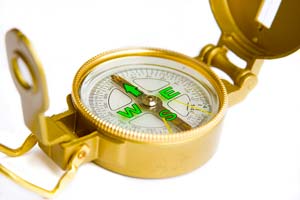
Worrying What Others Think About Us, What's Appropriate We may over-worry, ruminate about a lot of things or specifically about what others think about us, what's appropriate and consequently become confused about the images we have of ourself, the images we like to show to the world and who we are. Alongside affirmation, from time to time we may also need assurance & re-assurance. We need validation, recognition, appreciation & the right sort of attention, support. throughout our life to varying degrees. It is important to our growth, esteem and sense of emotional security. Yet when we become over-dependent on others for these, or feel worthless without them, we can become powerless, especially when we get caught in continuously comparing us with others. Struggling to be real, we may take on roles, which no longer suit us. It can be so important that we are seen, recognised, acknowledged, appreciated or maybe admired, that we would do anything to get this. We may need approval & love, which is unconditional or perfect, which may be too much for someone else to always give. We may believe that any approval is better than none and do anything (even compromise ourselves, to receive approval & recognition). Needing or desiring recognition, validation, or approval so much (and confusing this with love), interferes with our performance & how we are in the world. It can become tense-making, stopping us relaxing. We can be so busy criticising ourselves, putting ourselves down, that we now seek validation, affirmation, appreciation or adoration & admiration from others. Trying to pin our esteem on others, we may give ourself away, constantly seeking confirmation from others about who we are, whether we are good enough, maybe fearing others will abandon, reject us. Not feeling good about ourselves, we can look for others to source our motivation and give us the answers, meet our dependency needs. Dependent on approval from others (which can be withdrawn at any time), we may go along with things, continuously wondering what others think (frequently double, treble thinking) or trying to please others or fix things for them - giving them what they want or want to hear, e.g. "How do you want me to be?" (often caught in a trap at the cost of what we want or really want to say), without giving away ourself. Saying "No" and being assertive may be one challenge. Unsafe inside, or feeling like a fraud we may try to control others, outcomes or our partner. Some of us may always try to justify things and struggle to have a balance between withholding or sharing all our thoughts. We may have become dependent on our perceived expectations of others, what they want. (Also, how others perceive us is not in our control, yet what is in our control is how we perceive others.) We may be loyal to others, yet not to ourself. Ironically, even if we receive our longed-for approval, affirmation, validation, recognition, appreciation, praise, confirmation - important though it is, it may never be enough. We may have a needy part of us that needs everyone to like us (yet we may lose ourselves in the process). Either way we can feel in chains to others' responses. If we become hooked on our need for approval or validation, we give others power over us, as if we give ourself away, selling us short, losing touch with what inspires us. To compensate for our need, we may have developed certain habits like excessive emailing, texting or internet chatting or other unhelpful addictions. Searching for direction, we may have become overly dependent on getting our "compass" bearings from others, struggling to trust our own readings. We may also fear making mistakes. Seeking permission from others may inhibit giving permission to our self. Over-sensitive or basing our esteem only upon the responses of others, we may be over-reliant by holding on to what others say & how they respond. If we don't get the response we need, we may end up blaming ourselves, beating ourselves up, as if we are wrong or bad or to prove our own unworthiness (see also Self-Hatred, Self-Loathing, Self-Persecution, Self-Disgust, "Bad" Or "Wicked" Inside, Self-Punishment). This can also affect our esteem in relationships. (It can take courage to be disliked.) The self-esteem counselling & confidence therapy may also explore what resources inside us we are in touch with and can develop, so we can utilise our personal boundaries and are less worried about how we are seen by others and are willing to be self-appreciative, grateful. We may have difficulties being in touch with our own free will, expressing this, preferring to do or obey what others expect us to do, following others or external authorities, yet not always feel comfortable doing this, because it is not close to who we are. Being on our own path may be a need, as may listening, respecting who we actually are, what we think about ourselves, being more physically connected to who we are in our own ground, anchored - so we orientate ourself internally, opening our heart when other people aren't or can't be there for us. Some may be drawn to seeking a spiritual connection. Releasing ourselves from the burden of being dependent on others for our OK-ness - being ourselves and thriving may matter to us as we let go of trying to control others, outcomes.
When the voice and the vision on the inside is more profound, and more clear and loud than all opinions on the outside, you've begun to master your life.John Demartini
Being Easily Offended We may become easily annoyed, offended by others' opinions (even our own). Disidentifying from our opinions - the meanings we make, weighting we put onto things, acknowledging that others have the right to express their opinion, may enable us to be less offended, annoyed. And our fears, upsets, feelings of being let down may also influence not wanting to let people down, fear disappointing, hurting, upsetting or annoying others, our partner.
Healing Our Need For Others' Approval - Internally Validating, Encouraging, Valuing, Appreciating, Affirming, Liking, Accepting Ourself - Giving Permission To Ourself & Giving What We Want From the moment we are born, we need validation and loving parents offering this consistently, validating and responding to their child's needs, feelings, perceptions, interests, talents, gifts - their personal qualities related to their self-worth. Through our experience of being validated, valued, appreciated, affirmed, accepted by our parents, knowingly matter, this models how we can do this for ourself in later life. Yet if our parents didn't provide this (e.g. experiencing a parent who was absent or critical) that "needy" part of us, who may have felt abandoned and missed out continues to re-enact abandoning ourself as an adult now and to look for external validation from others, because our wounded self and our lost or young parts did not know back then how to self-validate. We are social being and all need external validation, yet exclusively seeking approval externally, we may not even know that it is also our loving adult's responsibility to do this for ourself. Judging ourself is opposite to validating ourself and in order to validate ourself we may need to replace self-judgement with our kindness, valuing ourself (our intrinsic qualities, abilities, knowledge, skills, experiences, wisdom, potential), noticing, responding to our own inner child, feelings. Yet, for some people (from our old script, narrative), we may have had to compromise ourself so much and whenever we try to get approval, validation, etc., it still won't change our inner experience that nothing seems good enough and we may also believe we aren't good enough, become full of self-doubt, or end up procrastinating. Having faith in our self, building a circle of supportive people around us can help (yet when we carry the belief that we don't deserve love, appreciation, validation, affirmation, we may block others' attempt to give us the very thing we crave for). However, our best supportive friend is our self - attending to ourself, encouraging ourself, being self-affirming, self-validating. And if ever we don't get the validation, approval, acceptance we would like from others, we don't have to diminish our Self. (Sometimes we look to another for assurance, believing we can't do it for ourselves and the therapy may also be a place to look for it outside of ourself, yet ultimately only we can give ourselves assurance, as does appreciating what we do - valuing our contributions.) We may also want to let go, no longer abandon ourselves, be in tune with our Self (not a pseudo-self), feel empowered, regain our own stability and ground, have our own support systems, be compassionate, caring to ourself, courageous, resilient, have our own internal strength, internally validate ourself (telling ourself the things we want to hear from others) be in our own integrity and take loving actions so we are no longer so dependent on others for our own happiness, validation. An aspect of this self-validation may include being aware of our emotions without numbing, suppressing them, integrating all our feelings, validating the information our feelings are giving us, trusting this inner knowing, so we understand ourselves more, are grateful for our attributes, strengths, talents, gifts, personal qualities. Tuning into what we are proud of, any progress we make, putting trust in us, unconditionally accepting ourself, so we have a sense of internal safety, becomes part of our self-validation. And when we are no longer reliant on another for our confidence, we don't have to wait for their permission - for someone else to tell us we're OK or it's OK to do something before we try something. We can go ahead with what we believe in and that trying something is enough reason to give things a go (see also Taking Risks). In the therapy we may also need to explore what stops us - the part of us that is in resistance to our own self-validation. This may entail tuning into lost parts of ourselves, developing secure attachment within ourself, so we validate ourself internally. This empowers us. This process of initially giving what we need to ourself may also be true of love (see also Appreciation, Gratefulness & Gratitude - Our Challenges). If what we want most is validation, approval, appreciation, attention, being valued by others, we can also (maybe counter-intuitively) give this to others (often opening up a doorway for also receiving these qualities back).
Some people never say the wordsPaul Simon
"I love you"
It's not their style
To be so bold
Some people never say the words
"I love you"
But like a child they're longing
To be told
No Longer Trying To Meet Others' Expectations We can feel more at ease, genuine pleasure, joy, when we don't have to be who or what others want us to be, drop our needs to impress others based on external validation, approval, etc., no longer need to control meeting others' expectations. This may entail overcoming our fear of others' reactions, if we don't meet their expectations, when we do what others want and not what we want. And coming from this scared place can be stressful, especially when we sacrifice ourself (maybe pleasing/fixing things, rescuing, caretaking). In order to control how others feel about us, which is ultimately unloving to us, we can abandon ourself. Our fearful inner child may need to feel safe through our reassurance, as we learn to say "No" and speak up for ourselves and establish trust in ourselves and others.
Unhelpful Self-Beliefs Related To Our Esteem A belief can be viewed as a thought we keep practising. Our self-talk, sometimes called "inner chatter" - the voices in our head, may run on the lines of: "Others are better or more successful than me, they know things and I don't", "I better not try this, I might fail, make a mistake or get it wrong", "I'll stay in my cocoon", "I might upset someone or get uncomfortable", "What would they think", "You are rubbish", "You are nothing", "Who do you think you are?", "You don't deserve ..." or "It won't make a difference, what's the point?", "Just get on with it" (see also The "Should", "Shouldn't", "Ought", "Must", "Never", "Always" Beliefs). We may tell ourselves we are unlovable, a sinner, are going to hell. These repeated voices acting as our inner judge or self-critic, can be an attempt to create safety (e.g. by not taking any risks). Trapped in being ashamed or sorry for ourself, our negative self-talk can reinforce a negative self-image & low self-esteem. When our esteem, confidence is low, we may have an additional set of unhelpful self-beliefs. Some unhelpful beliefs can remain inside of us (e.g. that we will fail), contaminating & controlling how we are. We may for example believe we are unacceptable, unworthy of love, devaluing who we are now. We may be holding onto beliefs from our wounded place or holding on to unhelpful expectations, rationalisations (often of how things should be). We can feel false, a fraud, a fake, as if we are an impostor, believing "I mustn't expose myself, otherwise I will be found out" or "I must adapt at all costs". Seeking an illusion of external safety we can believe we are bad, unacceptable or unlovable (confusing love for approval), questioning how anyone can love us, compounded by our need to control others, outcomes, our partner. And when we believe we are bad inside, so too may all our thoughts, feelings, beliefs be bad. Coming from this place we may believe we have to play at being good - "knowing" from this bad place it is an act. Nothing can be right for us, we don't deserve any good, and if our good points, qualities are seen, acknowledged, we may believe we are conning others. How we measure success may also affect us. We can ensure that our inner fears of not being good enough, get reconfirmed in our interactions with other people and affect the weighting we put on things. When we are convinced that nobody likes us, it is usually a signal that we need to like ourselves. We can sink into self-pity. Some of us may have a masochistic lifestyle, suspicious & mistrusting others, believing we have to do everything on our own. We may have allowed incidents & memories from the past to shape us more than we want to. Somehow believing that we shouldn't be self-conscious, we may have got into a habit of boycotting any good thoughts, which can tarnish our beliefs about who we are, affecting our centredness, groundedness. Counselling & psychotherapy can explore further the nature of our self-beliefs, perceptions & attitude, our self-judgement and whether we want to bring them up to date, transform them, be in touch with our home truths. (See also Reframing, Limiting Beliefs, Mindsets)
I know you think this world is too dark to even dream in colour,Andrea Gibson
but I've seen flowers bloom at midnight.
I've seen kites fly in grey skies
and they were real close to looking like the sunrise,
and sometime it takes the most wounded wings
the most broken things
to notice how strong the breeze is,
how precious the flight.

Believing We Are No Good, Not Good Enough Feeling stressed may trigger self-doubt, beliefs of not being good enough, not doing things right - fuelling our sense of inadequacy. When we tell ourself (or have picked up messages from the past) that we are not good enough, it can be as if living with the handbrake on. Disappointed, our very identity can be caught in the belief that we are no good, not enough (often stemming back from our childhood, affecting the source of our relating style, attachment patterns now - see also Our Painbody). Shame may result. Once we start saying negative things to ourself, we tend to believe that others too have negative thoughts about us without any real evidence. We can become too self-critical, believe we are wrong, should be more this, less that and overly dependent on worrying what others think (believing that what we say has little value), seeking approval, validation & reassurance from others. Not liking ourself (see also Self-Hatred, Self-Loathing, Self-Persecution, Self-Disgust, "Bad" Or "Wicked" Inside, Self-Punishment), we may have a strong need to be liked, yet at the same time afraid we might be exposed somehow, as if we might be seen as weak. Wanting to be liked by everybody may put demands on us, so we worry what others might say, even if what we think and say is true for us. We may have ended up not only basing our sense of worth on what others think, but also believing that failure erodes our intrinsic worth, stuck in self-doubt. Some of us may have an impostor syndrome, as if we are a fraud and this can affect commitment issues in relationships. We may also believe that we should know everything, and struggle to accept the strength of our vulnerability, let ourselves off the hook - see Fear Of Not Knowing (FONK Counselling) Tolerating Not Knowing - Our Need To Be In Control, Agnosiophobia Counselling. Inside our head, we may believe that others know what we want. Our sensitivities may be overly precious to us. We can define our worth based on our body or looks, overlooking our inner qualities or ability to love. In our insecurity (or taking things so personally), we may perceive ourselves as unlovable, inadequate, inferior, hopeless, wicked, so paradoxically, if we don't feel good about ourself, we can end up at times diminishing our own esteem as if to prove, reinforce this belief. And feeling we are not good enough we may fear rejection, abandonment - make ourself rejectable (see also Self-Sabotage, Destruction). Our early childhood experiences may have eroded our intrinsic self-worth and some of us may have ended up over-giving in relationship, whereas others become "takers". Not being good enough can also be connected to not being accepted - not so much by others, but by ourself. When driven by fear, our forgiveness and self-compassion may be in short supply and we may struggle to give ourself some slack, lighten up, be carefree. Most of us growing up experience moments when we were unfavourably compared to others who looked better, were better at some things than we were, had more friends, etc. ("My Perfect Cousin" - The Undertones song is a good example). The self-esteem therapy and confidence counselling can take into consideration experiences of being rejected or unappreciated when younger, where we are still sensitive to remarks now and review the ways we see ourself & the world, looking at other possible perspectives & actions, how we make decisions & conclusions, trust who we are and the world around us, feel safe enough, explore the false beliefs about not being good enough, evaluating how good our efforts need to be, paying attention to our strengths & qualities, our essence and improving our skills when we need to and engaging with thoughts that empower us.
Beliefs About The World Filling our time up with worry, we may have certain views, e.g. that the world as threatening, that we always have to defend ourselves against other people. The counselling can explore our views about the world, how we see the world (see also The "Should", "Shouldn't", "Ought", "Must", "Never", "Always" Beliefs).
Believing In Ourselves We may tell ourselves "I'll be all right when..." Having resilience, gaining confidence, trusting our innateness, believing in our self - all of who we are, our value and worth, accepting ourselves may be important to us. (See also Self-beliefs & Believing In Ourself)
Life is trying things to see if they work.Ray Bradbury
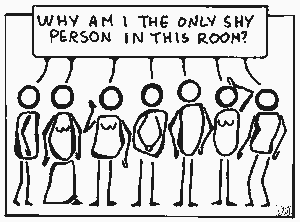

Shyness, Reserve Around Others One view of shyness is that it is constitutional - who we are, the quality of our temperament, that we are simply more shy as part of our nature, similar to being highly sensitive. Another view is that shyness is learnt behaviour, through fear of social judgement. We may feel like an outsider, invisible at times with people. And those of us who are shy or excessively blush can be more sensitive to shame - maybe being exposed as an introvert. (And the fear of blushing can itself cause us to blush.) Unlike others, who feel very entitled and special, we too may feel special, yet wonder if we bother others with our presence, they will be dissatisfied, discomforted by us, judge us (yet it may be us inside who is feeling dissatisfied, discomforted, judging ourself). And how to overcome shyness so we no longer become like a shrinking violet may be a concern for us. If the truth be told, many of us have a shy or timid part to us, rendering us emotionally insecure at times. Yet being shy for some of us can be so painful & limiting in our relationships, work & social activities (see also Social Anxiety Or Social Phobia). The counselling for shyness may also explore stretching our comfort zone by counter-intuitively by saying hello, exchanging greetings with at least 10 people per day as a curious experiment to ourself. Our shyness may not be about being shy, but about being easily over-stimulated, aroused - our high sensitivity. For others, it can be as if a part of us would like to be noticed and another part of us can't bear this. And much of our excitement, passion, joy may be suppressed (we may also be living a sort of phony shyness - see also Caught in our own narcissism we may tend to be more covert). There may also be more hidden dimensions to our reserve around people- that of holding on to our exclusivity, specialness, preciousness (maybe cynicism), that of maybe feeling superior (or holding an inverted snobbery) to others. (We may believe that if we don't show ourself, we can't be rejected.) Busy observing, we may overlook being, getting involved with others. We may struggle to accept people's otherness, differences to ourself - seeing through to their humanity. Our attitude may be to view these differences as daunting, insurmountable. We have the potential to not allow ourselves to be so dominated by these differences and instead choose to step over initial appearances, embrace our common ground as human beings, share our good will, personality, open our heart, manifest our own benevolence (see also In Tune With Us, Community & The Wider World, Our Interdependence, Interconnectedness, Oneness, Unity, Harmony). The therapy for shyness can also explore how we can regulate our thoughts, internal critic. Self-esteem counselling & confidence therapy can offer support with overcoming shyness, which may also point to ways we need to be comfortable with our introvertness, tenderness, vulnerability or high sensitivity, which can be linked to how our or others' buttons can be pushed.
Approaching Challenges Fear of failure or success, overly worrying about the outcome or what people think of us, can inhibit our approach to new challenges. We may define our worth by our performance or the outcome, rather than our effort or ability to be in the moment, relax & enjoy something (including our own company & that of others), without constantly believing we are missing out on something. Bearing life's sufferings, our hurt & pain, finding our own ways through uncomfortable feelings may be important for us. Picking ourself up after setbacks may also be important. When life presents us with challenges, we can retreat or welcome them, so we grow & learn from the experiences, especially when these challenges stretch us, take us out of our comfort zone, enable us to gain more skills, insights, building self-confidence.
You may have a fresh start at any moment you choose, for this thing that we call 'failure'Mary Pickford
is not the falling down, but the staying down.

Self-Esteem Counselling, How Counselling & Psychotherapy Can Help We may want to have more faith in ourself, the courage to make decisions, act, be more assertive & visible in the world, manage our anxiety. In the confidence counselling we will look how we can improve self-confidence, increasing & building self-esteem, developing a healthy inner life, so we are freer to live, more from the centre of our own being. This may include coming to terms with our fears, attending to all our feelings, validating the information they are giving us, exploring our willingness to take some risks in our life - trying things we maybe haven't tried before, transforming our self-beliefs and building a healthy relationship with ourself alongside our subpersonalities, alter ego. Rising to challenges, facing and overcoming life's obstacles boosts self-esteem. We may work with how to embrace change, stepping outside of what is familiar, rather than shy away from it. The counselling may also look at how we evaluate our experiences in each moment, and how we see ourself overall - the relationship we have with ourself. Despite our age it may be as if part of us hasn't quite grown up. The confidence counselling & self-esteem therapy may gently challenge any self-damaging ways we become defeated, extremely fatalistic, put ourself down (paying attention to the things we say to ourself), limiting our intrinsic self-worth or self-esteem, so we affirm ourself, are in our own authority, not beholden to others yet are in supportive relationships with others, sharing empathy. The confidence therapy & self-esteem counselling may include how we can reassure our self, respect and value ourselves, know we are enough, worthy, access more of our own resources, creativity & ways we can belong, appreciate, validate, support, assert, accept, value, trust and take care of ourself, feel substantial, so we don't diminish or sell ourself short, more able to freely live from our centre, anchored, in our own ground, be resilient (without interpreting constructive criticism as personal attacks), kind, loving, creative without being so overwhelmed. The self-esteem counselling may also explore how we manage our self, affirm to our self we are a person of value, bringing who we are (and that we are OK in our core, enough) to each moment, our own attributes, positive, good qualities, love of certain interests, what comes easy to us, our accomplishments, achievements, successes, strengths, what we are competent at, proud of, our core values, what gives us momentum, how we support ourself, what makes us feel good, nourishes us, so we flourish. The self-confidence counselling may also explore how we celebrate our achievements, victories, however small.
Forgiveness is choosing to love. It is the first skill of self-giving love.Mahatma Gandhi
Self-Criticism
Being Critical Criticism can be healthy when it helps us gain awareness, learn & recover from our failures, and release our potential. Yet being criticised by others can often be an attempt by them to control our behaviour, thoughts or feelings, and this attempt demands our response. Also, when others criticise us in unhelpful ways, it can be discouraging. This is not only true for external criticism, but also for how we react when we criticise ourselves and become self-critical, affecting our wellbeing. When self-critical, we may procrastinate more. Stress can fuel our negative, critical voices, as can loneliness, boredom, making a mistake, rejection. All that negativity (maybe living in our painbody) can be draining and we can get easily tired, fatigued, exhausted. In both cases this triggers our fight-flight-freeze mechanism.
- Fight reaction is a rebellious act against anything which constricts us, like our own self-criticism. We fight off our inner criticism through our rebellious ways, regardless of the consequences.
- Flight reaction means we withdraw & generally withhold, immersing into activities such as work, superficial relationships, alcohol, drugs or food for comfort. We often experience low moods or feel depressed.
- Freeze reaction is as if something inside of us collapses as we immerse into guilt, shame, doubt, depression, defeat, exhaustion.
Being Our Own Self-Critic Our self-criticism can be useful & necessary - be our survival mechanism, keep us safe, protecting us from further danger. Yet some of us can be our own worst critic - reproaching, bullying or persecuting ourself internally (maybe pleasing others on the outside). We may have become addicted to self-criticism, self-blame. Sensitive to criticism, when we are criticising ourselves, we are putting us under internal attack, and we can automatically end up believing that these critical messages are who we are, and not a critical part of us that is attacking us. This censorship reaction can happen so quickly that we are unaware of it. And the cycle continues. Everyone experiences self-criticism - those initially "outer" voices we have heard from others, parents, friends, etc, that we have now internalised into our "inner" critic. Each of us experiences our critical thoughts & beliefs differently. This critical side of us can be very subtle or like a harsh taskmaster, judging ourself and others. We may foresee dire or bad consequences of thoughts or actions (often associated to our experiences & beliefs formed in the past). Fearing failure, we may have lots of (real or imagined) expectations, we can become easily disappointed, frustrated in us or others, especially is we have a perfectionist's streak. Usually when we are being pessimistic or overcritical of us, we also become self-critical, pessimistic & blaming of others. We all have faults, qualities, strengths, achievements, skills, and gracefully accepting them at times may be our challenge. The self-esteem therapy and confidence counselling can support us in letting go of what we need to let go of, being more forgiving, accepting & supportive of us and the world around us. The esteem counselling can also explore the validity of logic, pessimism & truth of what we are telling ourself, exploring whether our inner criticism is constructive, compassionate, supportive or holding us back in taking action, becoming the person we want to be.

The "Should", "Shouldn't", "Ought", "Must", "Never", "Always" Beliefs We all have what is called our own "inner chatter" - the messages in our mind, scripts, narrative. Worrying inside and putting ourselves under unnecessary pressure, some of us may hear an "inner critic", often identified by a belief of how not only we but others in the world "should", "ought", "must", "never" or "always" supposed to be and can drive our internal taskmaster, keeping us frequently busy (see also Unhelpful Self-Beliefs Related To Our Esteem). "They should be like this", "They shouldn't have done that", "They should have known better" can be our narrative and when we do this, we are demanding and disapproving of others. Holding on to an illusion that life should be fair, that we deserve things, can trap us. If we're holding on to rigid boundaries, we can struggle to soften our hard edges and this can make us feel anxious. Holding onto self-doubt, often driven by our fears, this all-or-nothing voice inside of us tends to be attacking, harsh, mean, impatient, angry, belittling, righteous. And some of this may be connected to our unhelpful, redundant, inhibiting rules, loyalties, oaths, sacred cows, obligations, duties, taboos. Disappointed, we may be full of regrets - wishing things were different. ("If only..." may be a script we hold on to.) Usually when we hear this voice, we feel bad about ourself, weaker & smaller, fearful, unconfident & less powerful. It may tell us we are inadequate & a failure. As this "self-talk" grows we can feel guilty, ashamed, apathetic, lethargic, depressed, defensive, withdraw or force ourself to over-achieve, become aggressive, rebellious. Unnourished inside, we may be wilting, out of touch with our vitality, or not listening to, trusting our intuition and struggle to be in the moment. Acceptance, helplessness over others, outcomes and the power of surrender may be missing in our life. We can choose to turn any frustration we feel into a positive action. As opposed to our "shoulds", accepting not knowing, tuning into our desire, and "wants" may be a useful exercise, as may engaging with our own, inner authority, thoughts that empower us, tuning into our beauty, joy, light-heartedness, playfulness, carefreeness, laughter, fun and our sense of humour. (See also Our Expectations, Assumptions)
Learn and obey the rules very well, so you will know how to break them properly.The Dalai Lama
Our "Inner Chatter" Some of us would like to still the constant chatter in our mind, so we feel less under pressure. Closely linked to our anxiety, our self-critical voice obsesses about the future - how inadequate we will be, and the past - how badly we have done. The judgement - a particular dominant, tyrannical voice, tends to be generalised and harsh about who we are and our capabilities (see also Healthy Side Of Doubt). Our self-critic believes that they actually know what's wrong with us and why our life is doomed. This repetitious part of us offers familiar & harsh solutions & demands, e.g. "You need to work harder", "Stand up for yourself", "Be more assertive or loving". (See also Background/Foreground Thoughts, Our Self-Talk, What We Tell Ourselves, Internal Dialogue - Choosing What We Think)
Judged By Others, Feeling Judged We can't avoid others judging us, yet we can avoid letting others' judgements negatively affect us. No one can make us feel anything, unless we let them, and we may want to let go of feeling judged, choosing how we want to feel. We may also want to check with ourself whether others are really judging us or is this in our head. And sometimes we can explore, without pressurising ourself, changing what we may need to change, want to change.
More suffering comes into the world by people taking offence than by people intending to give offence.Ken Keyes
Judging Others Most of us like to believe we are accepting of others, yet most of us are quick to judge. It can help to remember how it feels to be judged, reminding ourselves of our own flaws, shortcomings, that who are we to judge, and we never know the whole story. Also, when we judge others it may point to how we judge ourselves, projecting these unwanted (often unconscious), judgements, feelings onto others.
Difference Between Making Judgements & Being Judgemental It is not the same thing to judge someone as to dislike someone. When we are judging someone this tends to imply that they are wrong or bad. We can dislike who and how a person decides to be without judging them as wrong or bad. And it can be loving to ourselves not to be around those people we dislike (see also Connecting With, Being In Touch With Supportive Others - Building A Circle Of People Around Us). We all need to have, make judgements (which is different from being judgemental) yet it is not loving to us or others being judgemental. We all need to make judgements between actions based on our values. In order to take responsibility for our life we make judgements all the time and need this ability to consider sensible decisions, whether things are good or bad for us/others (e.g. as a parent would our child feel safe with this person). Whereas when we are judgemental, we often compare ourselves more favourably than others. This often comes from our ego, false sense of superiority, disrespecting others' life journey. Flawed as we are ourselves, we may lack empathy, acceptance of others, as human beings.

The Negative, Judgemental, Critical Messages We Tell Ourself Often compounded by our moods, it can seem as if we have an "inner tyrant", "internal persecutor" - driving us at times. Internalising negative experiences from our past, we may continue to give ourselves negative, familiar messages now: "It must be my fault", "I'm not allowed to feel good about myself, and if I do, I feel guilty", "I don't deserve...", "I am useless, stupid, weak, lazy, incompetent, not allowed, selfish, a loser, can't trust what I feel". Alongside feeling inadequate, self-loathing, guilt & shame may result. If these messages become incessant, we may struggle to listen, trust a second, deeper, kinder, inner voice, become frustrated, sad, depressed, feel hopeless, stuck in our shell. In relationships, we may believe that others will leave, hate us if we say what we need and we may end up attracting rejection, because at some level we have rejected ourself (or feel unattractive inside). When we judge ourselves we create an inner pressure which can build up inside. We may complain, have resentment, bitterness, hold grievances, bear grudges, particularly of ourself. The counselling & psychotherapy may explore our choices, whether to be critical or appreciative, what stops us valuing ourself, standing up for ourself, our differences (including our sensitivities, introvertness), without judging them. And when we judge, harshly criticise ourselves, we are likely to control, blame, criticise others, including our partner. Our self-compassion, heart expansion may be missing. Mindfulness may also support us in letting go.

Self-Judgement - Our Inner Judge Judging & condemning ourselves, holding on to unhelpful self-beliefs can both mobilise & immobilise us and we can live our lives as if condemned. We may believe if we let go of self judgement, we would do nothing, lose our motivation. Being hard on ourself is a good thing we may tell ourselves and it may be we are doing well in aspects of our life in spite of our self-judgement, not due to it. The strategy we used for protection against pain of rejection, loneliness, grief and helplessness over others may have been self-judgement which can affect our self-worth, make us feel insecure or inadequate, fearful, anxious, , depressed, angry, empty, alone now. (And when growing up, others may have been hard on us, as a way of motivating us, and we may have absorbed their judgements, and become our own strict task-master now.) Some of us can tirelessly strive to prove ourself, others procrastinate. It can be as if every feeling we have has a judgement against it, blighting our life, when we wear these judgements as labels. Condemning, judging us and others is closely linked to concrete thinking, rigid thinking, thinking in absolutes & over-generalising - all or nothing thinking, either/or thinking, duality, our own self-critic. When we judge ourselves and others we usually don't feel good inside and convert our judgements to fact, truth. We may end up holding back aspects of our personality & being in the world (often our creative & courageous parts) that don't please our self-critic or "inner" judge. Never satisfied, always looking for problems in us or others, the world ("life is tough and it always will be - it has to be hard" - see also The Martyr In Us) we may worry about outcomes in the future, find it hard to relax. We may struggle to make mistakes without judging them or fear success. Having compassion for ourself, rather than the familiar self judgement, may actually support us in becoming more creative, productive. Confidence therapy & self-esteem counselling can help us with our self-judgement, exploring any feelings we may be ignoring, so we don't have to put our self on trial so much in anxiety-inducing ways. The confidence therapy may also explore the connection between, our self-judgement, our wounded feelings & what we tell ourselves, including our guilt & shame and how our self-judgement, self-blame, the weighting we put on things and reasoning may erode our vitality, self-validation and free will, so we no longer judge everything that occurs.
Comparison is the thief of joy.Theodore Roosevelt

Unhealthily Comparing Us With Others Contrast is part of our life and when used positively it can inspire us, improve, expand us, help us evolve. We all at times have tried to rate ourselves against others and sometimes this can spur us on (see also Competitiveness). And when we value and find inspiration for others - noticing their good qualities, taking encouragement from others, this can enhance those same qualities in us. Comparing ourself with others can sometimes be a helpful benchmark to motivate us. However, in discouraging ways, we may frequently try to rank ourself as better or worse than others, that they or we are somehow less, inadequate, inferior or superior and this can get played out in our relationship. Envy or jealousy (sometimes fuelled a social networking obsession) may also creep in, especially in our relationship where we can also compare our partner with others. Acceptance of us & others on our own journey may be in short supply. In our comparisons we make us worse off as we become defeated, which can become corrosive & self-destructive. Any negative comparison may feed our sense of inadequacy & emotional insecurity, stopping us from enjoying what we have, our accomplishments, our own uniqueness & value, and those of others. We may compare ourself unfavourably with others, and this can be a stick to beat ourself up, becoming self-critical. We can continuously worry about what others think & how we are perceived (we may also continuously compare our body with others), and in this comparison make our esteem dependent on others. Some of us can be very busy comparing us with others (maybe viewing social networking sites), wanting to take a leaf out of their book. We may often want to copy them. We may have a strong need to fit in, belong (see also Belonging) or to be accepted as a part of the group. Because we have become so self-critical, we may now have become over-reliant or dependent on others for approval, validation, recognition, appreciation, our self-image and self-worth can be reduced to what they think or say. In our attempt to belong with others, we may have overlooked how to validate ourself. Confidence counselling & self-esteem therapy explores the processes of our self-comparison, any internalised conflicts and how your own frame of reference becomes more internal than external, for what you know to be true about yourself. You may also want to have a healthy self-acceptance, sense of uniqueness, a way of accepting what is, alongside also acknowledging what is in our control and what isn't. This may also include acceptance of painful realities without fear of missing out (FOMO). Comparing and contrasting, it may be a further challenge to be genuinely happy for other people's success, appreciate, be proud of the work they have done & personal strengths, to take inspiration from them, get enthused by their achievements, success and be motivated for what we want to do in our own life, that wherever we are is just fine without measuring where we are in relationship to others, so the only consideration that has to do with us, is our own relationship to where we want to be so we focus on our self, own worth, inner security, what we want and how we get there. Comparison may motivate us yet it may also feed our ego and insecurities. Rather than comparing ourselves to others we may want to compare ourself to ourself - who we were and now want to be, what enhances our growth. Claiming our own resourcefulness & creativity, courage & determination can help propel us forward in our own way. Valuing we are enough, our originality - cherishing the uniqueness of who we are (and how we uniquely love and are loved), having compassion for ourself and others, finding & expressing our own voice, empowering ourself (when we no longer spend time comparing us with others - or comparing previous moments), bettering ourselves, we have the potential to be more in the present moment, freer to develop our own creative processes & direct our life to our own choosing, live to our full potential. And comparing different experiences one moment to another may stop us savouring the uniqueness of the moment as it is.
Keep away from people who try to belittle your ambitions. Small people always do that,Mark Twain
but the really great make you feel that you, too, can become great.

Receiving Criticism Most of us don't relish criticism. Handling criticism can be challenging, especially in our relationship, marriage. (See also On The Receiving End Of Blame, Control, Criticism - Considerations in the relationship, marriage). We may lose confidence, become defensive, try to justify. We may respond to the tone of the criticism, yet miss the suggestions. None of us are perfect. Some criticism may be valid or contain useful suggestions. Taking a pause, calmly taking criticism constructively (not necessarily personally, as if we aren't liked or somehow not good enough) and using it as a suggestion to improve or even learn something about us, can be of value. Hearing negative comments about us isn't easy, yet if we can get past the negative tone, there may be parts of the criticism, which are helpful, and we can discard the rest, responding gracefully (see also What We, Others Observe - Giving, Receiving Feedback To & From Others, Our Partner).
Diminishing Creativity & Open Heart Censoring things or misinterpreting events around us, our creativity can dwindle, we can become cynical, struggle to be loving, responding from our heart, or reach out to others. We can struggle to be fully alive & present, as if we are replaying situations (or reconfirming outcomes), which happened a long time ago (for details see Impact Of Our Past). Some of us may have become like a victim, martyr or self-sacrificing in our relationship, struggle to shine or be fully ourselves.
Blame & Criticism - Being Heard, Seen, Understood In Childhood We may be very reactive to being blamed by others, get angry, defensive. We may struggle to feel the helplessness and heartbreak of being unheard, unseen, unmet, unappreciated, misunderstood, in our relationship now. In our formative years we may have felt blamed for things we were too young to understand or that didn't seem worthy of blame. We may have learnt to feel guilty and carry this with us now. It may have felt better to blame, judge, criticise ourself causing us to feel guilty rather than feel our helplessness over being unseen, unheard, misunderstood. There is an updated saying taken from Chaucer, that "people who live in glass houses shouldn't throw stones".
Self-Blame Our ego wounded self loves to blame, feels superior, in control yet it is our wounded self that is self-blaming, feels inferior. Our self-critic imposes rules on us and tells us off when we don't follow them. Beating ourselves up, we can punish ourselves emotionally, with self-blame, and also physically, e.g. taking solace in comfort eating or alcohol. We may try to please others, fix things, take responsibility for things, which we are not responsible for, become depressed. Learning to stop judging, blaming ourself, loving ourself, taking responsibility for our choices may be important, so blame no longer toxify our soul.
Difficulties Letting In The Good Used to criticism (external & internal) we may have got into a habit of hearing everything as a criticism, yet it may not be so. Feeling bad about ourself can be triggered when we receive kindness, compliments, praise, affection or love. Embarrassed, we may want to deny or get rid of the positive, because we are used to the negative. "Why make it easy for myself, when I can make it harder" may be our logic (see also Self-Sabotage, Destruction).
Appearance We may have allowed the image we have of ourselves to be determined by our inner criticism. Our "self-critic" reveals itself in different ways, at different times. It may tell us how stupid, useless & hopeless we are, or how much better than everyone else we are. It tends to appear whenever we are vulnerable, tired, threatened & insecure about something. When we are adventurous, or creative the critic inside of us can appear to judge us poorly. It can also step in when things are going well for us, maybe responding with something like "Who do you think you are?"
Fear driven, our self-critic or censor gets can become fixated on showing us how incapable we are in a dangerous world, and if we don't heed these fear-driven warnings or follow our fear-driven advice, dreadful things will happen to us (see also Impending Doom, Sense Of Dread). And if we follow these powerful messages, our responses, thoughts & feelings become controlled by them.
Transforming Our Fear A challenge for some can be to let go of the tight grip of their self-criticism, listen to our higher voice, thrive more in the moment, inspire ourself and find their way through the fear, shame and putting ourselves down. The confidence therapy or self-esteem counselling can also assist in the integration of both the positive & negative messages we give to us, so we can overcome any shortcomings, weaknesses in order to reach our potential. Our challenge may be also to integrate other aspects of us, introduce different "self-talk", by learning to trust, feel safe yet take risks, rise to some challenges, overcoming fear, have self-compassion, softness. (See also Counselling For Fear, Psychotherapy For Fear)
Emotional Insecurity, Inadequacy

Emotional Insecurity - What May Be Happening Inside "How to overcome insecurity?", "What do we do when waves of insecurity or physical feelings overwhelm us?" may be questions we ask and the counselling for insecurities explores what's going on for us and how we can overcome insecurities (yet some of these may not be overcome - simply embraced). We all feel insecure (often reinforced by adversely comparing us with others, intrusive or obsessive thoughts), vulnerable, sensitive at times and mistake these qualities for insecurity. Our insecurities can stop us relaxing. Deep inside we may feel so insecure, perceiving ourselves as unlovable, inadequate or worthless - a fraud inside. Some of us can feel nervous or uneasy, depressed. We may lack confidence in our own value, capability, struggling to trust us or others. We may become secretive, hiding things from others. When we feel insecure, we may be shy, believe things which aren't true & withdraw. Some of us may react very differently. We may become arrogant, aggressive, or bullying. People with an outwardly "strong character", may have learnt to hide their deep, personal feelings, numbing them, losing our sense of vitality. In order to compensate the distress of our insecurity, we may become avoidant, controlling or a perfectionist, yet deep inside feel how we are or what we do isn't good enough. Having self-doubt, questioning if we are good enough, loved enough inside, we may fear failure or struggle to be real. Empty inside, our insecurity is likely to cause us a level of isolation, loneliness, immobilisation & powerlessness, often rooted from our childhood. Insecure, we may fret about our future, often waiting for something bad to happen, struggling to be where we're at in the moment. We may feel insecure about our body, achievements, need for approval, validation, things people say. We may also feel sexually unsafe. Insecurity needs a hook to hang itself on, where our buttons can get easily pressed (feeling overly sensitive), as if we always need to be insecure about something. And we can project our insecurities on others, the world. We may also take the insecurity we feel inside into insecurity in our relationships, projecting onto our partner. Trusting our partner may be a further challenge & we may be in the grip of envy or jealousy. Embracing, owning and accepting our insecurities, dependency needs - the parts of us we would rather not have without "fixing them" may be important. The self-esteem counselling & confidence therapy can support us in being in touch with our own worth, supporting our sense of assuredness. Learning what we need to learn from our insecurities, trusting who we are, including our insecurities (whose roots may be linked to our early bonding patterns) and the environment around us, so we get our sense of security from inside and strengthen the bond between ourselves and others, may be a challenge. Immersing ourself in our own activities may support us. Some of the insecurity we experience may be existential insecurity, natural in us all, which can't be "cured". Feeling centred, secure, grounded in our own body, may be important. Counselling for insecurity can support us in overcoming insecurities, being resilient, exploring ways we can feel at ease with ourself without making others responsible for our feelings. (See also Taking Charge Of Our Emotional Security, Our Or Others Dramas - Emotional Control)
Inadequate, Inadequacy When feeling insecure we may constrain our potential, the meanings we make, alongside our responses to others. We may also lose our objectivity, dismissing positive signs, develop disproportional bias towards all negative signs, reinforcing our negative self-beliefs. Usually it is what we tell ourselves (or have been told), that makes us feel inadequate (see also Self-Criticism), e.g. we must be bad, inadequate or unworthy if:
- Someone doesn't like us, gets upset, angry with us
- We make a mistake, have failed with something, are not successful
- We are single, divorced
- We haven't got much money
- We've inadvertently said something that offends someone
- We are angry
- We are highly sensitive
- We are depressed or anxious (see also Social Anxiety Or Social Phobia)
- We are guilty or ashamed
- We are empty, alone, lonely
- We are heartbroken
- We don't know what we want in our life
Our feelings of inadequacy, insecurity, not feeling good enough, may go way back in our lives (see also Our First Relationship - Early Connections & Bonding Patterns) and we may have become dependent on needing validation, approval, affirmation, reassurance, confirmation, permission, recognition, appreciation, praise, attention, adoration, admiration, adulation, acceptance from others (see also Self-Concept - The Images We Project To The World & Who We Are). Others may carry guilt, shame. The counselling for insecurity, inadequacy can be a space to explore any emotional neediness, our up and down emotions, whether these experiences are valid, irrational and how to overcome insecurity, feel more secure in our body alongside being in touch with our intrinsic self-worth, pride. Yet some insecurities may not need to be "fixed", just owned, embraced as part of our strong vulnerability (e.g. that we have certain dependency needs) - showing how we are, rather than would like to be. Counselling for insecurities can be a place to help overcome insecurity.
The counselling & psychotherapy for insecurity can be a space to see how else we can look at these beliefs, scenarios, the script, narrative, story (which may relate to our early attachment style), noticing any negative, judgemental messages we tell ourselves, exploring our own sense of autonomy, feeling centred, anchored, grounded. The therapy can also be used to explore how our fears, self-judgements affect our feelings of insecurity (which can also relate to an insecure attachment), inadequacy, so our shaky foundations for self-esteem are replaced by our own inner strength as we build a solid foundation of self-worth, safety and security, sense of empowerment, acknowledging that we are a person of value (see also Expecting, Assuming, Needing Our Partner Or The Relationship To Meet All Our Needs). Some may also need to heal from any unhelpful beliefs that there is something wrong with us. (See also Emotional Responsibility, Emotional Energy, Emotional Health, Emotional Wellbeing, Emotional Evaluation, Emotional Strength, Emotional Resilience, Emotional Intelligence, Emotional Growth, Emotional Maturity - Being Emotionally Connected)
Avoiding Conflict, Fear of Confrontation, Fear Of Conflict

Willingness To Have Awkward, Difficult Conversations Conflict is inevitable, needs handling and difference doesn't have to be discord. How we handle conflict is a skill. Before we find a way to dialogue through conflict, we may need to reflect upon that conflicts can be a little like ice bergs, where what we understand on the surface can only be a portion of what's really happening. We may therefore need to look beyond the actions and words that fuel conflict, uncovering our own emotions, expectations - all the things that lay beneath the surface (see also Opening Up Dialogue Between Each Other & Having Good Conversations & Dialectics). Some of us may put off conversations which we believe will be difficult or awkward (see also Relating With Others, Friendships - Building, Strengthening & Deepening Relationships). We may not want to let people down, fear disappointing, hurting, upsetting or annoying others, our partner. Before we begin to worry about the conversation, we may want to consider how we can handle the conversation by being calm, at ease, knowing its purpose, the important point we want to get across or keeping our emotions and reactions under control. Before difficult conversations we may want to prepare not just what and how we want to say, but also be clear why we want to say things. This could include making others feel better, wanting to resolve a misunderstanding or sharing our views. Knowing our intentions we are more likely to communicate purposefully and positively in order to make difficult conversations easier. We may also want to explore how flexible we are in our role & style of communication, especially around conflict e.g. do we try to please, fix things or tend to rescue, be martyr-like. Even though it may be daunting, and there is a risk of offending others, sometimes we need to say what needs to be said - even have healthy arguments (see also Not Wanting To Let People Down - Fear Of Disappointing, Hurting, Upsetting Or Annoying Others, Our Partner). Clarifying why this communication is needed, how it might make the other person feel, what and where we say things may be important. Being open to listening, learning, discussing, evaluating, deciding & responding in creative ways may support us, so we don't always avoid confrontation. When both courageous as a couple, we are both willing to talk about difficult things and have constructive arguments - even a healthy, fair fight, speak our truth (accept the bits in each other we find difficult to love) this can sustain our loving relationship, allowing for acceptance, forgiveness, clarification of what's mine, what's yours. There may be other underlying considerations to consider. It may be important to remember that our opinions are not facts, so we may want to use expressions like "I think", "I feel", "I believe". (See also Assertiveness)
Your conflicts, all the difficult things, the problematic situations in your life are not chance or haphazard. They are actually yours. They are specifically yours, designed specifically for you by a part of you that loves you more than anything else. The part of you that loves you more than anything else has created roadblocks to lead you to yourself. You are not going in the right direction unless there is something pricking you in the side, telling you, "Look here! This way!" That part of you loves you so much that it doesn’t want you to lose the chance. It will go to extreme measures to wake you up, it will make you suffer greatly if you don’t listen. What else can it do? That is its purpose.A.H.Almaas
Fear Of Conflict, Fear Of Confrontation Uncomfortable inside, we may not want to get upset or upset others. We may still believe that if people argue or have conflict, that there is something wrong with the relationship. Yet even in good relationships there are different expectations, conflicts, disagreements & discussions. Conflict can also provide opportunities for issues to be aired, differences to be resolved, accepted and for us to learn something. Being afraid of confrontation, conflict, can hold us back. Whenever there is a potential for change, there can be internal conflict (within us) and external conflict (between us & others), and the confidence therapy or self-esteem counselling can look at what happens inside us, our options, actions & free will. Being different to others, having our own needs, can bring about conflict, disagreements & at times confrontation. Being liked may become more important than valuing ourself and saying what we want, how we feel. We may have tried to avoid confrontation at all costs - even to the cost of our self (for example we may try to overly please people or fix things, develop a codependent relationship), however sometimes disagreement or conflict are inevitable and this can prevent the relationship becoming stale, apathetic, stuck, stagnated (see also Having A Healthy Fight In The Relationship Or Marriage). How conflict is managed & our approach to others may be of importance. Often our fear of confrontation, and what it may lead to, can be out of proportion, as we imagine possible scenarios. Procrastinating, avoiding conflict, we may fear disagreements, others anger or our own, which may lead us to agreeing to things we actually don't - hiding speaking our truth. Our need for validation, approval, affirmation, reassurance, confirmation, permission, recognition, appreciation, praise, attention, adoration, admiration, acceptance may get in the way of saying what we really need to say. Lonely inside, not knowing how to be, we may fear or try to avoid any conflict, confrontation. Where there is conflict, being strong, resilient, with our own healthy boundaries for protection can support us. Afraid of conflict, confrontation, being assertive in our own way may be our challenge, as may not feeling like a victim, by taking full responsibility for conflict, empowering ourself - by seeing what we are doing that is not for our highest good and are able to change this, so we need not worry for others' part in the conflict. (See also Conflict In The Relationship Or Marriage)
Conflict Responses Conflict can trigger our fight, fight, freeze response. When the conflict becomes intense or hurtful, unresolved & ongoing, this may point to fear of engulfment and our relationship style and how conflict is responded to rather than the conflict itself (see also Drama Triangle of Victim, Rescuer, Persecutor). How we respond to conflict, especially when frustrated or trying to get our own way (e.g. manipulation) may affect the outcome. We may want to handle conflicts in productive & healthy ways, remain calm, defuse situations (shifting our awareness and connecting to what's happening in our body), know when to let go of things and recover from conflict without holding onto resentments, so we take responsibility for how we respond. Practically we may want to explore ways of powerfully transforming our responses, breaking down situations into small pieces. Knowing our own conflict style (developed by Thomas-Kilmann) - each with its own strengths & weaknesses, and that of others, so we can select the right approach and range of responses for each situation may support us. Standing up for ourselves, being willing to make contact, being centred, grounded, alongside being respectful, flexible, creative in how we respond to conflict in each situation may affect its resolution. We may tend to have a certain conflict style:
- Avoidant Some of us may prefer to avoid conflict no matter what, leaving others to have difficult conversations, go along with whatever is decided, yet inside feel powerless or angry. This avoidance style can sometimes be appropriate if the issue is unimportant, unwinnable or someone else is in a better position to address the situation. It can also help us avoid getting upset, having stressful situations. However, once we continue to avoid conflict, small issues build up and we can also be seen as a pushover. (See also Insecure Attachment - Avoidant Style Of Attachment/Relating (Becomes Dismissing Style Of Relating As An Adult))
- Accommodating Addressing the needs & concerns of others, putting our own ones behind theirs, can be useful when the issue is more important to others than us, or for the sake of the bigger picture. We may however expect others to also concede or reciprocate (often getting frustrated when they don't, leaving us feeling disrespected) - see also The Peacemaker, Justice Seeker, Pacifier, Mediator.
- Collaborating We may have a style, which tries to meet the needs of everyone, that acceptable options can be found. This can help us when bringing together different viewpoints, or there is a history of conflict, a situation is too complex for a simple solution & a desire to find a resolution becomes paramount. However, if there is a power imbalance, especially without the presence of a third party, this style may become ineffective.
- Compromising Similar to collaborations, this style may include trying to find a solution to meet everyone's needs, yet also means that each have to give up something, where trade-offs occur. Yet whatever is offered may not be accepted, and other compromises may be necessary. This can be effective if what each person relinquishes is outweighed by the cost of the conflict continuing and can be helpful when negotiations have an equal power base or there is an impending deadline.
- Competing This style is often used when people come alive at the thought of conflict or come from a position of authority, power, expertise or have a strong personality, verbal skills, physical size, or strength, using power-orientated strategies in order to support their position, get others on their side, by often becoming upset, demanding, aggressive or accusatory. They may be a part of us that is controlling, struggling to be vulnerable. An advantage of this style is that we may know what we want and are prepared to be assertive to get this. It can be a very functional style when decisions need to be made urgently or are unpopular, or for people who are behaving in selfish ways. However, often relationships can be strained and resentment can built up. When this power-based way of interacting is overused, others can end up feeling controlled, disrespected. They may feel blamed, criticised and relationships be damaged. (See also Competitiveness)
Apologising
Over-Apologising, Insincere Apologies Some of us may have got into the habit of beating ourself up when we apologise, automatically believing that we are to blame or feel sorry for ourselves - become like a victim. Others may apologise, yet not always mean it. "I'm sorry you feel that way" is usually not a way of taking responsibility for our behaviour and can be received as manipulating, trying to get something. Giving ourself away, we may have become over-apologetic, saying "Sorry" more often than we would like (maybe without much sincerity) as if we can't stop. Often linked to pleasing others, over-apologising may devalue ourself, lowering the impact & influence we have and can be experienced as manipulative behaviour. We may want to cut down our unnecessary apologies, only say it when we mean it. Afraid of confrontation or any conflict, some of us may routinely say sorry & apologise, yet use it as a means of trying to control.
When Someone Expects, Demands An Apology From Us We don't have to apologise to make others feel OK. It is not our responsibility to take care of their feelings. If a person expects us to apologise, and we give it to them, regardless of whether we feel apologetic or that we have something to apologise for, then it can be as if we are trying to control how this person sees us. It is as if we have to give ourself up at the expense of feeling bad inside - what the other person feels about us overrides us being true to ourself. The other person may be happy receiving our apology, yet we may feel low or disappointed, with our integrity, sincerity compromised. We don't have to apologise when we are authentic. Some people demand an apology before they will be forgiving, loving. And if we genuinely feel we didn't do anything that merit our apology, it could be loving to ourself to let go where they are and accept responsibility to be loving to ourself, so we don't abandon ourself.
Expecting, Demanding An Apology - Other Ways Of Reconciliation We can't always expect others who have hurt us to accept and understand we have felt wronged and that they need to apologise. Some of our need for apology may be connected to old wounds - triggers, hooks, buttons pressed now in our life, when we didn't receive an apology. Demanding an apology rarely works. Giving the other person choices, being curious and willing to understand others may be more productive. And just because the other person hasn't said the words "I'm sorry", it doesn't necessarily mean they are not. They may choose other ways of demonstrating that they are sorry and have a need for reconciliation through their deeds rather than words. Being sensitive to this, open receiving this, can also be healing.
Avoiding Apologising If we can't compassionately find our way to forgive and accept ourselves, apologise, say sorry (again, to ourself as well as others) when we need to, we may struggle to forgive others. All of us have struggled to say "sorry" at times. Needing to be right (including our relationship), some may need to blame someone else & avoid saying sorry at all costs. We may struggle with forgiveness & letting go. When we are wrong, our pride can stop us apologising and it may be hard to find the courage to accept any criticism, genuinely say "Sorry", apologise sincerely, yet when we do, taking responsibility for our future action and maybe offering constructive solutions, it may lighten our heart, free us from guilt or shame, enhance this relationship. Sometimes a face-to-face apology may be too challenging for us, impractical, and we may need to apologise over the phone or in writing. Some of us may want to consider willingly apologising to the other person in our mind, if we can't do it face-to-face. We may really not want to apologise or struggle to connect with the other person, yet often our very apology can make a connection.
Apologising Cleanly We all make mistakes and how we react to mistakes is in our hands. Most of us recognise it's important to apologise when appropriate and not to repeat similar mistakes in future. We may say things which offend others, or they feel upset, and we may not have meant it. It may call upon our humility and compassion to accept our mistakes and acknowledge our flaws and shortcomings, being humble enough to accept the consequences. Taking responsibility, genuinely apologising for what we have done, said, how we came across, and reassuring others of our intentions, being kind, can also enable others to reciprocate, enhance the quality of our relationships. When we fully apologise we may feel embarrassed, ashamed, guilty, or humiliated and this may be very appropriate when we own it. There is a difference between a whole-hearted, unequivocal apology - one we mean, as opposed to saying "Sorry but..." which isn't an apology at all. When we politely & assertively apologise because we feel genuinely bad about something we did, we are self-caring and caring for the other, respecting us and the other by acknowledging our poor behaviour or who we've hurt, and we tend to be more at ease with ourself, can feel healed. Also, we haven't abandoned ourself to get approval or love. Confidence counselling & self-esteem therapy can consider these issues.
Apologising In Our Relationship, Marriage Saying "I'm sorry" and meaning it can be healing and reconciliatory, bringing us close together as a couple (and may also facilitate our partner to do the same). Some of us find it difficult to forgive or say "sorry" (especially if we need to be right) and others are always apologising (as a way of deflecting our guilty feelings) or maybe fearing conflict in a relationship, not wanting to upset our partner. We may use trying to apologise as a means to try to control our partner, get our way. Simply saying "I'm sorry" (yet continuing to repeat doing what we are sorry for, over and over again, lacking any remorse) may not enhance trust or forgiveness in our partner if we don't follow it through with demonstrating we are sorry by our kind deeds, future actions. The marriage counselling and relationship psychotherapy can look at the role of apologising in our relationship or marriage.
Apologising For Our Historical Behaviour - What We've Said or Done, Our Indiscretions At some point in our life we may be willing to make amends to people we've harmed. Whether and how we apologise is up to us, our decision. And we can't predict the outcome - whether an apology will be accepted or received a negative reaction. Knowing our intention behind our need to say sorry may influence our decision whether and how to apologise. We may for example be asking for forgiveness, to cleanse ourselves. We may need to check if we are being self-indulgent or to repair, heal a relationship. Weighing up these considerations and more, we may be clearer whether to offer some form of apology or it be best not to and carry out some ritual instead to help release our sorrows - whatever internally works for us.
SorryTracy Chapman
Is all that you can't say
Years gone by and still
Words don't come easily
Like sorry, like sorry
Forgive me
Is all that you can't say
Years gone by and still
Words don't come easily
Like forgive me, forgive me
Assertiveness
Asserting Our Needs - What May Block Us "If I stand up for myself, I won't be liked or let others down, disappoint them" - and this way of thinking may stop us fully expressing ourself. We may believe we can't be assertive without offending others in the process. We may end up being over-apologetic or fear upsetting others, our partner. We may be afraid of saying "No" to others, because we might hurt their feelings, they might get angry or reject us. We may fear being alone, lonely inside. These beliefs may hold us back. We may feel like an outsider, invisible at times with others. We may find it hard to be in touch with or vocalise what we need in positive ways (see also Getting Our Basic Dependency Needs Met In A Healthy, Loving Relationship). We may see having needs as weak (see also Difficulties Being In Touch With & Asking For What We Need In A Relationship, How To Know, Name & Respect Our Needs - Speaking Up For Ourselves & Letting Others, Our Partner Know What Works Best For Us), become secretive, fear the consequences that we may be judged, rejected, and the counselling can explore these beliefs with you alongside any social anxiety we may experience. If things become heated we may struggle to remain calm. Anxious inside or fearing conflict or confrontation, constantly thinking of the consequences of saying something "wrong", self-hatred or shame may stop us and can be explored in the counselling for assertiveness. Some of us may not want to assert ourselves, believing "What's the point?" or struggle to manage our uncomfortable feeling if we don't get our way. We may have unhelpful beliefs about acceptable ways of interacting with others. We may, for example, believe it is bossy to be assertive and this is not the case if we confidently share our ideas and listen to others with interest, asking rather than telling others what to do, offering suggestions rather than giving orders. These beliefs or communication styles can go back to experiences or messages from childhood (e.g. others may think we are selfish), which keeps us unassertive. Standing up for ourselves now, being grounded, secure and anchored in our body may also be important so we no longer limit our influence and effectiveness.

Our Assertiveness If we don't stand up for ourself, assert ourself, we become ineffective and end up not being the person we want to be, yet if we are too aggressive, we may come across as pushy, bossy. We may also feel anxious or guilty when we say "No" or assert who we are, which compounds our assertiveness problem. Not knowing the response we will get back, we may struggle with our own style of being assertive, becoming aggressive, manipulative or passive aggressive. Some of us may dig our heels in, become stubborn, withdrawn, go silent, become mean, as if these are our only options, rather than be clear, say what we mean and clean when we assert ourselves. Especially for those of us who are sensitive, we may want to feel more confident, develop our personal presence, be totally present, be who we are, letting others be who they are. We may want to get to know our personal boundaries, clearly setting them with others honestly & politely, respecting others' boundaries. Standing up for ourself without always having to apologise for it (or putting others down), standing our ground, connected with our self (especially when it's uncomfortable, uneasy), supports our assertiveness. We may want to assert ourself - express our feelings, thoughts, views confidently, clearly & respectfully, in controlled ways, without putting anyone down, punishing, attacking or blaming, playing games, people pleasing or hoping the other person reads our mind. Reflecting on the situation first, understanding it may support us, so we can be more objective. Having, holding respect for us & others we may want to maintain our own integrity as well as respecting others' integrity. We may want to both give and receive any negative feedback positively, warmly, say "No" comfortably, gently yet firmly, speak in calm & clear ways, with less stress & anxiety, confidently expressing our feelings, ideas & opinions, while respecting those of others. In our relationship it may be important to sensitively get our basic dependency needs met, speak our truth, ask for what we need without being pushy. In our relationship, marriage, if we always avoid disagreement and conflict, don't speak our mind or assert ourselves at times (see also Relationally High Maintenance), the relationship, marriage may become stale, boring, stuck, lack emotional connection and resentment may build up. Sometimes having a healthy fight in the relationship, marriage can clean the air. (See also Avoiding Conflict, Fear of Confrontation, Fear Of Conflict)
Assertiveness - What Beliefs We Choose Familiar beliefs, expectations we hold on to are that:
- The problem will go away anyway
- That they should know what we feel, need or want
- It's not our role, responsibility to assert ourself
- We won't make a difference
- We will get a defensive response
- We can't refuse requests, even if they are unreasonable
Assertiveness - Trying New Things, Finding, Speaking Our Own Voice It is challenging for most of us to cultivate the right level of assertiveness, striking a balance between not being assertive enough and being too assertive, domineering - to calmly, clearly, positively and politely express our feelings, opinions confidently (especially when things become heated), setting clear boundaries and expectations without offending others, to be ourself and allow others to be themselves. Confidence counselling & self-esteem therapy supports developing positive beliefs about assertiveness, being in our personal power, taking care of our needs, asking for what we need, standing up for & expressing who we are & what we want directly, honestly & clearly, as we stand in our own ground, anchored, centred. The therapy may also look at how we manage coming up against resistance or criticism from others, their uncaring or rejecting behaviour, so we can make our own imprints in life, belong. Expressing & learning to receive constructive criticism & anger may also empower us to make our own choices. In our relationship some of us can feel like a victim, rescuer or persecutor in our relationship or marriage, and we may want to be congruent, choose to speak our own truth, express our needs, which can also be included in the assertiveness counselling & confidence therapy. Trying new ways to be assertive, however small, may support us (e.g. if we need to take time to understand where someone is coming from, say something like "I'll get back to you on that" or "It's not the way I function", "It's not going to work for me" or a clear and confident "No", and we don't have to, but may want to, help the other understand why something is unreasonable). Alternative responses to ones we usually adopt can also be a part of the assertiveness counselling, so we are able to assert ourselves in healthy ways. Positive assertiveness training can also be offered, so we are more in touch with our emotions, values, opinions - ours and others where we find and express our own voice. The therapy may also explore the healthy side of being selfish, our values, conscience, integrity, what we believe, our willingness to change, flexible approaches towards asserting ourself, alongside how we relate with others.
Specific Questions About Counselling For Insecurity, Self-Confidence, Self Esteem, Assertiveness We may be holding inside lots of questions, like:
- Develop self-confidence - what is confidence and what is self-confidence and am I stuck with low self-confidence, low confidence?
- Confidence building - how to build confidence? Lack of confidence - how to improve confidence? How to increase confidence?
- Develop self-esteem - what is esteem and what is self-esteem?
- Increase self-esteem - what is low self-esteem and am I stuck with low esteem?
- What is self-esteem help
- Build self-esteem - How can I build my esteem? How to boost self-esteem?
- What is insecurity, can counselling for insecurity help?
- How to overcome insecurity, what is counselling for insecurity?
- Is overcoming insecurity possible?
- What is assertiveness?
- What is an inferiority complex?
- How do I overcome self-doubts?
- How do I stop doubting myself?
- What is self-esteem therapy, confidence therapy, confidence counselling?
- Is overcoming shyness possible?
- How to overcome shyness?
- Avoiding confrontation - Is avoiding confrontation, avoiding conflict a good thing?
- How do I avoid conflict?
- How do I avoid confrontation?
- How to overcome insecurities and how does counselling for insecurities help?
- How can I find a therapy for insecurity or psychotherapy for insecurity in London?
FAQs about the confidence & self-esteem Counselling London practice based in Kings Cross, Camden:
- What is the frequency of confidence & self-esteem counselling in London, Kings Cross?
- How many confidence & self-esteem counselling in London sessions do I need?
- How much does confidence & self-esteem counselling London cost?
- Must I visit your London counselling practice in Camden or do you offer Skype counselling, online counselling or Telephone counselling?
- What are the advantages and disadvantages of offering online counselling, Skype counselling or in-person counselling in London, Camden, Kings Cross
- Do you only offer confidence & self-esteem counselling in London, Camden or Kings Cross?
- What times do you offer confidence & self-esteem counselling in London, Kings Cross or Camden?
- How do I contact a counsellor in London, Camden, or near Kings Cross?
- How effective is confidence & self-esteem counselling in London, Kings Cross, Camden?
- What can I expect from the initial session of counselling London?
- What to expect from the other confidence & self-esteem counselling London sessions?
- What is the typical duration of the London counselling services in Camden, Kings Cross

