


I DON'T see couples for relationship counselling, marriage counselling, or civil partnership therapy.
Please note, for relationship counselling, I ONLY see individuals privately (independently of their partner),
who want to work through their OWN, SPECIFIC concerns, issues in their relationship.
Communication, Conflict & Empathy - Counselling London
See also Relating With Others, Friendships - Building, Strengthening & Deepening Relationships
Only in communicating and in struggling does the power of destiny become free.Heidegger
Strengthening Relationship Communication - How We Relate
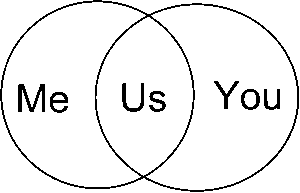
Our primary relationship is with our self, therefore the person we most communicate with, engage with, relate with is ourselves, affecting our perception and attitude, self-worth (i.e. "I have a relationship with me, with you") - see also No Longer Abandoning Us. Building a healthy relationship with ourself, having empathy for us, tuning into ourselves - our "being" - enables us to tune into others - their own "human-beingness", have empathy for others. All of us have a public life, which we show to the world, a private life, which we show to some, a secret life of our innermost world, some of which we choose to share and some of which we keep to ourselves. Being our own supportive friend to ourself, self-love is important. And how at ease we are, the way we talk to ourselves, what inspires us (and what doesn't, e.g. our self-critic), our values and a range of other internal factors (including mentalising, listening to ourselves, will towards self-expression) may shape our communication style. Our relationship also teaches us who we are. And our relationship style is affected by our earliest significant relationship in the first years of our life - our early connections and bonding patterns. We are continuously learning about connections and communication skills in our adult life - building rapport, being authentic, real, honest, strong yet vulnerable - trusting ourself and others, so we can self-disclose and are committed to each other's development, growth. And these qualities also help us effectively manage conflict, rather than having self-sabotaging reactions. (See also Self-Responsibility - Building A Healthy Relationship With Ourself) Tuning into ourselves - our being, having empathy for ourselves, enables us to tune into others - their being, have empathy for them.
We must deeply know others through what we know about ourselves.
Listening & Learning About Ourselves, Each Other Learning to listen and understand ourself (bracketing aside our own agenda), enables us to listen and understand the other, and is paramount in healthy relationship.
Relationship Choreography, How We Engage In Conversation With Good Faith - Styles Of Relating, Relating States When we greet someone, we can choose whether we are welcoming or wait to be welcomed first, and this may be linked to our intent to give or get, whether we hope others will make us feel safe. The tone of our relating state begins very early. We can change the music of our relationship dance and how we engage (see also What We May Need To Learn Through The Dynamics Of Our Relationship System). When our interactions through rigid relating states become fundamental to us, we and others may struggle. And when we are aware we are dipping in and out of relating states it may be easier to connect with others (even though we tend to have a bias or "favourite" state of relating). We all have the potential to hold on to ingrained related states, have certain conscious, unconscious biases (see also Repetition Compulsion), as if they are our template. (Our unhelpful habits or addictions may bring out a different relating state.) We may want to explore and discover new ways of relating outside different to previous patterns by making small changes to the relating states we are in, stepping in and out of other ones and these adjustments can affect the quality of our relating, connectedness with others and ourself. We may want to move in and out of relating states as they ebb and flow flexibly changing and responding to different circumstances and constantly adapting to different roles and the people we meet - partner, parent, sibling, child, friend, peer, work colleague, acquaintance, neighbour, authority, online interacting, etc. alongside different personality types in us and others. To maximise effective communication it helps to understand our and others' communication style. This also minimises frustration and misunderstanding. We all have different relating styles. Some like lots of details (how people think and feel, things work, whereas others like coming to the point (be more factual, literal) - see also Emotional Dependence - Dance Between Emotionally Dismissive, Avoidant & Emotionally Dependent Partner. One framework of looking at conversations is viewing them as clarification and confirmation, and when we and others are willing to be curious with benevolence and compassion when holding different points of view, we can both expand, exploring, establishing the truth of opinions through reasoned argument - sharing these together, creating something new from the dialogue, another opinion - dialectics. This creates good faith conversations through sincere mutual spirit of enquiry, free to navigate around the to-and-fro of challenges, ideas (that may be better than ours). This allows us to revisit our own unsound ideas of low quality. If any of us don't value disagreement or good faith we may need to disengage the conversation, especially if one of us becomes self-righteous, unable to own our flaws. Yet when we are able to sympathise with our common struggles as human beings to articulate our place in the world within the limitation of words, breathe meaning into them it can be illuminating, hold value and make sense. Holding good faith creates common ground, making room for disagreement by exchanging thoughts and information, rather than instructions (see also Healthy Arguments). It needs us to drop our ego, allowing for the privilege of being wrong and not knowing.
Action has meaning only in relationship; without understanding relationship, action on any level will only breed conflict...Krishnamurti
The understanding of relationship is infinitely more important than the search for any plan of action.
Our Relating State Influences We may be unaware how influential we are - whether it's positive or negative. We may want to positively affect others - not by making people do what we want them to do, but bringing out the best in them, as well as ourself. It is situations themselves that can render us feeling either "stressed and wanting" (which can trigger our fight, flight, freeze mechanism) or "comfortable and satisfied" which influences our relating state. Other factors which shape our relating state may also be linked to our early bonding patterns, how safe and secure we feel, that we have boundaries about what does and doesn't affect us, whether or not we have choice in our actions and some control in being able to change things if we want to, how the world and people around us respond, that we feel valued and loved. Our narrative, script, the scenarios we play out, roles we take on and defensive strategies also influence our relating state and disidentifying from what is unhelpful may support us. In our relationships we may be familiar with getting caught in some sort of drama triangle (see also As If We Are In A Drama) and sometimes we may feel alone in our relationship, marriage because of different relating states we are in. Understanding each other's relating states, articulating them and our needs, may help us relate and engage differently and not take our partner's needs so personally (see also Relationship Style, Attachment Patterns). The mode of interaction we are in and need for dependence, independence, interdependence and codependence also influences our relating states - where we are coming from and how we relate with others in any given state of "dependence". (See also Influencing Our Thoughts, Beliefs)
Tell me and I forget, teach me and I remember, involve me and I learn.Benjamin Franklin
"We Can't Communicate" - Making Others, Our Partner Responsible For Our Feelings Relationship gives us an opportunity to learn about ourselves, heal. Communicating on the surface, some of us may procrastinate on saying things to others, our partner (see also Accessing Our Feelings, Healthily Expressing Feelings, Fully Feeling Our Feelings - Allowing Our Emotions To Flow). We may struggle to communicate with our partner which may have built up over time (and may also be linked to our own relationship style and way of loving). The relationship dynamics between us and our partner can also be explored in the relationship therapy. We may try to get people to understand things from our point of view, project onto others, trying to make our partner responsible for our feelings. Yet underneath this may be our need to control them, to listen to us, to understand things through our point of view, that they should change, do and see things our way. Also, we may have to watch for communicating our feelings as a way of making our partner responsible for them - that this should change for both of us to feel OK or do something to take responsibility for our own feelings. And our partner may energetically pick up that we are using our feelings as a form of control or blame. We may show this by expressing how we feel and making them responsible for our own feelings, blaming them that they have to change or do something, so we feel OK. It can help to say something like "You can't be responsible for my feelings, but this what it made me feel". Having regular couples check-ins can support communication in the relationship, as can learning what loving actions we need to take. (It may be worth reminding ourselves that in the beginning of our relationship we weren't making our partner responsible for our feelings, nor trying to control them, that our focus was about sharing ourself and learning about each other. And we may need to return to this as we each take responsibility for our own feelings, let go of trying to control the other and move into an intention to learn about each other.) (See also Towards Making The Relationship Or Marriage Work)

Good, effective communication may not resolve issues but no issues can be resolved without it and when we both communicate well, spend quality time together, honouring each other, holding a sacred couple space, are willing to have awkward, difficult conversations, it can be like the oxygen for our relationship, affecting the footprints we make and leave behind. (And knowing when it's best to step in and get involved, guide or help and knowing when it's better to step back, get out of the way and give others space to discover and do things for themselves is a skill.) The power of touch, eye contact, body language, energy we radiate, intention, love we have can create trust and may be far more effective than the impact of words, as can preparing the right conditions, being curious, finding out what the other means behind their words - why it is important to them. We can often speak in code, have unspoken expectations, assumptions, including in our relationship. And when we do speak, good communication requires preparing the ground (which isn't always possible) being accessible and engaged, transparent, truthful and emotionally honest (owning our own projections), holding our self and the other in mind, being open to learning about each other, empathic, accessible and willing to engage, mirroring back that we have listened and heard what's being communicated, validating we've understood and made sense of this, having clarity. (See also Loving Someone When It's Hard - Opening Our Heart To Others, Even When Things Are Difficult)
I've learned that people will forget what you said, people will forget what you did,Maya Angelou
but people will never forget how you made them feel.

Changes In The Way We Communicate Wanting to make love last, we may love our partner, yet how we interact may no longer be working and we may struggle to respond any differently now (e.g. one of us may attack, the other may withdraw, as in our own ways we both struggle to be open and relate). Good communication can flow naturally when our intention is to learn rather than control. When couples first meet, eager to learn about each other, they may initially talk freely, emotionally sharing and listening to each other without the need to control or trying to get something from each other (e.g. understanding, acceptance, attention, time, approval, affection, sex). Yet as the relationship evolves, one or both partners may become uncommunicative or state "we can't communicate" (as if we make each other responsible for our feelings). We can say something like "You can' be responsible for my feelings, but this is what it made me feel". Power struggles may emerge when one of us feels used because they give a lot, and the other resists trying to be controlled by all this giving. Both can feel resentful. We can get caught in familiar knots of relating unproductively. Communication in the relationship or marriage can be stuck in other ways, as if we are going around in circles, missing each other. Our willingness and need to learn - often present in the beginning (about ourselves and our partner) gets lost. It can be continuous challenge to learn about us and our partner, taking responsibility for our own responses, to love without controlling. Keeping the flow of communication open and clear may be important (supported by having regular couple check=ins), as can working together in order to find solutions, agreeing to disagree and sticking to one issue at a time. Having a willingness to talk about tough and significant issues may be challenging, as can saying things, hearing things differently. The attitude and intention we hold can go a long way in affecting how we communicate. Relationship counselling and marriage counselling can support you in discovering your own intentions. Some of these may be unconscious ones.

Our Attitude, Emotions Caught in our defensive ego, many of us can get stuck on the issue at hand or try to be right, persuade others. The attitude and emotions we bring into the relationship supports communication and through our emotions we can influence changing the music of our relationship dance (see also Emotional Engagement, Emotional Connection, Emotional Intimacy). Some may believe we can't express certain emotions, fearing the response we may get (see also Not Wanting To Let People Down - Fear Of Disappointing, Hurting, Upsetting Or Annoying Others, Our Partner). This may also be related to patterns, wounds from our past. We may be holding onto unhelpful, negative attitudes. Being in touch with our emotions, acknowledging them, emotionally sharing them with our partner may be important as we embark upon a path of courage. The relationship counselling and marriage therapy can explore our attitudes and their impact.
Checking In What's Going On For Us Noticing what's going on for us inside, including whether we are tired, stressed or anxious, fearful, low or angry, and noticing how we may treat others (including our own relating state and role we take on) may help us before we engage. Dropping our fears, things that scare us, may enable us to engage better with our partner, as may reflecting on the meaning of any imaginary conversations we have with them. And our partner may also hold up a mirror to us, to aspects of ourselves we would rather ignore.
Relationship communication problems can on the surface mean that our partner isn't listening or understanding us from our point of view. Yet underneath we may have an agenda of wanting our partner to understand things our way, or change in ways we want them to. When they don't change, we may blame, criticise or seek sympathy in order to control (see also The Complainer). We may want to punish our partner. If we communicate our feelings in ways to make our partner responsible for them, that they need to change in order for us to be OK, they are likely to respond negatively. Being complete within, derived from our own emotional, mental and physical strengths can enable us to be in a strong position to communicate well and regular couple check-ins for both of us in the couple, can support us. The marriage counselling or relationship therapy can be a space to discuss your own struggles with communication in a relationship. (See also Being Relationship-Ready & Sharing (Not Necessarily Agreeing With) Each Other's Vision Of The Kind Of Deep & Meaningful Relationship, Marriage We Really Want)
Communication Blocks We all have relationship communication blocks from time to time, and this can be considered in the relationship counselling or marriage counselling. Some issues or conflicts seem to go round and round, like a broken record, indicating a block in the way we communicate. We may have got stuck in a rigid way of relating, as if this is the only way of relating (see also Challenges To The Way We Communicate As A Couple). For some their relationship communication blocks may be connected to what's happening inside us - our own difficult feelings, like anxiety, fear, loneliness, emptiness, helplessness or heartache. This is often symptomised by bringing up the same issues over and over again, which can become a heart sink feeling for either or both partners. One partner may withhold, withdraw, be unresponsive. What qualities we bring to the table (e.g. our light-heartedness, willingness to build rapport, etc.) affects the quality of interactions. Our communication blocks may also point to what we communicate unconsciously (see Unconscious Communication In Relationship Or Marriage).

Communication Impasse There may be an impasse and relationship communication breakdown, as if at times the two of us speak different languages (we may also have ignored our dark side) and it can be hard to see our way through this (see also Relationship Problems & Marriage Problems - Counselling London). The marriage counselling and relationship therapy can be a space to talk about this, any stuckness, staleness, neglect and apathy in the relationship, look at our options. Withdrawing, withholding or fighting can replace being honest and intimate with each other. "What's the point of talking?" can be our attitude (see also Challenges To The Way We Communicate As A Couple). What started off as sharing and giving, can get replaced by only wanting something from our partner. We may begin to make our partner responsible for our feelings by trying to control them. We can each find controlling ways to get what we want from our partner - understanding, approval, acceptance, attention, affection, sex. We may have become undermining, possessive, overdemanding or abusive. Through power struggles of controlling and resisting, a couple may fight tooth and nail, or one party may give in, ending up resentful or used. One of us may become very passive. It can be hard to lay down our weapons and discuss matters rationally, being sensitive to each other's vulnerabilities in order to communicate respectfully and listen openly. When we are annoyed, compounded by the tone of our words, our heart becomes more distant and we have a choice to maintain this distance or be open-hearted, become physically closer, and as we do, our tone may soften, enabling us to reconnect with our partner, more able to hear them. (See also Scapegoating, Controlling Behaviour, Blaming & Criticism - Counselling London)
Holding On To Things Some of us may hold on to things, resentments, grudges, keep scores, finding it hard to let go. Disappointment may have set in, especially if we struggle to love the bits in our partner we find difficult. Letting go of what we need to, including our defensive ego, may be important. We can fail to see our partner as they actually are when we hold on to our defensiveness, resentment, sarcasm, cynicism or spitefulness. What else we may hold on to may also be uncovered in the marriage counselling or relationship counselling. Some of us may not have communicated to our partner our sensitivities, what and why things affect us or the efforts we have made towards them, because we care - giving them the opportunity to take this information into consideration.
Relationship Communication - Our Intentions The quality of energy between two people is experienced differently, determined by intent and our intention to control to get what we need (e.g. love) and avoid pain or to give and share love How we talk about what's important to us, our issues, whether our intent is to protect, control or learn without being defended, controlling or protected affects the ability to learn what we need to learn. As we open to get to know our own judgements, defensiveness, blame, anger, resistance, withholding and withdrawal, taking responsibility for these, a deeper connection and intimacy with our partner usually increases, as we become accountable for our own fears, beliefs, controlling behaviour, so how we are with our intention and openness can help prepare the ground to then talk about our issues and what's important to us. (See also Willpower - Setting Our Intention) The conscious and unconscious intentions we hold (when for example we want to grow closer (see also Opening Up Dialogue Between Each Other), feel more connected, touch or be touched), impact upon the outcome. We may for example fear not getting it right for our partner, not pleasing them, which can bring up primitive emotions, anger (see also Love & Approval).
Watch your thoughts, they become words;Frank Outlaw (also attributed to Lao Tzu)
watch your words, they become actions;
watch your actions, they become habits;
watch your habits, they become character;
watch your character, for it becomes your destiny.

Impact Of What We Say, The Words We Use Not everything can be articulated, explained through the limitation of words. Sometimes, talking things out can replace emotional connection, intimacy, loving touch. (And we get to know others, not just through talking, but through being present - see also Loving Someone When It's Hard - Opening Our Heart To Others, Even When Things Are Difficult - just being.) Yet the words we use are important, have an impact (as George Orwell says "If liberty means anything at all, it means the right to tell people what they do not want to hear"). We can't assume that what is in our head can be understood by others. Words can be slippery, with different meanings to each of us. (And if we are in a relationship, just because there is love between us, we can't assume that we can understand everything without words see also Expecting, Assuming, Needing Our Partner Or The Relationship To Meet All Our Needs). How we express ourself (e.g. our tone, inference, loving words) and the body language we use has an effect, touches others, as does our intention (see also Relationship Communication - Our Intentions), attitude emotion behind our words, thoughts and feelings. Being in touch with what really matters, how we say it, our relationship style, affects others. Choosing the right time and place to speak may be important. Do we really share what's important to us or talk just to make a noise - talk a lot yet say very little? Rather than using the same words repeatedly - overusing them in conversations, we may want to play with words, so we make our conversations more varied, vivid, and colourful. We may need to remember that relationship communication is a two-way flow, therefore we can cut down unnecessary things to say (see also Over-Talking, Oversharing, Floodlighting - Whether Or Not To Share Our Feelings - Taking Responsibility & Care For Our Feelings, Over-Talking, Oversharing - Balance Between Withholding Or Sharing All Our Thoughts), yet say the things we want to say in respectful, non-blaming ways, taking responsibility for the weight of words, being harsh or soothing, whether our words need to be sorrowful or expressing our joy (see also Tactful & Truthful Approach). What we don't say, yet would like to, whether the impact of what we say has, adds value (see also Self-Chosen Values), can also be explored in the marriage counselling and relationship counselling. What we say or do in the moment doesn't necessarily define us in that moment, but more the impact of energy of our intent, with how we speak and act (for we respond to each other's energy more than actions or exact words). Words carry a weight and once expressed can't be recalled. Words can encourage or discourage - they can hurt or comfort. Each word sent or received can have different triggers, meaning, emphasis. We may want to weigh our words, make them count before they spill out - choosing them carefully. The words we use - the negative and positive terms we use (including images, emojis ☺) and how we use them matters - they count and carry a weight. (this includes texting, emailing, social media, online chat, internet communication). Do we intend to encourage or discourage, hurt or comfort others? Checking if we need to exaggerate, emphasise, accentuate, carefully choosing our words - weighing them up, thoughtfully wondering what effect they have before we speak to them, checking if we are speaking from fear or love, kindness, being truthful and emotionally honest, matching our deeds with our words may help (see also Giving Feedback To Others). Also, practicing the art of surrender, release and liberation so we don't always have to hold onto the real thought - the one that is telling it like it is (which can keep us where we are) can enable us to reach for a thought that feels best. So, if we don't like telling it how it is, we can tell it how we want it to be. And as we do this enough, we may feel it like we want it to be and when we feel this thought like we want to, it has the potential to become like we want it to be (see also Becoming Our Vision, Visualisation, Envisioning The Reality We Wish To Be True). We may also want to share (not necessarily agreeing with) each other's vision of the kind of deep & meaningful relationship, marriage we really want.
Remember not only to say the right thing in the right place, but far more difficult still,Benjamin Franklin
to leave unsaid the wrong thing at the tempting moment.
Being Vague, Being Clear When We Need To Understanding occasions when it's best to be clear and when we need to be vague may help us. Some of us may have difficulties being in touch with, asking for what we need or letting others, our partner know what works best for us. We may also fear hurting, upsetting, annoying them. Effective relationship communication includes being closer with each other by being clear. Clarifying what we feel, think, need supports our self-worth and this can be included in the relationship therapy or marriage counselling. We can't assume others, our partner know what we need or want, that they will understand us. Rather than speak in general terms, like asking our partner to be considerate, respectful, etc. we may want to consider using specific examples, e.g. that we prefer to be properly listened to, be given choices, etc. Relationship honesty - a honest communication between each other can enable the relationship to thrive, be more alive. It may help to be precise, positive with clarity about what we need or want, set clear boundaries, be direct, without being blunt or rude, so we are able to communicate the details, leaving little room for misinterpretations, e.g. "I have to honour myself and speak my truth...", "My reality is ..." . This can promote honesty in our relationship. At times revealing all the details in one go may be too much, stressful. On occasions we may choose to be vague about things, because this serves us, saves time, doesn't necessarily have to hurt people's feelings and with certain people can limit their interference in our life. Yet these same people may take advantage of blurred boundaries, unclear expectations or become easily hurt. However, when we are being vague, we may assume that others are on our wave length or that we should never hurt their feelings (which might be impossible at times). Being vague also has the disadvantage of being second guessed, where misunderstandings can be made, ending up with vague results. What being clear means for us, alongside taking our own loving action in difficult situations, can be included in the relate counselling or relate therapy.
Planning How We Communicate Communication is relational, about connection and curiosity about each other. It may help to think about what outcome we want, being clear about what we want to communicate, how and when we want to do this without blame, yet with our emotional courage. (See also Willingness To Have Awkward, Difficult Conversations)
Challenges To The Way We Communicate As A Couple A key challenge may be to genuinely attend to, understand and accept our partner. How to be open for things to be said, clearly state our feelings, develop thick skins, so we are not always hurt, may also be a need (see also Communication Impasse). To communicate well both need to drop their agenda to control or get the other person to change and become open to learning about each other's feelings and point of view. And we may need to lovingly disengage when we are feeling sad, lonely, frustrated, helpless over the interaction. We might need to go back to our partner later to see if they're open to learning with us, so the issues can be more easily resolved. To really listen may be important. We may want to no longer allow faulty communication to fester, find our way through this together, so trust can be built. A further challenge may be how to successfully manage setbacks in loving ways. Being supportive through tolerance, compromise, acceptance, with a sense of humour may help each other to open and lighten up, be more human. You may want to look at how you communicate as a couple (e.g. who pushes, who pulls, how we are open, closed, subversive, covert or overt, passive or active, etc). Building the relationship, so it is enriched, may be important, as may being kind, respectful, understanding of our partner in their energy, words and deeds, treating them well. How we make quality time for each other, make decisions, helping one another to get each other's needs met may also be important. In the relationship counselling and marriage psychotherapy you may also want to talk about how you do and don't express your love for your partner. What enables you to create a relationship or marriage that can be sustained, loving and enduring can also be explored in the relate counselling and relate therapy. In "The Four Agreements" Don Miguel Ruiz speaks of the necessity to speak with integrity, being impeccable with words in the direction of love and truth, saying only what we mean, not taking anything personally, nor making any assumptions - having courage to ask questions, clearly express what we really want, always doing our best. (See also Giving Feedback To Others)
If liberty means anything at all, it means the right to tell people what they do not want to hear.George Orwell
What May Be Happening Between Us
Taking Things So Personally We affect and impact on others as they do on us. We may take personally people's unloving behaviour towards us. Whatever we experience, and what others do, affects us, can impact on us, yet we don't have to take what others say, or how they behave, their dramas, personally - that is about them, because nothing others do is because of us. What others say and do is their projection of their own reality, assumptions, dreams, etc. We are not responsible for others' emotions. We may need to become immune to others' opinions, actions, so we don't become so preoccupied by this, a victim of unnecessary suffering and more able to experience peace of mind. We need to be resilient, reflective and take personal responsibility when we choose not to take on any unhealthy guilt or take things so extremely personally (often from our wounded self). And just because others, our partner has a certain mood, behaves in a certain way, says, or does certain things, we can't make assumptions about what it means without checking this out. We may need to practice validating, reassuring our self, alongside noticing what it is in us that gets triggered and whether we are being self-judgemental. We can get caught up in things that aren't really important. The relationship counselling can explore this alongside our own expectations, needs, sensitivities, old hurt, pain or struggles to grow up, etc. The therapy can also explore the aspect of our Self, beyond our ego, defensive roles, where we can observe from this disidentified essence of who we are, where nothing is personal through our observing self. Relationship rejection can be painful and deeply affect us, yet we may need to learn not to take rejections so personally.
More suffering comes into the world by people taking offence than by people intending to give offence.Ken Keyes
In Our Own World - Making Everything About Us Some of us may have a tendency to make most conversations about us. We may do this in many ways. When we talk, our conversation may be like a one-way monologue, continuously finding ways to bring the conversation back to us. Filling up the space, we may talk, yet not allow space for responses back (see also Overtalking, Addicted to Talking). Caught in our own sensitivities, without seeing others, the bigger picture we may make what's happening around us exclusively about us, living as if only we count. So caught up in ourself and in what we have to say, we may not even notice if others are listening. When others speak, we may not really be listening or struggle to constructively comment on anything said. Sometimes we may enquire about others, our partner, yet not really be interested, taking over the conversation again before they get their words out. Others may talk, as if trying to entertain. It can be as if we talk into an empty vessel, that we try to fill up with words. If we stop talking, awkward silences may emerge. Being in tune with both us, others and the wider world may be challenging.
On The Receiving End Of Our Partner Making Everything About Them Some of us may have gone along with one-way monologues in our relationship, marriage. We may feel empty inside, find it difficult to articulate things ourself, fear upsetting our partner, or try to please them by hearing their words without really involving much of ourself. We may have allowed this, even set this up, yet also feel uncomfortable with this. When we are on the receiving end of a one way conversation, we may feel lonely inside, unseen, unappreciated, if our partner doesn't show interest, ask questions about us (they may be living as if only they count). If we want dialogue and two-way conversation, we may also need to speak up for ourself, be curious, choose not to spend time with people who don't respond or only talk about themselves. We may want to consider asking our partner why they are not engaging with us, telling them how we enjoy two-way conversations, that they rarely ask about us, listen to us, can shift things, asking them what's going on for them, because they seem to be doing all the talking may open up dialogue towards a different way of relating.

Opening Up Dialogue Between Each Other Amongst other things, conversations are about confirmation and clarification. When willing to share conversation, simply discuss together, be willing to learn about each other, things may flow easier. Two-way conversations, where both are curious, dynamic in their interactions, listening well, responding in caring ways, asking questions to deepen interaction can enhance intimacy. Moving back and forth, switching seamlessly between talking and caring, listening, can deepen conversations. We may want to be more relaxed, curious about each other and put more emphasis on listening, being close and a willingness to understand each other's point of view, rather than the need to change our partner, be right or win (see also Competitiveness In The Relationship Or Marriage). Finding strength in each other's virtues, and the willingness to at times sacrifice for the sake of being a couple, may be a challenge for some. The relationship therapy and marriage counselling may also investigate, how dialogue can be more central to how we relate, are at ease, so there is our own world, our partner's world and our world together as a couple (see also How We See The World). Having an intent to learn, letting our partner know what we're feeling, that we want to explore any reasons behind this, what may be going on for us, them or between us, that makes it hard for us to be appreciated, can move things forward. We may for example learn more about us, that we find it hard to receive appreciation or there may be an aspect of our behaviour, which impacts on our partner's resistance. Maybe our partner doesn't appreciate themselves and if that is the case they will be unable to appreciate us (see also Appreciation In Our Relationship, Marriage). Opening up this dialogue may lead to new awareness for both us and our partner if we are both open to learning, caring, kind to ourselves and our partner. In opening up the dialogue between us, when we are open to talk about issues in a kind and caring way, not only towards our partner but also towards us, an intimate atmosphere can be created. Improving dialogue between us and our partner can be a container for difficulties to be discussed in healthier ways. (See also Having Good Conversations & Dialectics)
Patterns Of Communication In Relationships There may be patterns of responding in relationships, which are familiar to us but no longer work, and these can be aired in the relationship counselling and marriage therapy. Constant bickering, displaying negative body language or facial expressions (e.g. conveying resistance, boredom, etc.) and trying to win arguments, struggling to apologise may not be conducive. Letting go of our pride, learning to be humble, give and take may be a challenge. Some of us may be too afraid or ashamed to say what we want to say. We may take on a role of fixing things or trying to please our partner to avoid deepening the relationship. Relationship honesty - a honest communication between each other can enable the relationship to thrive, be more alive. The relate counselling, relate therapy can help explore your own patterns of communication. The relationship counselling may also explore our relationship style.
Open Communication Effective communication, opening up dialogue between each other, using our emotional awareness and skills in relationships may be important to us. To varying degrees we are learning all the time about the quality of human interaction and engagement, whether to be open or closed. We may want to meet each other without wearing masks and come from a strong place, be more open to each other. It may be important for some of us to find ways so we can move from gridlock to dialogue with open communication, respect and appreciation, being in real contact with our partner, valuing them, so we protect our relationship from our defensive egos. Having some ground rules may support each other. How we do and how we don't close the space down in our relationship or marriage, how we do what we need to do to improve the level of communication in the relationship, loving aspects of our partner we find hard to love, can also be explored in the marriage counselling and relationship psychotherapy. (See also Willingness To Have Awkward, Difficult Conversations)
Communicating Differently Skilled in other areas of our life we may struggle with relating. Sometimes rather than blaming our partner, which will create defensiveness in them, we may want to consider taking ownership of our problem by expressing our own concern or feelings, rather than rushing straight to criticising them for what they do (see also Preparing The Ground, Opening Up The Space, Creating The Conditions, Setting The Scene). Relationship counselling can help unravel things and explore how you relate. This may include issues of compliance, resistance, conflict, resentment, trust, being true and honest in a way that meets our partner. Communication is not just about talking and clearly getting our point across and is so much more than words. Creating a meaningful connection (see also Emotional Engagement, Emotional Connection, Emotional Intimacy) in our interactions and real understanding may be important. The relationship counselling and marriage counselling may also consider the challenges of really communicating, considering the essence of what is going on, opening up if that is our choice (and what this means for us), how we express our emotional needs and dreams, and what happens to our desire to resolve issues. Creating loving compromise can sometimes be a struggle, and agreeing to disagree can be a solution for some. Being and relating with others may also evoke in us existential struggles. relationship counselling and marriage therapy can help with these and other communication issues.
Conflict In The Relationship Or Marriage
Your conflicts, all the difficult things, the problematic situations in your life are not chance or haphazard. They are actually yours. They are specifically yours, designed specifically for you by a part of you that loves you more than anything else. The part of you that loves you more than anything else has created roadblocks to lead you to yourself. You are not going in the right direction unless there is something pricking you in the side, telling you, "Look here! This way!" That part of you loves you so much that it doesn’t want you to lose the chance. It will go to extreme measures to wake you up, it will make you suffer greatly if you don’t listen. What else can it do? That is its purpose.A.H.Almaas

Responding To Relationship Conflicts Differently We may love our partner but not be turned on by them for many reasons, especially if they come from a needy place, pulling on us to have sex and we may resent this. Most of us won't feel safe in a relationship until conflict is responded to, handled well. (It is said that we don't really know someone until we have conflict an how each other respond. Some may use anger, compliance, resistance or withdrawal, staying close for days, weeks. Others may sweep things under the carpet, as if nothing has happened, and remain distant until the other apologises.) Good communication in a relationship includes some levels of conflict, healthy arguments, however small. Differences (including our expectations, disagreements and conflicts) may at times be unavoidable. We all have our ways of responding to conflict and some of us may try to avoid any conflict, confrontation, remarking that "we never have any conflict" as if the relationship has become conflict avoidant, yet all relationships have conflict. When any two people bring their own issues, history, backgrounds, assumptions, expectations, personalities and personal struggles, there will be inevitable conflict from time to time. Differences in relationships will always emerge. Difference of opinion will always be part of a relationship or marriage. Many of us fear conflict in the relationship, or even disagreement. Yet it is not conflict itself, which is damaging, but how we respond to it. Recognising potential difficult situations before they escalate may support us, alongside avoiding blame, defensiveness (where some of our own experiences of these may date back to childhood). We may respond to any disagreement as devastating (see Not Wanting To Let People Down - Fear Of Disappointing, Hurting, Upsetting Or Annoying Others, Our Partner). Yet becoming intimate as a couple usually involves conflict along the way. If we are lonely inside we may find it hard to respond to any relationship conflict or confrontation. Those of us who struggle with conflict in general may struggle with their relationship or marriage, if we are unable to relax, not react or become so embarrassed. Relationship conflicts handled well, separating out the problem from the person, being collaborative, remembering we are a team, accommodating can give the relationship or marriage the opportunity to grow and deepen, bringing us closely together as a couple and being a team together, there for one another. If both of us want to honestly resolve a conflict, (without simply getting our own way), taking responsibility for our own role can help, focusing our effort on the aspect where we have control. In the marriage counselling and relationship counselling we can also look at what conflicts mean to us and how else we can respond to them. There may be occasions when we or our partner become full of rage developing into a fight and things become hurtful, when the most appropriate response may be to disengage, because resolution and learning are not possible. Doing our inner work on our feelings, being clear what triggered us into reaction and being open to learning, so we can come back together, talk about things with an open intent to learn. As we realise everyone is responsible and we take blame out of ourself, others, out of the picture we and the relationship has the potential to heal.
Life is very short, and there's no timeJohn Lennon, Paul McCartney
For fussing and fighting, my friend.
I have always thought that it's a crime.
Fixed Roles & Styles Of Responding To Conflict Some of us may be responding to conflict in familiar ways, which no longer help us (see also Drama Triangle of Victim, Rescuer, Persecutor). Uncentred, we may abandon ourselves or not take a stand, speak our truth for what we believe is right for us, when the time is right or opportunity arises. Sometimes, doing the opposite of what we would normally do, changing our role - what we've usually said, done, can allow something new to emerge. Stepping back from our usual ways of responding, especially in negative ways at times can allow the space for our partner to step into. Both of us may have found ways to traumatise each other (which when unpacked, may have nothing to do with our partner and more to do with our conflict style, relationship style).

What May Be Happening Inside Effective relationship communication includes knowing what keeps us safe in our relationship, being aware what's happening inside of us, including unhealed wounds in us that can be triggered by others, and often our partner (see also Painbody Examples, Experiences In Relationships). The marriage counselling and relationship therapy may also take into consideration not just the relationship conflicts between us and our partner (or others), but also our internal conflicts, some of which may be related to our own attachment, relationship style. Intolerance may spread through the relationship - see also Highly Sensitive People Counselling - Scale Of Sensitivities - How Our Buttons May Get Pressed, Especially In Relationships. (Conflicts can be like ice bergs, where what we initially see and understand, may be at surface level and uncovering our emotions, expectations, looking beyond words and actions, can help us see a bigger picture, as we take time to reflect.) We may struggle to be in touch with and ask for what we need, speak up for ourselves, let others, our partner know what works best for us. We may find it hard to get our point across or find it difficult to really hear our partner, practice the art of toleration - dropping our defensive ego, loving all of them, even the bits we find difficult (see also Opening Up Dialogue Between Each Other & Having Good Conversations & Dialectics). We may want to avoid the role we play in any emotionally polluted environment, full of negative thoughts or feelings: criticism, contempt, casual insult, sarcasm, blame and complaints, guilt and shame, hurt and pain, holding grudges, old and current grievances, anger, retaliation, "point scoring", try to be right, fear or depression. Some of us may withhold, withdraw. (See also Giving Feedback To Others)
The Meanings We Make Of Conflicts or Disagreements We all have our triggers for arguing - sometimes it's just our differences we allow to get in the way, and when our partner does something or says something, we can react. The relationship counselling or marriage counselling can look at these. We all have different needs, e.g. sexual needs, libido. Where relationship conflict and tensions occur, it can be easy to conclude that "we simply don't get on together" and for some this may be accurate, yet usually there are other considerations, e.g. we can become disillusioned, believing this is all to do with our partner or the relationship. We may struggle with how to disagree yet find ways to talk together without speaking harshly or trying to hurt our partner. The meaning of what is said can be twisted. Rows can develop. What we make of things, how we see them, is our interpretation, not necessary a fact. Conflict with our partner can also point to unresolved conflict within us, which can be included in the therapy work. Aspects of us we hard find to see, deny, disown or repress, can get projected onto our partner (some of them unconsciously) and be energy sapping, e.g. our stress, fear, anxiety, anger or unmet love needs, etc. We may not be able to avoid pain and suffering (see also Sometimes when there are differences, disagreements), how we respond to this and how free we are to disagree, maybe our challenge, alongside valuing our relationship and speaking from our heart - positively utilising this source of our energy, and these can be explored in the relate counselling. (See also What We, Others Observe - Giving, Receiving Feedback To & From Others, Our Partner)
Agreeing To Disagree Arguing is one way of responding to disagreements (as may using "should", "shouldn't", "ought", "must", "never", "always" beliefs) and because we disagree, we don't have to be disagreeable (see also Expecting, Assuming, Needing Our Partner Or The Relationship To Meet All Our Needs). Relationships include difference in opinion and agreeing to disagree can be only a first step towards healing, reconciliation and can strengthen the relationship. Sometimes though agreeing to disagree can lead to stuckness, a "wet compromise", which pleases no one, especially when we try to never disagree - avoid all conflict. Each of us may be entrenched in our own patterns and we can't always understand another's reality yet can find common ground. We don't have to agree with others, yet engaging in others' dilemmas, struggles - their inner world, can be all we can do. Moving and staying in this hard place, remaining focused to see a bit more what we are seeing now through considering each other's position, listening with open-hearted energy, listen to the essence of what is going on, can open up space for a third stance - between us and the other, which has little to do with wrong or right (see also Having A Healthy Fight In The Relationship Or Marriage).
I disagree with what you say, but I will defend to the death your right to say it.Evelyn Beatrice Hall
Trying To Be Right, Needing To Be Right, Better, Persuade Others, Our Partner Protecting our ego, being right, not being rejected, controlled by others may become more important than being loving to ourself and others. We may have shut down our heart, struggle to love the aspects of our partner we find difficult to love. What can start off as offering an idea, opinion, to others, our partner, can end up in conflict, because we are trying to make them, tell them to accept what we are saying, expecting them to do so (see also Trying To Get Others On-Board). As if we are caught in a drama, relationship counselling and marriage therapy can look at why it is so important that we must win, be right, need to persuade our partner (see also Control Issues, Controlling Behaviour In The Relationship). It can be a nice feeling to be right, yet it may be futile spending a lot of effort trying to prove we are right, win an argument or prove our partner wrong. We may exaggerate, overemphasise things, struggle to let go of our need to be right, stop trying to change our partner, convincing them that we are right, to see things the way we do. Staying open to other possibilities, discussing things together, so there is better understanding, expressing our core needs can help for some couples. Often we want exactly the same things, connection, closeness, love. A wounded part of us may be devoted to being right, having to win, be afraid of learning and loving, yet another part of us can choose whether to be loving and part of a team. It can be a challenge to simply appreciate our partner the way they are, and at the same time respond to our anxiety if they don't agree with us or when we aren't met in the way we need to be, so we can let go of our expectations in everything we offer, yet do so with our own confidence, humility. Paradoxically we may discover that others will more likely appreciate and accept what we offer as we value harmony over having to be right, being a team over being super-competitive - supporting each other towards win-win solutions. A tactful approach may be missing. The counselling can also explore our attitude, emotions, what may be happening inside. (See also Differences Between Us & Our Partner)
Truth persuades by teaching, but does not teach by persuading.Quintus Septimius Tertullianus
Healthy Arguments Conflicts and arguments are part of any relationship and can be part of a healthy relationship. In fact in their absence things may be communicated unconsciously. No two people agree about everything, so disagreements are inevitable (which can be anxiety provoking in itself), especially when our old hooks, buttons get played out in our relationship (see also Highly Sensitive People Counselling - Scale Of Sensitivities - How Our Buttons May Get Pressed, Especially In Relationships). We don't necessarily have to turn disagreements into arguments, blaming or criticising our partner or necessarily have to be competitive (believing that arguments are win/lose scenarios, especially at the cost of the relationship), as they rarely achieve much and frequently waste our energy. With our good communication skills, we can view these challenges as opportunities in establishing a stronger relationship. Slowing down, calming ourself, creating a healthy atmosphere, valuing our relationship over the problem, acknowledging, accepting each other's differences, listening to our partner's point of view, putting our point across clearly, bringing our resources to work towards agreement on what we both want, may support us. Arguing is a normal process and often healthy. (See also Having Good Conversations & Dialectics<)
The course of true love never did run smooth.William Shakespeare
Dealing Effectively With Conflict
Repairing & Redirecting Things Differences, disagreements are inevitable in the relationship. "Rupture and repair" shows us that conflict is part of relationships, yet so is repair (see also Having A Healthy Fight In The Relationship Or Marriage). Taking charge of our own overload, the space to allow our own arousal levels to drop, keeping calm (yet experiencing our emotions without tying them in knots) despite stormy waters can be challenging. If tensions arise we need to find a way to coming back together when things have calmed, so we can really listen, own any damaging things we've said, forgive and be forgiven so we can move on. Keeping open lines of communication each day helps us as a couple as does the value of kindness, humour so things aren't stored up. We may want to utilise the relationship therapy or marriage counselling to find our ways to repair, redirect, reinvigorate our relationship or marriage. When we say things in negative ways, we can also say sorry for this, take some time out before we do any more damage. When our partner says things in damaging ways, we can let them know how we feel asking them to say it differently, or later on, taking responsibility for our own feelings, we could consider saying something like "You can't be responsible for my feelings, but this is what it made me feel" (see also On The Receiving End Of Blame, Control, Criticism - Considerations). We may want to feel secure in the relationship and find exits from negative cycles, apologise when we need to. The relationship counselling explores ways of disagreeing well so we no longer hold on to negative feelings towards someone, so our feelings no longer dominate our words. And practising dissolving our negative feelings - letting them go, developing neutral feelings (or better still warm, good feelings) towards others, our partner can also help us resolve conflict. We all mess up at times - we are human, and we always have a choice whether to clean up the mess. This may include reconnecting with someone we want to reconcile with, forgiving the other person, putting our ego aside, being open, honest, understanding, empathic and willing to make amends. Yet if the other person is unwilling to reconcile, we can give things time and space, as sometimes time can heal. The counselling can also explore how else we can keep our feelings (when we need to) in check at times. (See also Willingness To Have Awkward, Difficult Conversations)
Underlying Considerations We have no control over getting other person to be open, listen, understand, agree, care or accept. Getting on with others can be challenging at times. Practising accepting others and forgiving quickly, being as respectful and pleasant as we can or making compromises as well as standing our ground, can be considerations. We can't make others responsible for our feelings but can express something like "You can't be responsible for my feeling, but this is what it makes me feel". Healthy conflict resolution can be enhanced when we move away from winning or not losing and those involved are concerned with our own highest good and the highest good of others with an intent to be open to learn (as opposed to control). And our intent is the container and context, so we don't get stuck in the content, and it is this that can shift things. Finding out each other's needs - why this is important, what meaning it has for them, can be more effective than trying to persuade them. We all need help, especially if we have neglected ourself or are deluded in certain ways, have blind spots to certain aspects of us - our body, feelings, mind, sexuality, spirituality, behaviour, etc. Our personal relationship may be remote or stormy and sometimes creating conflict in the relationship may either be an attempt for excitement and to avoid intimacy. One or both of us may have got into the habit of looking for arguments which may need to be explored in the therapy. We may feel angry with our partner because they are doing what they want to do, instead of what we want them to do. Some of the conflict with our partner may be related to how we experienced ourselves from childhood, our negativity and insecurity, judgements and self-criticism. Difficulties in the relationship or marriage could be seen as a breakdown of boundaries - what's mine, what's yours and what's ours (see also Dependence, Independence, Interdependence, Codependence - Moving In & Out Of These States). Working out problems may rarely be helpful. When we talk about problems, we may just not see things the same way and neither of us may feel heard, understood because quite often we are trying to get the other person to see things our way. And instead of solving the problem, each of us may be trying to have control of how the other person see things, leading to frustration and more conflict. We may need to take loving action towards ourself and our partner, rather than judging us or them, moving towards compassionately accepting ourself and our partner. This requires practising self-discipline in saying nothing, letting go of having to be right, winning, disengaging with compassion and love, without punishing our partner. This can be supported by accepting we have no control over our partner's feelings or behaviour yet do have control over our own thoughts and actions, as we take compassionate care of ourselves in the face of other person's choices.
Being The Bigger Person - Making The First Move When there is conflict and if we remain stuck in our own righteousness, some of us may unhelpfully keep score, as to who reaches out first, waiting for the other to repair things and this can take hours, days when stuck in these bad feelings. Without stewing, fuming, blaming, resenting (or waiting for the other person to apologise first - even when we believe they are totally at fault), reaching out to resolve conflict can help us to move away from our wounded self, feeling like a victim towards empowering ourself. This feels different. Often, if the other person has behaved badly, they may not feel good about it, even if they are still angry with us, yet when we move into compassion for the wounded part of them, we can feel peaceful within rather than remain in turmoil, be in gratitude that we have found our loving, compassionate self.
Being Heard, Seen, Appreciated & Met In The Relationship Or Marriage
Getting Our Point Across We all want to be seen, heard and understood, yet when we become so devoted to getting our point across, we may not be open ourselves - be hoping for our partners approval, appreciation or agreement. Caught in the wounded place inside we may struggle to compassionately accept our helplessness over our partner being closed or unable to hear us or let go of expecting them to hear us, that we have no control over this. (See also What We, Others Observe - Giving, Receiving Feedback To & From Others, Our Partner)
When Someone Isn't Listening We may be in a one-way relationship with someone self-absorbed, who is unable to listen even when we speak up for ourselves, ask for what we need. This may remind us of learning to be a listener when growing up (maybe because we weren't heard) - ignoring our own feelings, needs, maybe abandoning our own inner child. Looking after ourself so we don't re-wound ourself from past memories of being unheard may be important. We may find it hard to connect with people who keep bringing the conversation back to them and may want to understand their reasons for doing this. In some situations the other person may respond positively and if not we may compassionately see how they too may have abandoned their own inner child without taking responsibility to take care of their abandoned child. The counselling may also include exploring any ways we make ourself not listened to, unhearable. (See also Listening)
They would not listen, they did not know how, perhaps they'll listen now.Don McLean, "Vincent"
They would not listen, they're not listening still. Perhaps they never will...
Overtalking, Addicted to Talking Some of us tend to over-talk, almost non-stop. This may be linked to the need for secure emotional connection - healing from our early attachment wounds, lack of bonding or our nervous energy or ADHD/ADD. We may tend to blurt out our stream of consciousness. Oversharing our thoughts, feelings (maybe needing to over-explain things), we may also do this to fill our emptiness when we feel alone, maybe to be really heard, understood (especially by our partner) or needing attention, approval. The singer/song writer Paul Simon sings "People talking without speaking" and needing to justify ourself, or for fear of missing out (FOMO) we may brainstorm others, yet no matter how much we talk, we may never feel fulfilled. Others may feel saturated and we may end up pushing people away as we pull on the energy of those listening, draining them (maybe affecting the quality of friendships, relationships). We may want to explore the personal boundaries that support us.
The said can't be unsaid.

Being Heard, Seen & Understood By Our Partner Some of us may believe we are unheard, unseen, unmet, misunderstood in the relationship and feel angry or try to control, blame or criticise our partner. Some of us can be waiting or longing to be seen - really seen and to hear some words from our partner. This longing, and sense of being unheard, can go back years, especially if we felt blamed, criticised, unseen, misunderstood in childhood (see also Relationship Style, Attachment Patterns). When we are really heard, listened to emphatically, mirrored back, it can give us permission to love, let go, yet we don't need to do this to open our heart to others and having heart to heart communication with our partner can open up the relationship, marriage. The marriage counselling and relationship counselling can help explore this further in depth alongside our sense of connection, disconnection being seen in our difference and similarities. The therapy may also explore how we can take responsibility for our experiences now. (See also Making Connections With Our Partner - What Might Get In The Way)
Mirroring Back Our Partner's Experience Our early bonding patterns help mirror who we are. Listening well is one skill as is mirroring back to our partner so they know we have heard their experience and what they have said (see also Empathy For Others, Our Partner). This is often easier said than done and includes checking back with our partner until they are satisfied we have mirrored back their experience and what they have said (e.g. without projecting onto our partner so our own "stuff" doesn't get in the way or responding to what we think we've heard, based on our own script) - see also Validating Our Partner.
Appreciation In Our Relationship, Marriage We all like to be appreciated, affirmed, validated, shown gratitude from time to time and we may feel sad, not valued, when unappreciated. We may end up believing it is our fault, maybe blaming ourself, even not liking ourself. And as we treat ourselves this way, so too may others. Yet valuing, appreciating ourself, expressing appreciation of others, their own quirks, positive traits, efforts, however small, their qualities, looks, may also be important. Inside we may have abandoned this part of us who doesn't feel OK, appreciated, yet expect our partner to do this for us, pulling on them to do so, yet we have no control over how our partner chooses to be. Without being dependent on approval, affirmation, reassurance, recognition, validation, appreciation, praise, permission, confirmation from others, when we are willing to take full responsibility for our own feelings, by changing this in us, so too does the relationship have the potential to change. When we go inside ourself, we may see how we may be abandoning ourself, ignoring our feelings, judging ourself or pulling on our partner, so we can take responsibility for our own feelings, we may be freer to open up healthy dialogue with our partner, offering our appreciation. Frequently, as we open our heart and appreciate others, so too do we receive appreciation.
Appreciating Our Partner Being appreciative towards our partner, their presence - even for the small things, strengthens the relationship, keeping it healthy, no matter how long we've been together. Being in real contact with our partner - valuing them, appreciating the way they are, their efforts, strong and not so strong points, their uniqueness, letting them know our loving feelings towards them may be important for us as a couple. (See also Helping Our Relationship, Marriage Thrive, Flourish - Nourishing It)
Love & Approval We may confuse love with approval. It can be challenging at times for our (and our partner's) love to be unconditional, whereas our approval may come and go. Some of us may try to get the approval of our partner (mistaking this for love) at the cost of who we are (see also Unhealthily Looking For Social Approval, To Be Liked, Noticed, For External Validation, Encouragement, Approval, Affirmation, Reassurance, Confirmation, Permission, Recognition, To Be Valued, Appreciation, Praise, Attention, Adoration, Admiration, Adulation, Acceptance, Trust). Although we can't make our partner connect, there is nothing to stop us doing what we need to do to be more available for a deeper loving emotional connection, so both partners come together:
- Exploring what it means to feel safe in the relationship
- Connected with themselves, loving of ourself with self compassion
- Taking responsibility for our own needs, feelings and walking towards our partner with our own love to share
- No longer so dependent on others for approval, affirmation, reassurance, recognition, validation, appreciation, praise, permission, confirmation, attention
- Wanting to connect in a loving way, rather than avoid being hurt
- Willing to risk honesty in relationship
- Able to be openhearted, learn about ourselves & our partner
- Cherishing our own & partner's deepest sense of self
- Being compassionate towards us, our partner
- Willing to listen well to each other
- Willing to risk being spontaneous - surprised & surprising, expressing care, love, human warmth
- Open to learning about our self, and genuinely want our partner's help, with our own inner exploration
- Wanting to be there for our partner in loving & caring ways
- Willing to offer help to our partner when overloaded
- Being heard, seen, appreciated & met in the relationship or marriage

Making Quality Time Together In Our Relationship Some couples may have difficulties sharing love. Quality time together, the quality of loving energy, intimacy, touch doesn't necessarily mean going on luxury holidays, visiting fancy restaurants, spending lots of time together. It is more about the intent to give and share love, how we deeply connect emotionally and strengthen our bond as a couple in how we relate together (see also Small Talk, Surface Level Conversations & Meaningful Interactions). Being together, valuing, enjoying shared experiences, relaxing, incorporating fun, romance, positive memories, exchanging qualities we find appealing about each other, making and having special "us" quality time together, nurturing the relationship or marriage, connecting in meaningful ways can be important considerations and may be difficult to prioritise, especially if we are also parents. Couple check-ins may be another way of making quality time together.
I love youTracy Chapman
Is all that you can't say
Years gone by and still
Words don't come easily
Like I love you, I love you
Emotional Engagement, Emotional Connection, Emotional Intimacy
When someone we care about hears & understands us this is the basis of emotional connection and intimacy (into me you see) Being emotionally connected, emotionally engaged with those we love, (see also Connecting, Disconnecting, Reconnecting, Interconnectedness) emotionally available, emotionally connected ourself, having meaningful interactions with the desire to share our feelings, understand others' feelings helps develop rapport, makes us human and our life feel more worthwhile, boost our self-worth yet can bring up our dependence, independence, interdependence, codependence issues. When we value our own essence and have love for ourself, this supports our emotional connection by deeply seeing, understanding and valuing others, sharing each other's innermost experiences, both our pain and joy at times, good and bad times. This may entail open-heartedly sharing our strong vulnerability, being willing to express what we truly desire, regret, envy, mourn, dream of. We may want deeper emotional connection and warmth with friends or our partner, sharing love, being moved, touched, which enhances our sexual passion.
Shared joy is a doubled joy; Shared sorrow is half a sorrow.Swedish Proverb
Distracting Ourselves Away From Emotional Connection, Emotional Intimacy Our need for secure emotional connection may have its roots in our early years. Denying our dependence on others or focusing on other things we may have put all our energies showing our love in different ways or into sex, work, technology, fixing things, pleasing our partner, distractions, unhelpful habits or addictions yet our emotional life and deeper connection with our partner may have been sacrificed (see also Not Fully Engaged Or Only Become Engaged During Sex). There may be differences between us and our partner and our very differences that have the potential to connect us, can bring out emotional connection, especially when we are open, express the strength of our vulnerability. One of us may have chosen to confide in others - a friend or work colleague (or one special person) to get our needs met, taking emotional connection away from the relationship, marriage. We may have begun to keep secrets, preferring to share our personal issues with others. In terms of what we share with others, we may have ended up crossing boundaries when deception now becomes part of what we do.
Connection, Disconnection If we feel lonely, emotionally disconnected from our partner, it may point to:
- The profound intimacy or sharing our suffering & love
- Valuing doing things our own way above emotional connection
- Feeling emotionally distant from ourself, emotionally blocked
- Waiting for our partner to initiate our time together
- Being afraid to reach out with physical affection
- Withholding expressions of care or support
- Being unwilling to risk speaking our truth
- Preferring to lose ourselves rather than risk losing our partner
- Being disconnected from ourselves, empty, needy, looking for approval, affirmation, reassurance, recognition, validation, appreciation, praise, permission, confirmation, sex
- Being focused on controlling, not being controlled, protecting against our hurt, rejection, with blame, anger, resistance, withdrawal, compliance, addiction to work, alcohol, food, over-talking, pleasing others
- It being more important to be right than loving
- Trying to get love rather than be loving
- Being more interested in punishing, blaming, than connecting
- Feeling like a victim
- Relating from a wounded place inside, expecting our partner to make it better
- Taking our partner's behaviour so personally
- Feeling unsafe in our relationship
- Our sensitivity

Making Connections With Our Partner - What Might Get In The Way Good communication in relationship includes interactions that share feelings, making good connections (see also Embracing Ourselves With Compassion & Understanding For Us & Others, Being Loving, Sharing Love With Others - What May Help Us). If we try to talk about things with our partner, seek connection, resolve problems when we are disconnected, stuck in our head, often more problems are created. Emotional connection with our partner, being there and available for them as a source of security and comfort, may help us connect with each other. We may try in vain to get our partner to connect with us, yet if we are not at ease with our self, disconnected inside or aware of our own resistances, we bring our unease into the relationship. We may be trying to , control or get something from our partner (see Relationship Communication - Our Intentions), by intending to make our partner responsible for us, getting them to change, doing what we want them to do. We may for example try to please our partner, become a caretaker, do what we should be doing to keep the peace in order to avoid them being angry or upset with us - anything to avoid rejection, abandonment. We may subtly, or not so subtly, try to blame, complain to our partner to get what we want (e.g. trying to make them responsible for any of our own anxiety, depression), to get love, rather than be loving. Taking care of ourselves to feel lovable, worthy, may be challenging, so we don't come to our partner empty, emotionally needy or insecure, trying to get love, attention, validation, connection to fill us up. (See also Willingness To Have Awkward, Difficult Conversations)
Other Disconnections May Include:
- Talking on and on about ourself, lacking interest in the other, in how they feel and what's important for them
- Expecting our partner to give themselves up for us
- Not being concerned about how our behaviour affects our partner
- Defending, explaining, harping, nagging
- Needing to be right, judging, criticising, being parental
- Blame, anger, sarcasm, ridicule, threats, verbal abuse
- Threat of actual violence towards our partner
- Indifference, withdrawal, resistance, shutting down,
- Shutting the other out through various addictions: work, computer, alcohol, drugs, mobile, pornography
- Silence, closed, refusing to talk about issues between each other
- Sulking, being a victim, pulling on the other, tears of "poor me"
- Self-neglect, not taking care of ourself, eating badly, lack of exercise
- Spending money, which can't be afforded
- Being so frugal that life can't be enjoyed
- Giving others a lot of attention, but not our partner
Being Emotionally, Energetically Connected As A Couple Sometimes we may not be synchronised as a couple, as if our energy fields are in different places - which at times may repel or attract each other (see also Relationship Dances - Pushing & Pulling). What this means to us when our energy is sapped and what brings us closer together or further apart as a couple can be explored in the relationship counselling, marriage therapy (See also Relationship Choreography, How We Engage In Conversation With Good Faith - Styles Of Relating, Relating States). We may love our partner, feel loved by our partner, yet this isn't enough for us, because something is missing - an emotional connection, where we each give, receive, share love, touch. Lonely in the relationship or marriage we or our partner may feel sad because of the lack of understanding, warmth, attunement (see also Relationship Style, Attachment Patterns). We may need to connect (and listen) with our hearts so we can feel each other, be there for each other, experience loving eye to eye contact, in tune with our senses, essence, give the right sort of attention to our partner, express our longing. Being truthful and honest may not only enhance our emotional connection, but also sexual connection. (See also Creating A Loving, Trusting Bond) What facilitates connection with our partner may include:
- Taking responsibility for our own health and wellbeing
- Engaging in two way conversations, dialogue, not monologue
- Not deliberately saying things we know are hurtful
- Taking responsibility for our feelings rather than blaming our partner
- Valuing and letting our partner know that time with them is very important
- Letting our partner know the many ways how we appreciate them
- Being interested in hearing about our partner's day
- Being interested in what interests our partner
- Being able to enjoy small talk with our partner
- Complementing our partner
- Noticing when something changes in our partner, e.g. their appearance
- Being open to learning with each other when there is conflict
- Showing our partner in many ways that we care about their feelings
- Listening and giving our full attention when we talk
- Trying to understand what is going on for our partner when they are upset, rather than judge, problem solve, get angry or withdraw
- Being kind and compassionate when our partner is hurting, even if they are hurting about concerns something we did
- Sharing our thoughts and feelings with our partner
- Enjoying being tactile, cuddling, hugging
- Being physically affectionate, without sexual expectation
- Having desire to make love with our partner
- Initiating sexual contact
- Being responsive to sexual advances
- Keeping our word
- Not threatening the relationship, even when we are going through hard times
- Being light-hearted, playful, able to laugh
- Making plans to have fun together and doing these things together
- Standing up for our partner when others are mean to them
- Supports our partner when they need support
- Supports our partner in what brings them joy, even if it's not what we want to do
- Giving our partner meaningful gifts
- Caring about how our spending affects our partner
- Supporting our partner in doing what they love, even if doesn't make much money
Emotional Trust - Our Need For Emotional Connection With Our Partner Some of us may have been trying to emotionally connect with our partner - sharing our feelings, desires and thoughts, being close, attached, seek love and approval since we've met them, and wonder why this hasn't happened. When we first met our partner, we might have ignored this, hoping things would change. The therapy may also explore what was going on for us back then and now and how come we chose someone who we couldn't emotionally connect with. For some of us it may have felt unsafe to connect when a child or we weren't emotionally connected ourself. Being emotionally connected with ourself now, in order to be open, willing to genuinely connect with our partner - show up each day, reach out, may be important, so we support each other when in distress. For others, we may have given up on our passions, show disinterest and this impacts upon the level of emotional connection. The relationship counselling can also explore building emotional trust through genuineness, honesty and truthfulness in our relationship. (See also Trust & Intimacy In The Relationship, Marriage)
Responding To Our Partner's Needs For Emotional Connection On the receiving end of hearing this need for more emotional connection, we may believe we do so much in our relationship, yet are told by our partner that they want more - an emotional connection, to spend time with us. Feeling blamed (and we may be blamed at times) we may take this very personally, be concerned, confused or puzzled. We can choose to view their need as threatening (that we can't "do" this, or a loving call from the heart for more emotional connection, that they actually want to feel closer to us and are calling us, which needs a different response). Deep down inside we too may want an emotional connection - to be more attuned with our partner and fear this, yet when we are in touch with our strong vulnerability, tenderness, it has the potential to bring us closer together, enhancing our sense of safety and security as a couple. Some of our own concerns about being emotionally connected may stem from worrying about being dependent or go further back in our history, when we learnt to manage any difficult, overwhelming feelings, hurt or pain by closing off, shutting down, bottling things up. Empty inside or out of touch with our feelings, afraid, maybe terrified to open up to them, we may struggle to be emotionally available - emotionally connect with ourself, face our fear of feeling, open our heart, so how can we be expected to connect with others, our partner?
Using Our Emotional Awareness & Skills To Support Our Relationship, Marriage How we regularly react in positive ways to situations can contribute to a healthy, successful emotional relationship, marriage, so we don't blame or project onto our partner our own issues and take responsibility for our own actions. Healing our own fear of engulfment, rejection or abandonment and staying open to each other's protective behaviour can help us be a loving adult in a relationship. Our empathy, resilience and ability to focus on what matters may support our relationship. Being emotionally aware so we can control our emotions when we need to, express our intimate emotions on other occasions, acknowledge our mistakes and apologise, support our partner's achievements, successes, dreams, without envy, insecurity, hold an optimistic attitude, helping to improve our partner's mood, may all contribute to supporting our relationship, marriage in emotional ways. Talking about issues in a firm and gentle, tactful, way can enable us to express our frustrations, dislikes and what upsets us without attacking our partner, learning to patch things up, providing assurances that we will work harder together to resolve issues can be important, enabling forgiveness (see also Building A Healthy Relationship, Marriage). Acknowledging that we are two individuals, valuing ourselves, with our own dreams and goals, supporting each other's pursuits, compromising when necessary may be important. Regularly interacting in positive ways, responding to our partner's requests, criticism, conflict or what upsets them without getting defensive, so we don't view criticisms as a manifestation of not being loved, more of an opportunity to be valued, change for the better may enhance the emotional relationship, as may when we courageously, openly communicate our thoughts and feelings, allowing ourselves to be vulnerable in our communication, creating authentic connection. (See also The Connections We Need & Make)
Responding To Our Partner's Feelings, Needs, Views
Choosing To Respond To Our Partner's Needs We may want to show our love, that we care by meeting some of our partner's needs (see also Ingredients Of Love, Expressions Of Love, Mutuality - Being Loving In Our Actions - Actively Showing Our Love). And it may matter to us (and them) to think about their needs, choosing to meet them when we can, so they feel loved and we feel good, loving.
Taking Our Partner's Needs Personally For those of us who are sensitive, when our partner has needs we may feel very responsible for their needs, make ourselves dependent on our partner's happiness (see also Codependency (Co-Dependency) - Caretaking). We may view their needs as a criticism, fearing that we are not loved. We may become like a sponge, absorbing our partner's emotions, reactions, as if they are our own (see also HSP Counselling - Giving Our Power/Energy Away?) - that their wounds become ours. We may feel awkward or uncomfortable and rather than listen to our own feelings, put ourselves under pressure for the way our partner feels (as if we are responsible for their feelings rather than mange our own), try to make it (our uncomfortable feelings) better. If something is wrong with our partner, or annoying them, we may see it as our fault, that we are to blame, not that this is their reaction. Anxious inside we may believe that if we respond and they get upset we will lose them. We may become needy ourself. For some of us, having to take care of our partner, trying to make things better, taking responsibility for their feelings can be too much to bear, we may end up resenting them (see also Taking Things So Personally). Pleasing or trying to fix things, avoiding saying "No", may be our way of avoiding our partner's (and our) uncomfortable feelings or conflict at all costs. Others may struggle to bear any suffering, sometimes our partner's hurt, pain, upset, can be unbearable in us (see also Influence Of Our Past) and we can get hooked in, taking responsibility for their hurt, by trying to avoid ever hurting them at all costs - even if it means not being fully ourself, standing up for ourself, being centred in our own ground, with our own boundaries, as if our selfhood diminishes. The relationship counselling can explore what is going on inside us, our relating states, other options available to us.
Distinguishing Between Requests & Demands Asking for what we need is important, yet it becomes a demand, when the other person doesn't have the right to say "No" without getting punished or controlled in some way. And the other person may go into resistance (see also Unreasonable Requests, Unwanted Advice). When we hear our partner asking something of us, we may interpret it, hear it as a demand, yet it may not be. The therapy can explore this further. (See also Giving Feedback To Others)
Our Partner's Emotions Effective relationship communication includes taking into consideration not only what we are experiencing but also our partner. It can be easy to get drawn into our partner's emotions, losing the sense of our own, especially if we feel under pressure, to have some sort of telepathic empathy for how they are always feeling. Joining them in their emotional state, feeling the same emotions, may not always be helpful in being receptive and supporting them. Staying calm when our partner is emotional may be important for us. What happens to emotions in relationship or marriage can be explored in marriage counselling or relationship therapy. (See also Loving Someone When It's Hard - Opening Our Heart To Others, Even When Things Are Difficult)
Staying Centred, Anchored, Present When our partner needs to talk about something uncomfortable for us to hear, we can be tempted to withhold, withdraw or go on the attack. It can be challenging not to abandon our self and our own views, managing our anxiety about whether we are going to be heard, affirmed. Being relaxed, trusting things will work out, present in the moment as best we can without past baggage, anchored, grounded, centred in our self in the presence of what's happening for our partner may be important so we are able to clear our own mind of much of its processing, moving our focus away from our own internal reactions to that of what's happening with our partner, sharing their experience, focusing our concentration on them.
Validating Our Partner Acknowledging and stepping outside any differences between us and our partner, we may need to hold perspective, be tolerant, try to understand and make sense of our partner's point of view - validating this, even if we don't agree with it, that this is what they are feeling (see also Giving Feedback To Others). And empathising with our partner's point of view can enhance closeness. In a conflict or disagreement we could choose to respond by trying to invalidate our partner by name-calling, controlling, blaming or shaming, which escalates the situation or we could take time out to think and choosing to validate their feelings - that they matter, letting them know we have heard them and understand why they perceive the situation the way they do. And when we validate them, soothe them and their worth, we can choose to remind them of our love for them, that we care, that it is not our intention to hurt them in any way. When we do this, we are more likely to get an open response and they are more likely to be in a place where they can also calmly hear our position, discuss the essence of what we want, be more willing to resolve any conflict, disagreement. (See also Mirroring Back Our Partner's Experience)
Shared Experiences - Being There For Our Partner Being comfortable with our personal identity and shared identity as a couple (see also Me, You & Us As A Couple) can be challenging at times especially if we struggle with enmeshment. It is said one aspect of a healthy relationship, is where each in the couple is able to pursue their own personal goals in life and that we are happy when our partner achieves something, participating in not only celebrating successes, where their happiness becomes our happiness, but also where our partner can rely on us through difficult times - that we are there for them no matter what and sharing love. (See also Making Quality Time Together In Our Relationship)
Other People's Annoying Habits What habits were amusing, endearing in others,our partner, can end up irritating, annoying us. And I'm sure we have our own set of annoying habits. It's easy to become irritated with people's annoying habits. Yet is we don't communicate to resolve small irritations, then these can build up. And if after communicating people still don't change their annoying habits, rather than continuously re-hashing the same issues, we may want to understand that our own irritation can pass (which may be linked to struggling to manage our frustrations), yet that the relationship is of endurance, more value, importance. Learning to accept and accommodate others' habits may be a further challenge.
Not Wanting To Let People Down - Fear Of Disappointing, Hurting, Upsetting Or Annoying Others, Our Partner We wouldn't want to deliberately hurt someone's feelings and sometimes need to take care not to or unnecessarily let others down. Yet if we can't bear upsetting others are so careful sparing others' feelings - taking responsibility for their feelings instead of our own (see also Brushing Our Feelings Under The Carpet - Managing & Transmuting Our Emotions, Core Painful Feelings), we may give ourselves away, fail to respond or face up to challenges, feel uncomfortable in ourselves in only saying "Yes" without expressing our "No" or "Maybe" (see also Healthy Side Of Being Self(ish)). A healthy relationship allows us to say "No" to our partner, even if there is disappointment. When we are not being our self or doing what we really want, the impact on us can include anger, anxiety, resentment, depression. Sometimes losing our own ground, personal power, we may walk on eggshells so as to avoid conflict or confrontation, yet the conflict in the relationship doesn't go away and may escalate. We may be confused or fear rejection, abandonment or losing our partner and become a mixture of passive, aggressive or manipulative (see also Habitual Lying). Over-sensitive, some of us may try so very hard not to upset, hurt others, our partner, that we must never "annoy" them, make them angry, so we end up pleasing, fixing, silencing, forsaking ourselves or apologising without really meaning it. Maybe in our rescuing mode, we may not want to disappoint others, our partner (which for some may not only have its roots in not wanting to disappoint our parents). And just because someone is hurt, disappointed, it doesn't mean we are wrong, bad. (Our shame may play a part here.) Even the thought of upsetting them can block our actions and we can spiral down. In certain ways we may have become secretive. We may have our own issues around disappointment, which can be explored in therapy. Through fear of hurting or annoying our partner, or fear of their disapproval, reaction, we may not ask for what we need, express our different opinion, disagreement or regularly withhold asserting or saying what we need, speaking our truth in tactful ways (often from fear of destroying something), choosing to be vague. If we are feeling inadequate inside, especially if we are in our codependent relating state, we may find it hard to tell our partner the effects on us, what we are feeling when they do certain things. We may struggle to take responsibility for us, our own feelings and be our self. We may need to be willing to have awkward, difficult conversations. Sometimes having a good and fair healthy fight can clear the air, clean things, bring us close together, deepen the relationship. We may also be carrying our own disappointment, dissatisfaction, disillusionment, despondency. These challenges can be explored in relationship counselling and marriage psychotherapy. (See also Relationship Hurt, Fear Of Getting Hurt)
If liberty means anything at all, it means the right to tell people what they do not want to hear.George Orwell
Seeking Permission From Our Partner We may feel a little insecure inside, questioning if it's OK to have our own, different feelings, do what we do. And the relationship counselling or marriage counselling can look at this further. It may also be so very important to get approval, affirmation, validation, recognition appreciation, permission or confirmation that we struggle to be real with our partner. We all need reassurance at times, yet may struggle to take our own stand, trusting ourself, so we don't always need our partner's permission.
Feeling Upset Ourselves Struggling at times to acknowledge our own wounds, we may find easier to see wounds in them. When we are upset it can be tempting to react without taking care of our own upset feelings, acknowledging them, understanding them, taking responsibility for how we feel. And when we do this we may become more objective, see our partner's point of view more clearly, respond from a more rounded place. When our upset feelings diminish, we may experience peace of mind, be freer to resolve why we were upset in the first place.
Preparing The Ground, Opening Up The Space, Creating The Conditions, Setting The Scene Before discussing each other's ways, behaviours that can be changed and implementing them (see also Wanting To Change Others, Our Partner), some people have found that making quality time to be together, connecting in a more conducive, trusting space, being aware of our relating states, can help rather than rushing to brainstorming possible solutions. Creating times when we can be amiable together as a couple can help defuse the urgency of situations, as can creatively diverting our urge to rush in. Creating the right internal conditions, sensing what we are feeling, thinking, believing, needing, being in touch with our own good intentions maybe important. If one of us is on edge, stressed, tired or preoccupied, this is likely to affect interactions. Dropping our anxiety may support the ground we are preparing. (Preparing the right conditions for us, our own internal ground, may also be important, so we are able to really listen - see Listening). Taking a mood reading (of us and our partner) may also support us. Good communication in a relationship may also allow for preparing the right conditions. Knowing what keeps us safe in the relationship, some of us may therefore want to utilise relationship counselling or marriage therapy to look at how we can create the conditions for us and our partner to relate well. Being respectful, open, creating plenty of goodwill (see also Wellbeing Of Others - Generosity Of Spirit, Being In Service Towards Others, Acts Of Service) and intention can be the foundation for relating better. It may be important to acknowledge, accept each other's integrity, authenticity, as we prepare the ground between us and our partner. Opening up the space between us for mutual support, acceptance, understanding and facilitating this space (a space to also assimilate what we experience, to compose our thoughts and determine the best response rather than react) in a conducive atmosphere can support us speaking our truth (see also Relationship Maintenance - A Framework For Regular Couple Check-Ins). The timing of discussing any disagreements can be important as can the ability to stick to the topic without lobbing in other diversions, which can muddy the waters. Finding ways to connect openly and honestly, respecting and accepting each other's differences with tenderness, seeing each other's vulnerability, responding to criticism may be important, as may setting our own boundaries. How we give feedback, convey our feelings, thoughts in ways that can be clearly heard, affects how we are received.
Empathy For Others, Our Partner
Empathy For Our Partner & Others May Start With Empathy For Us, Self-Empathy Without empathy in a relationship - understanding, interpreting and responding to each other's emotional state, inner world, reference systems, in supportive ways, effective communication is unlikely. Before having empathy for others, we may struggle with having this for us (see also Accessing Our Feelings, Healthily Expressing Feelings, Fully Feeling Our Feelings - Allowing Our Emotions To Flow). We may have closed our feelings down, numbing them, closing off, shutting down, bottling things up and have difficulty trusting ourself to be open again. Some of us may be cynical, sarcastic, have disengaged from others, our partner or become overly competitive, self-absorbed - living as if only we count or struggle to listen to ourself and others. We may feel emotionally blocked or have shut down our feelings - see also Being a Loving Human Being, Loving Ourself, Self-Care, Self-Love - How Do We Love Ourself? - Being Our Own Strong, Wise, Mature Adult, Loving & Caring For Our Self. (Others may have a form of alexithymia - emotional unawareness in our self or others, which may be linked to certain neuro-diverse conditions, such as Asperger's Syndrome, Autism.) Some of us may be highly sensitive. Reconnecting with our feelings first - fully feeling them and ability to understand and identify our emotions may be important for us. Through self-empathy and as we become loving, love ourselves we are able to love others, open our heart. And some of our lack of empathy may date back to empathic breaks in our early years. Empathy develops from early age when our caregivers tune in to us and respond appropriately, consistently. Some of our own struggles in being empathic may therefore date back to our early bonding patterns disruptive things which happened in childhood (see also Relationship Style, Attachment Patterns). We may have felt disconnected, emotionally out of touch with ourselves, which may echo now through our anxiety. And it is difficult to be empathetic when we become anxious as our fight-flight-freeze mechanism gets activated. Regulating our anxiety may support us, alongside taking care of our own insecurities. Being grounded, in tune with ourselves, understanding who we are, where we are coming from, where we are going helps us attune ourself with others, understand their perspective - where others are at. Relationship counselling can help us explore our feelings, what's going on inside of us, our self-awareness, what we imagine is going on inside of others, our partner even if we've never been in in their situation (or they disagree, oppose us) and whether it's possible for us to stand back, witness and see what might be happening to both us and the other, as if we were observing the relationship, like being moved or even disturbed watching films (which can also enhance our ability to empathise).
Developing Empathy For Others, Our Partner - Empathetic Relationship When we feel others' emotions it develops rapport, helps us remember to be respectful of their feelings and accountable for our own actions. Stepping back from our busy mind, giving time, experiencing the elevated mood of genuine shared empathy for others, our partner, getting close to how each of us are feeling, being willing to understand reasons and where each other are coming from, can help build natural understanding, emotional connection. It may be important to be tolerant, develop empathetic relationships, a capacity to connect - be empathic, emotionally open to both our own and others' humanity, vulnerability, thoughts, feelings and principles, being caring, respectful, affectionate, forgiving, sacrificing, supporting, understanding, kind and compassionate. We may pick up what may be happening deep inside others, through both our and their demeanour, body language, posture, gestures, ways they express themselves - tone, nuances, etc. through their senses and utilising our own senses, even imagining what they might be feeling if they project onto us. Entering imaginatively into others' feelings, experiences, learning what we need to learn, being curious about others' worlds, what is happening inside them - not necessarily what they are saying, expressing, trying to say (e.g. behind their anger may live sadness, behind coldness may live fear), can widen our perspective, help us understand and ultimately respond to them.

We may show our empathic response to others' experience by being sensitive and concerned for their wellbeing, focusing our attention on them, knowing, and sharing what it might feel like to be in others' situations. Having empathy for others by showing it enhances our emotional intelligence. Empathy includes being attuned with the other mirroring their experience - showing this. This helps build rapport and emotional connection between each other as we have made the effort to feel and appreciate the experience they are having as if we are walking in their shoes (without having to lose our own shoes) - see What Empathy Isn't. Simply accepting the essence and humanity of ourself and others, our partner, with each other's love and suffering, tolerating each other's wounded self, seeing their own inner child, may help us empathise. Being curious, wanting to know who others really are, beyond the façade also means attending to our own, internal reactions - our physical reactions, thoughts, emotions, senses, intuition and may include:
- Putting our narrative, frame of reference, aside
- Not judging the other or questioning others' feelings, but seeing them as authentic & valid
- Focusing on the person, their own frame of reference
- Tuning into nuances, subtleties, reading people's body language, facial expressions
- Formulating what we see happening for this person, leaning into them, what they may think & how we feel in response
Empathy - Effect On Others & Our Relationship Really hearing, listening to others, observing their posture, gestures, way they express themselves, etc. - reading, scanning and understanding their energy, attuned to their signals - even their subtle interactions and the less obvious ones can be appreciated. Being heard, seen, appreciated, met in our relationship, feeling emotional connection may be important and reduces misunderstandings, aggression or controlling behaviour. Compassionately recognising where each other is coming from and different points of view, exploring what others are thinking or feeling, caring for what's important to the other, empowers, encourages others, nurtures the relationship. Differences in the relationship or marriage can much easier be resolved in meaningful ways when we have genuine empathy. Empathising with others' point of view, validating their feelings (especially in difficult or challenging moments) and helps others, our partner feel more understood, valued, heard, less alone, vulnerable or anxious and the relationship may become more nourishing, authentic. This can also enhance closeness, intimacy, creating less conflicts and more positive feelings for both, relating at much deeper and wider level.
What Empathy Isn't Empathy isn't being so over-identified with others, that we lose ourself. It is not about just being porous like a sponge or being so enmeshed in our partner's world that we take on, absorb others' emotions, which aren't ours (as if we make their emotions about us). Distancing ourself from others' emotions, so we aren't in distress or suffer, yet appropriately sharing our own emotions, regulating them may be important. Empathy isn't pleasing others, fixing things, being codependent, trying to rescue them especially if we collude in someone who pulls on us for sympathy and feels like a victim. Empathy isn't about taking emotional responsibility for others (which we can end up resenting when we receive little back). Some of us may tend to over-empathise or feel sorry for someone, which can be experienced as patronising. Empathy is not feigning our caring or trying to control others, our partner (which can be received as manipulation) or never confronting what needs to be confronted. Over-empathising we may experience empathy fatigue (and burnout). Without intruding, if we do feel empathic (or genuinely sorry if we need to be), we can reach out, be compassionate, positive and are able to empower the other person as well as ourself. Empathy is also different to altruism, sympathy, compassion (deeply caring about our own and others' pain), kindness and is not about forgiveness.
Altruism, Altruistic Behaviour Some of us may question the nature of our altruism - compassionate response in doing something, which benefits someone else (not necessarily driven by empathy, emotional triggers or codependence), based on our desire to help, because it feels rewarding and good, without expecting anything in return. (See also 100% Unconditional Love, Altruistic Love)

Qualities Of An Empath The qualities of an empath include extreme sensitivity to the energy and emotions of people, animals and atmospheres, places, physically feeling the energy field of our surroundings through our highly natural intuition (yet we may ignore our own feelings, needs, internal state). Some of us may have other qualities of an empath, that we are hyper sensitive - absorbing, feeling nature, other people's emotions, needs, physical symptoms often through our highly honed intuition overriding our intellect and this can be our very helpful guidance system at times. Absorbing other people's moods, emotional dramas, we may feel things to an extreme taking them in, which can be enlivening or exhausting, dependent on others' energy and what we do with ours. There can be a good fit between "energy radiators" and "energy suckers". Energy draining people, so called "energy vampires" can especially drain us - people who may be narcissistic, charismatic, predatory or codependent (see also Harnessing, Protecting Our Mental Energy). We may orientate around others and become a conduit for (or enmeshed with others') energies, emotions, struggling to distinguish and filter what's theirs, what's ours, through merging, absorbing others' stress, pain, etc. This can affect our own unpredictable energy levels, moods, triggering physical symptoms, e.g. fatigue. We are able to feel what it's like to be in another person's shoes yet may overlook what it's like to be in our own shoes at times. We may have intentionally, unconsciously dulled our own senses because of any difficulties, pain or chaos that also comes from our empathic abilities. (Some may prefer one to one contact, tend to be introvert, limit mixing with crowds.) Anxious, at some level, some of us may experience panic attacks or feel low, turn to binging (maybe on food, sex, etc.) unhelpful habits or addictions. Our senses may overload because we are used to sending our antennae outwards - forever reading, observing others (maybe becoming a people pleaser), we may no longer want to be bystander nor overlook the benefits of sending our antennae inwards, sensing what's going on for us, relaxing into our Self. Spending time alone to recharge, developing, trusting and listening to our gut feelings about people, using our filter, may help us manage any overload, emotional overwhelment as may anchoring, grounding, centring ourselves. This can also support us not being overwhelmed in intimate relationships where we may be nurturing, very giving yet struggle to receive (maybe codependently driven to help and heal others). - see also Taking Emotional Responsibility For Others
Internal World Of An Empath People who are empaths it is said have highly active "mirror neurons" - cells in our brain that help us empathise with and understand emotions of others - deeply picking up on both negative and positive emotions. Yet we can absorb others' (and the world's) emotions, energies, as if they are our own. Picking up others' energies - becoming finely tuned to them, may have become our default yet raises our anxiety levels. (We may also pick up the energy of nature, e.g. trees.) We can experience super-fast build-ups of our nervous system. Also it can be bewildering that others around us don't feel the same as us (this may include those of us with ADHD/ADD). Some of us may have been born with this finely tuned empath ability, whereas others have developed this through living in an unpredictable, unsafe early environment, experiencing trauma or insecure attachments - see also Our First Relationship - Early Connections & Bonding Patterns. In the past we may have worried we weren't loved, affirmed, or never quite received the responsiveness we needed, so when younger we may have spent a lot of time trying to find out what makes us lovable by orientating ourselves around our parents in order to understand and fulfil their needs. We may have spent our childhood observing our parents in great detail, so we could receive their love, validation, attention. We may continue to be drawn in to others' dramas, issues, or overly pleased, maybe becoming fawning. And if the people that look after us devalued, ignored our own emotions or sensitivities we may have learnt to reject not only our own emotions, sensitivities but also our beliefs, values with the mindset that our own emotions, experience can't be trusted. We may feel empty inside if we have lost touch with our own internal intuitive gifts, rendering us confused, maybe chaotic, struggling to make decisions, affecting our esteem. The counselling for empaths includes exploring and being in touch with our personal boundaries through being in touch with what separates us from others (and the pain out in the world) - "this is me, I am not you", distinguishing whose feelings they actually are, so we regulate what we take in. We may also want to be in touch with our internal sense of safety, the range of our own feelings (so called positive or negative ones), listening to, trusting our own intuitive voice so we can self-regulate alongside not taking disappointment so personally and maybe being open to our light-heartedness, playfulness, carefreeness, laughter, fun and our sense of humour. Many people who are empaths are highly sensitive.
Being Congruent, Choosing To Speak Our Truth
Being Truthful & Emotionally Honest In Our Relationship - Speaking, Sharing Our Heartfelt Truths We may withhold our truth from someone important to us because we are afraid of their reaction, maybe not care about us. Telling the truth doesn't mean telling our partner how to change, what's wrong with them. Telling total truth about ourself, our behaviour, feelings, thoughts may entail us be willing to lose our partner, rather than lose, compromise ourself. And if we do speak our truth, and they don't care about our feelings, it is important we don't abandon ourself. We may have become disrespectful not only to others, our partner, but to us, and be seeking courage to be true to ourselves, lose the other, honestly speak truth from both our aligned head and heart (this may include being playful, light-hearted, tearful, willing to learn and manage conflict, with kindness, calmness), asking for what we need, trusting our innateness. If we aren't on our own path, don't speak our truth, we may feel anxious and disconnected from ourself as if we have abandoned ourself. We may and want to be honest with ourself and no longer speak in limiting ways, saying the things we are afraid to and this can bring us emotional connection. Good communication in all relationships includes being able to openly talk with candour, radical openness, being truthful with each other without lying, judging, blame, accusation and emotionally honest in the moment or as soon as we are aware of it without being attached to being right, fearing disapproval or trying to control the way others, or our partner treats us. We may believe others, our partner won't tolerate our emotional honesty, so we end up not saying what we really mean, e.g. saying "Yes" and meaning "No". And if we aren't truthful, a barrier between us as a couple can be built, fostering insecurity and pain. Sometimes we may want to control or deceive our partner excluding them from an important part of our life (maybe believing that if our partner finds out who we really are, we won't be liked, loved). We may fear we may destroy something. We may hold back, deciding not to speak directly to our partner, as if we speak past them, walking on eggshells, through fear or hurting, upsetting, annoying them - yet may go to such lengths in hiding our truth, so we don't get upset. Having our intent to learn, express our love, pain, fears, explore what's causing any distance between us (see also Stuckness, Staleness, Neglect & Apathy In The Relationship Counselling London) and a willingness to hear truth may also enable others to feel safe with ourself and naturally tell us the truth. When we communicate well, are honest in our self-revelation, it helps facilitate understanding, emotional connection, closeness, intimacy - being in touch with our vulnerability, tenderness, empathy, tolerance and forgiveness. When we are willing to lose the other and there is honest communication between each other, this enables the relationship to be more alive, thrive. Honesty may include being precise, positive with clarity about what we want or need, setting clear boundaries, being direct, without being rude or blunt, so we communicate exactly what we want to say, leaving little room for misinterpretations (see also Willingness To Have Awkward, Difficult Conversations). Being real and tender, in touch with our own conscience and integrity, having courage to speak our truth, respecting, valuing ourselves, others, our partner, recognising their intrinsic value may increase intimacy and trust in the relationship and open up the space for us as a couple. Yet sometimes we or our partner are unable to open up, have a different pace, feel uncomfortable, hurt. Being respectful and gentle may also be important. (See also Our Home Truths)
Sometimes Speaking All Our Truth, In Every Moment Can Destroy Relationships Checking our intent while we want to always speak our truth, all the time, may be important. Distinguishing between opinions and truth may challenge us, as may considering whether we are being loving to ourself and others. (And when voicing our opinions, being tactful and kind may be necessary. Examples of not speaking our truth might be if someone is mourning the loss of a loved one, where it may not be appropriate to tell them it doesn't feel good around them. Similarly, telling another we are upset because we are tense or upset around them may indicate our lack of empathy when we want to make them responsible for our own feelings.) It is not always necessary to justify and prove our truth, yet often truth becomes revealed in the right moment, in the right place. Living our own truth may suffice at times.
If you tell the truth, you don't have to remember anything.Mark Twain
Speaking From Fear Or Love, Kindness Choosing to express ourself through fear (e.g. being nice, diplomatic, telling white lies, giving explanations) or through love (being openheartedly truthful) may be our challenge. Sometimes we may be faced with the choice of telling our own truth about ourself (e.g. about how we feel, what we want), being who we are at the risk of losing our relationship. Setting up a facilitating space may be important so we speak our home truths. Being honest with others entails being honest with ourselves. Being aware of our experience and really honest in taking responsibility for these experiences, saying what we experience, feel and need to others, may be just exactly what we need to do. These issues, alongside what it means to feel safe in our relationship, can be explored in the marriage counselling or relationship therapy. We don't have to share every feeling with our partner, say everything and distinguishing the differences between what's truth and knowing things, whether we have to say everything on our mind, may support us. Honesty doesn't mean we have to give all our un-asked for opinions, make assumptions, judgements, always say it how it is. It may simply mean expressing ourselves in honest and loving ways. Being kind as opposed to always having to be truthful at all costs and tactful, may also be other considerations.
No, you don't have to lie to me, just give me some tenderness beneath your honesty.Paul Simon
Tactful & Truthful Approach Some of us may believe we have to share all our feelings, thoughts that we should speak our truth in however it comes out without being tactful. We may not want to hurt someone's feelings, especially in front of others, and it may be important for us to be tactful, aware of when and where we are, people's feelings, the impact of what we say, rather than trying to be right, choose the right time and place to say the right things in a direct, honest manner, being clear when we need to. (See also Willingness To Have Awkward, Difficult Conversations)
Difficulties Being In Touch With & Asking For What We Need In A Relationship, How To Know, Name & Respect Our Needs - Speaking Up For Ourselves & Letting Others, Our Partner Know What Works Best For Us Sometimes we may end up procrastinating (or sabotage things) purely and simply because we haven't asked for what we needed. Others may minimise our needs, deny, repress, suppress them and this may be related to our ambivalent relating style. We may believe if we ask for anything, it will be too much or imposing. Accessing our feelings using them as a guide, expressing our feelings, speaking our truth may be our challenge. (We may experience frozen feelings, become numb, shut down our feelings, struggle to know what we're feeling, and feel unsure what we need and want.) We may have learnt to please others, identify with others' needs rather than be in touch with and articulate what we need or become codependent. Some may feel ashamed, hiding our feelings, or need for love, validation, affirmation, reassurance, appreciation. (Others may feel guilty for having any needs or expressing our desires, sexual desires.) Based on what's acceptable to others and worrying what they may think, we may end up second-guessing how others will respond, whether they will be upset, hurt, get angry. We may fear being turned down, rejected, that others will leave us (or lonely inside, believing we've got to do it all ourself). We may also consider it selfish or too risky to ask for our basic needs (ones that can only be met by another person). Others may struggle to reach out, ask for help at times, despite how independent we feel. Believing we should know everything, not have needs and too proud, we may consider it weak to ask for what we need. (Struggling, maybe not in control, or fear being seen as stupid, sometimes naming our insecurities to ourself can empower us, e.g. fearing we'll be perceived as inadequate - that we should know everything.) Maybe carrying shame, we may also fear being seen as a burden, not wanting to take up others' time, that we should know and not have to ask. In our relationship we may also erroneously believe that if we have to ask for something - it isn't really love or assume that others, our partner should know or guess exactly what we need (see also Unmet Love Needs & Emotional Neediness), which may date back to our early attachment patters affecting our relationship style now. The impact of our past, how others have not responded to our needs affecting out trust and vulnerability, may continue to influence us and we may wonder what is the point of stating what we need now.
How We Can Ask For What We Need, Speak Up For Ourselves, Let Others, Our Partner Know What Works Best For Us It can help to know what we want and ask for it, because if we don't, we are unlikely to get it. When we ask for what we want, it may be important to find the right person at the right moment, ask with confidence (yet without being demanding or pushy), be specific and clear so there is less room for misunderstanding, and we ask without expectations. We may not get what we want or in the way we anticipated. It takes courage and faith to speak up for ourselves, assert our needs, with supportive others, especially in difficult situations yet this can enable us to feel safe in our relationship, marriage (see also Taking Loving Action In Conflict Situations). No longer abandoning ourself valuing who we are, listening to, following and naming our desires, attuning to what we feel and need, our heart's desire and asking for what we need is a way of loving ourself which may matter to us. When in a healthy relationship, we are free to ask for help and what we need (not caught from our wounded self, hurt and pain, but from our adult place, being in touch with, naming our needs - "I would like .....", "I would like you to .....") and receive a caring response. Yet sometimes others aren't listening and what happens when we don't get our needs met, may play over in our minds. Also, how we ask, the energy we put out may affect the response back. Being who we are, letting others be who they are, communicating, sensitively and collaboratively, without being pushy, bossy, controlling, yet setting clear boundaries, may be important, as may choosing whether to involve others in any decision making. Choosing to be vague or clear when we need to be may be important. (Sometimes using positive reinforcement of what we enjoyed, liked can be more effective than directly asserting what we need, e.g. "That helped".) No other person can meet all our needs. Taking responsibility for our needs, being in touch with our communication style, speaking up for ourself, getting our basic needs met, can be challenging, yet important for us, alongside sharing our expectations, assumptions, hopes, desires, listening to our inner voice, so we make asking for what we need, saying the important things we'd like to say, more important than experiencing a "No" or fearing rejection, separation or disappointment in others, our relationship, partner. Using our emotional awareness and skills to support our relationship, marriage, balancing giving, receiving, sharing love may also support us, expressing our intimate emotions. (See also Talking About, Sharing Our Sexual Feelings, Needs, Desires, Our Uncomfortable Areas With Our Partner)
The Place We Are Asking From Especially when we are struggling, we all need the help, support, love of others. What may inhibit some of us is a belief we've got to do it all on our own (see State Of Independence), yet we are all interdependent. Others may ask from and empty, needy place, come from a victim place inside, not asking for what we need, saying what we want (so we also don't have to take responsibility if things go wrong). We may feel beholden - that we are in debt and there is always a payback. Others may believe this is important to keep our armour on, that it's weak to have needs. We may need to challenge these beliefs. There is a difference of intent between being emotionally needy, pulling on someone, making others responsible to fill our emptiness, fix us, because we have abandoned ourself, wanting others to do everything for us, so we feel better and that of having an authentic need for others emotional support, so we can learn to take care of ourself, grow, by talking through things with another.
How We Reach Out & Speak Up For Ourselves If we confidently don't directly communicate clearly and lovingly what we need (e.g. space, affection, kindness, time, to be heard) our partner, others will struggle to fulfil these needs. Clarifying and setting our intention in how we reach out to others, confidently ask for help and speaking up for ourselves may be important, especially in difficult situations (e.g. "I'd really like it if...", "I would feel happy if you...", "I'd really appreciate if you..."). Letting people know when they are dumping negativity on us can help when we are direct - "It doesn't feel good that whenever we meet you talk about yourself and complain, are rarely interested with me and this isn't OK with me. Either this needs to change, or I don't want to spend as much time with you because I end up feeling drained, used." Some may not listen, deny what we say, others may appreciate what we are saying, maybe didn't realise our impact and maybe are willing to stop what they were doing. (See also Willingness To Have Awkward, Difficult Conversations)
Taking A Risk Some of us may allow our fear of others, our partner's reaction (or indeed our own reaction), which deters us from taking a risk - being all of who we are, saying what we need to say, being willing to say the important things we haven't said and make them happen. Some of us may want to speak our truth in loving ways, risking our vulnerability, tenderness, when good can come from this, when others, our partner receives us differently. Getting in touch with our self-compassion - guiding our own path, in touch with our own personal power, may support us taking risks in asking for what we need. The relationship counselling, marriage counselling can explore what this means for us. (See also Taking Risks)
Compromising
Compromise In A Relationship By the very nature of being in a relationship, we affect each other. The art of compromise with others, our partner can be challenging at times. We have different needs and can't get our way, be selfish all the time and negotiating, compromising are important bedrocks in all relationships and helps avoid anger, resentment. The relationship is not only about us. We and our partner may give and take in different ways. Usually we feel the experience of the compromise differently inside - it either feels good or it carries a weight of anxiety, depression, anger, resentment or shame. In our relationship or marriage sometimes one of us really wants something, to do something and the other one goes along with it because we care, even if it's not what we really want. And this doesn't go against our own integrity, when our motivation is coming from love rather than fear, feeling good inside. Yet if we are going along with something from our fear, then this may not be very loving to ourself or our partner. Balancing things out and being balanced ourself may be of more importance, so we don't compromise all of our self, self-sacrifice. It may be important for us not to act from our wounded place, become a people pleaser or to go into a caretaking role of looking after our partner's feelings, needs, unnecessarily compromising our own. How to find resolution that feel right for both of us, engage lovingly to ourself or our partner, towards appropriate compromise without losing ourself (see also No Longer Abandoning Us) or our integrity, so we don't compromise ourself to control how our partner reacts or feels about us may be our challenge. How decisions are made in our relationship, marriage, may be worth exploring. The role of compromise and forgiveness in a relationship or marriage can be looked into in the relationship therapy or marriage counselling.

Difficulties Compromising Finding a compromise isn't always easy, especially without any common ground, love, respect, honesty, goodwill, a genuine willingness on both sides to find a compromise, best solution or way forward. Working as a team where our energies positively meet, the value of creativity and humour around any differences, surrender, release and liberation, where at times compromising for the sake of us as a couple can support the relationship and work well, yet although compromise in relationship is frequently important it is not always possible. Pulling together our best interest as a couple, acknowledging our differences, yet with our individual freedom (where we both know what's not negotiable regarding our desires, personal happiness) remaining intact may be important (see also Being Autonomous Yet Part Of A Couple).There may be times when we or our partner don't feel or decide that compromise is possible because we don't want to compromise our own truth, yet the relationship can still thrive, so just because there is disagreement, which can't be easily resolved, compromise can't be reached, it doesn't always have to mean a relationship crisis or the relationship has to end. Accepting difference (holding an attitude of given our differences we will find a way through our difficulties together) negotiating well from and finding ways how things can be worked through together may also be important. It may help us to have an intent to learn about ourselves and our partner, fully understanding of where each other are coming from, the essence of what each other want - being open to each other, exploring what's important for each other, why it matters. Through the process of learning about each other as a team, we may be able to move away from lose-lose scenarios where both of us feel unhappy and support each other towards win-win solutions and what we end up with may be different to what we started out with, so a joint resolution can be found, where neither of us feel we are in a straitjacket, that we've compromised ourself, our values, standards, vitality and our integrity.
Having A Healthy Fight In The Relationship Or Marriage
Having A Fair Fight Some couples avoid disagreements, differences or fights or arguing in a relationship at all costs, yet they have the potential to bring us closer together in a dynamic and constructive way (see also Willingness To Have Awkward, Difficult Conversations). We may not want to upset our partner. Accepting us and our partner, how we disagree or on occasions have a fair fight and establishing the ground rules may be challenging. Sometimes having a good row and making up - a good, fair, healthy fight in the right spirit, where both parties have dropped their defensive egos, are present and empowered (without being caught in our painbody or triggering our fight, flight mechanism) in the relationship or marriage can clear the air, improving relationship communication. Difference, conflict and confrontation can't always be avoided and it may be important to be clear we are not coming from our wounded self or to prove we are right, the other is wrong, but more from our own loving adult. When both parties are willing to learn, the relationship has the potential to become more intimate during the process of having a fair fight - without hitting below the belt, saying very hurtful things, being abusive in any way. In the early stages of our relationship or marriage, we may have avoided conflict or show vulnerability. We may have tried to keep things safe, comfortable, avoid getting too close for fear of losing our partner or upsetting them, yet somehow things may now have become stuck. We may expect or resent certain things, finding it hard to express certain emotions or needs. We may have got sucked into something or got into familiar routines, that stop our own vitality. Sometimes taking the gloves off, dropping our barriers down - laying down our armour, risking rejection, opening our heart, having the good fight, really listening to our partner, expressing who we are, what matters to us, clearing the air, being real, angry without blaming, compassionate, honest and vulnerable, taking responsibility, truly accepting our differences, can be a healing process in the relationship or marriage (see also Trying To Be Right, Needing To Be Right, Better, Persuade Others, Our Partner). Really seeing each other, expressing our core needs, a different level of intimacy emerge, deepening the relationship. Taking responsibility for the impact of what we say, being clear, choosing what we emphasise, may be a challenge. Preparing the conditions and ground to resolve relationship conflicts may be important - selecting the best time and conducive place, checking that we and our partner have enough energy, willingness (including willingness to learn), respect for each other. The marriage counselling and relationship counselling can support you in having a fair, conscious fight, which is not necessarily about winning, losing, and may be more about speaking our truth.
Ammore verace è quanno c'è s'appicceca e se fa pace.Neapolitan saying meaning:
Authentic love is when you fight and then make peace
Maturity As A Couple
Mature Outlook, Mature Love Through Self-Awareness Growing and developing ourselves with integrity in touch with our destiny, having a mature, self-aware perspective in our relationship, marriage, being in touch with our passion, inner calm, inner peace allows for better trust, communication, compromise and understanding - an understanding and acceptance of our perspectives, preferences, differences and interests. Learning together through our experiences including the minutiae of daily life, utilising our knowledge and skills, can help promote these attributes, no matter what our age. We can appreciate our relationship based on mutual care and sharing of love. With maturity we are sometimes able to subordinate our own demands to the needs of another, put them for a time ahead of us. When we are mature as a couple, self-aware, our ability to control and express our emotions when we need to, having and holding a mature love for each other, remaining emotionally connected as a couple, with aliveness, communicating our feelings through being truthful, emotionally honest, working together towards our goals, making successful joint decisions and resolving conflicts as they arise becomes easier. For some couples our passionate love for each other may slowly decline to be replaced with a growth of our bonding as a couple towards a stronger compassionate love, consummate love, where companionship, security and trust may be valued as the harmonious relationship evolves, complements the couple.
Unconscious Communication In Relationship Or Marriage
Invisible threads are the strongest ties.Friedrich Nietzsche

Unconscious Communication In Relationship We all carry blind spots and unconscious aspects - internal forces some of which have misleadingly been called "baggage from our past" (its positive and negative aspects), which return in the present by recreating the pain of our past in order to heal old wounds, e.g. fear of rejection, abandonment. Other unconscious aspects of us may also point to our potential. These could be seen as messages, which keep returning to us until we are ready to respond (for example following a previously wounding relationship we may have shut down, given up and no longer need to do this). Also, when younger, whether we liked it or not, whether our parents loved us, they had power over us and we were dependent upon them, at their mercy, which can induce strong feelings (e.g. we may want our partner to treat us in ways we would have wanted our parents to have), and we can also project these unconscious feelings (e.g. hostilities) now onto our partner (some of us unconsciously sabotage the relationship). Relationship counselling and marriage therapy acknowledges how the unconscious aspects in us continue to affect our interactions. We all have our own biology and instincts, drives, urges, impulses, etc., issues, history, some of which we are blind to, and can take these into our relationship or marriage. We may therefore need to bear in mind that much of what we communicate is unconscious, which may point to why there are some communication blocks. This can include our unconscious thoughts, beliefs, intentions, expectations, motivations, behaviours, primary and secondary feelings, hopes, desires, aspects of childhood and early bonding experiences which get re-enacted, triggered or sabotaged in our adulthood (see Relationship Style, Attachment Patterns). All relationships to varying degrees contain unconscious elements. And as these unconscious parts of each us are picked up between partners (including our body language, subtle nuances, even the unspoken) they intrinsically affect our conscious interactions. We can project onto our partner all our conscious and unconscious unpleasant (and even unbearably pleasant) characteristics that we see in them, yet refuse to see in us. Sometimes it can seem as if we and our partner are in some sort of play with a script as our unconscious interactions get played out, and we are watching our roles (see also Relationship Style, Attachment Patterns). Our unconscious elements may include our dark side or "shadow" - our instincts, intuition, unacknowledged feelings, e.g. anxiety, depression, anger, shame, guilt, even our creativity, desire, passion, our love (see also The Realm of the Unconscious).
Listening
The purest form of listening is to listen without memory or desire.William Bion
Listening & Hearing (Especially if we experience ADD/ADHD and a busy mind, it can be challenging to fully listen.) The art of listening includes hearing ourself - cultivating this inner listening. Hearing is different to listening - we hear involuntary sounds in our body and around us, all the time, in passive ways, whereas listening is active, involving our intent to reach out. (If our intent is to get others to see what they are doing, to control them, this will backfire, whereas if we're acting from our true desire to understand another's feelings and point of view, listening with generosity, this is experienced very differently.) Being open to learning supports our listening. We think, we listen but often we don’t hear. The radio is on and something is playing, but not heard – we move things into the background in order to make room for our own stuff, which takes precedence. Mostly we believe we listen and hear the other. They speak: and we listen and hear. And that, of course is true. Yet, nevertheless the question remains; do we hear just the melody or do we also hear the bass line too where there is so much information - often conveyed in metaphors? (And, if those messages are present from our past it will affect the way we approach and hear the music within our relationships now). Communication takes place on so many different levels. Preparing the ground, opening up the space, creating the conditions, setting the scene may help start things off from a good footing. We and others feel unmet when we are unheard, unseen, unappreciated. Effective relationship communication importantly includes how we really listen and enrich our interactions, so both of us are heard, seen, appreciated and met in the relationship, marriage. Listening may be of a different nature - as the singer/song writer Paul Simon sings "People hearing without listening" (see also When Someone Isn't Listening), especially if we are overwhelmed by emotions. Being aware of what's happening inside us, what helps us effectively listen, expand our understanding of what works and what doesn't, may help us. It is said that listening is an art (people who are highly sensitive tend to be good listeners), it shows we care and are able to acknowledge and empathise with others' perspective and this can expand our own perspective. If we want others to listen to us, we may need to listen to them first, drop any selective hearing, be open to their point of view. It may be important to listen not only from our head, but also with our whole heart (also utilising our intuition and all our senses), noticing and picking up what is being communicated non-verbally, including gestures, expressions, emphasis, tone, physical movements, so we not only catch the facts, but also the feelings behind them, bearing witness to them in order to understand where they are coming from (couple check-ins may be vehicle for this). These issues can be brought to light in the therapy, so we can consider the bigger picture - the layers and dimensions of what is being communicated, rather than projecting our meanings onto them. Dropping our ego, we may also want to consider how we pay attention, actively listen with curiosity:
- Hearing what the other person is saying over the noise in our head, so we go behind this and reset our listening position to finding a place of peace within us
- Re-evaluating the level of importance we give to what we have to say, compared to how we listen.
- Be aware of our own mind, making a conscious decision to put our reactions to one side (e.g. offering sympathy, education, pleasing, fixing, consoling, reassuring, judging, telling our own story)
- Some of us may put ourselves under unnecessary pressure, anxiety when we listen.
- It may help us to be aware of our intentions, when we listen (do we want and are we prepared to listen) and decide how we can focus to listen intently.
- Misunderstandings, mistakes, hurts feelings may happen because we are unwilling to make quality time to understand, giving others time to say what they need to say, or have intent to learn.
- Creating a trusting space, preparing the ground, setting the scene, being present in the moment, valuing them can help the other connect with us, be open, feel important.
- When engaging with others, it may help to leave space for them to talk, so they (and we) don't switch off, stop listening or get exhausted.
- Giving our full, undivided attention may be important, so when listening, we may need to not get distracted, maintain appropriate eye contact.
- Consider remaining silent (an anagram of "listen") so we listen with the quiet mind - hearing the feelings behind the words. Attuning & listening to others - be with them, validate their worth, accept their difference, demonstrating this through our gestures to show we are listening.
- Listening beneath the words may be essential (see also The Way Our Body Non-Verbally Speaks, Our Demeanour, Body Language, How We Carry, Express Ourself - Embody, Form Ourself In Our Body)
- Simply listening to receive information may assist, no matter what is said, not taking things personally, without reacting (e.g. playing "tit for tat").
- Noticing our impatience or need make quick assumptions can support us.
- Rather than listening, we may be anticipating what we are going to say, interrupting by asking lots of questions, jumping in to give our own opinions, trying to fix things, or please others, yet this may not always be what others need (or in fact what we need). Tuning into all the emotions we feel, our lingering thoughts to enable us to listen may help us, as we manage our emotions, wait for our turn. Holding, containing our anxiety may be important, so we can refrain from speaking, stilling the chatter in our mind.
- Accepting that what we hear might not be aligned to our values, accepting we can't control what others say but can control how we feel & react
- We may struggle to bear in mind that the feelings we are feeling as others speak may be more about them than us.
- Listening with an open mind, open heart - receiving information as also part of a bigger picture without trying to judge, point out others' flaws, trying to dominate, dismiss ideas or prove something wrong can be of benefit.
- It may be important to listen to what is actually being said and not just selected parts, so it gives us a more rounded view. Also listening to what is not being said or partially said and what this tells us about their needs and message of the whole story may also help.
- Wanting to interpret, interrupt, jump in, we may struggle to wait for someone to finish. We may be busy saying what we think about what has been said, rather than be generous with our curiosity, asking questions.
- Being accepting and understanding in heartfelt ways, responding to what others are really saying, considering their point of view - what they are calling for, so they are heard & met may help.
- It helps, when responding to what we've heard to check if our understanding is correct and stay on topic (see also Giving Feedback To Others).
- We may want to seek clarification or ask follow up questions to deepen the conversation.
There are people who, instead of listening to what is being said to them,Albert Guinon
are already listening to what they are going to say themselves.
Witnessing Being a kind, empathic witness, alongside our self and others enhances, honours each other's existence, deepens the relationship with ourself and others. Setting back and witnessing our chatter expands our consciousness. The quality of witnessing - sitting with our Self, another, in non-judgemental ways, including our body, feelings, mind, behaviours and those of others as human beings on their own life journey, watching the world go by, can be undervalued. (Quakers also acknowledge an active part of witnessing - taking the pulsation of life out into the world through transformative action.)
Gossip & Rumour Gossiping may be second nature to us and some of us enjoy gossip (especially the "juicy" bits) - it can be fun and seem unavoidable and harmless, like glue flowing between people, fostering mutuality and can be sign we trust them. Local gossip can be used for good purposes, social neighbourhood. Gossip can release pressure, relieve feelings of tension or judgements, ill-feelings we have towards others. Gossip is different to small talk. Yet we can also get off on other people's dramas and we may become addicted to gossip, backstabbing. If our intention is to be curious about others, not judging them, it can have different energy to enjoying listening to or spreading harmful gossip. We all talk about others, gossip behind people's backs, facilitated also by social media and view gossip and rumour as a way of connecting and trying to feel better. And when we gossip, we may avoid taking responsibility for our feelings (e.g. self-abandonment), or not have taken into consideration other's feelings or bear in mind the old maxim, what goes round, comes round. When we listen to gossip it can be draining and may not always contribute to our wellbeing, authenticity, nor deepen our relationships. Gossip about others can change the way we think about others and can be unfair. Gossip can encourage more gossip, and it can be challenging to walk away from this and make the conversation constructive, positive, and saying complimentary things about others. When tempted to gossip ourselves, we can choose to be more direct in our communication about someone's behaviour, making "I" statements (e.g. "I feel..." "I notice...") followed by stating what behaviour we would like instead. This enables us to take responsibility for our responses rather than gossiping, blaming. And when we hear gossip about us or that we are the subject of a gossip, if it's harmless we can choose to let it go, yet if it's hurtful, or affects our reputation, we may choose to address directly with the originator or ask supportive others to help resolve the situation to curb the gossip. A jiucu rumour, although entertaining, may not be reliable, and become distorted, fabricated, misleading. And the impact of AI can promote gossip and spread rumours as facts.
Relating With Others, Friendships - Building, Strengthening & Deepening Relationships
How We begin & End Interactions With Others If we are distracted, don't value human interactions, are unaware of our intentions, the quality of how we meet people and end part with them is affected. Saying "Hello" and "Goodbye" on autopilot may not be very connecting. And we may want to intentionally optimise how we welcome and part with others, taking an extra moment to be mindful and heartfelt in order to strengthen our interactions, connection.
Building Rapport We may want to establish more rapport with others. Generating the power of our good feelings - reflected through our attitude, eyes and smile (often with its origins in early bonding patterns) to connect with others and change the tone of conversations helps build rapport, as does being attuned with others, having empathy, establishing emotional connection.
How We Relate With Others Our mind cannot see who others really are. Only our heart can connect with another's essential self, true self, (including through their woundedness) - see also The Pain & Joy Of Life - Opening Our Heart To Heal Love. How we relate with others - building positive, healthy relationships, can be influenced by our early bonding patterns, relationship style, relating states, culture we were brought up in, our narrative, script, etc. How we relate with our self and life itself also impacts on how we relate with others. And others tend to treat us the way we treat ourselves, so what we ignore in us, others may do the same (see also Drama Triangle of Victim, Rescuer, Persecutor). Some of us may love humanity, yet struggle relating with people or say the things we'd like to say. When having important conversations we may struggle to prepare, work out our clear intention and purpose of the conversation including what we want or don't want to say. Whoever we are with we may want to consider the balance of familiarity and respect. Rather than quality communication, some put an emphasis on quantity - relating on the surface, relating on the surface (we may for example have a social media obsession, forever texting, checking emails), settling for remote, superficial relationships, that aren't really worth our time, attention. We may want to speak our truth, be honest in what we disclose, real, mentalise.
In building relationships with others, what style, design, materials do I utilise and do I prefer building bridges or walls?
Struggling To Connect With Others Growing up we may have learnt to protect ourselves against pain,maybe disconnect from our body, not be present with our unbearable feelings and live from our head. This survival mechanism worked well as a child, but as an adult it may be causing us emptiness, loneliness, anxiety, feeling disconnected not only with ourself, but with others. The counselling may support us in being present in our body, open to core, painful feelings - managing these, alongside opening to love and compassion.
We are all a people in need. We are not perfect. We are not machines.Jamie Tworkowski
We make mistakes.
We need grace. We need compassion.
We need help at times.
We need other people.
And that’s okay.
Who We Choose To Be With The people we most spend time with can affect us in positive and negative ways. They can drag us down, leave us feeling negative, or elevate us, empower us. We may want to increase contact with people who have a positive effect on us, maybe find our own tribe of people may matter to us. Maybe the group we are with may not be our own tribe. We all need to belong, share with others and some of us may waste our time, energy and resources on others, who are unreliable, untruthful, create conflict or turmoil in our life (see also Dominant Personality "Types", Behaviours, Roles & Faces We May Show To The World) and we could be stuck in unsatisfying relationships. We may want to explore whether we attract others similar to our parents or at our common level of woundedness or health, including whether what we transmit, we receive back, and the therapy can explore this further with us. Protecting ourself, so we don't get caught up in messy or frustrating interactions, building and strengthening meaningful relationships, developing support networks, without unnecessary drama and complications, taking care of ourself by choosing, surrounding ourselves with loving people, who value themselves and others, know us, love us may be important. (See also Connecting With, Being In Touch With Supportive Others - Building A Circle Of People Around Us)
People come into your life for a reason, a season or a lifetime.Unknown
When you figure out which one it is, you will know what to do for each person.
When People Are Unsupportive We all need others' support in life but sometimes it isn't the support we want especially when there are differences, disagreements. This can be disheartening. Without abandoning ourself, we can allow this to be an opportunity to support and believe in ourself, seek others out who are supportive.
Don’t walk behind me, I may not lead.Albert Camus
Don’t walk in front of me, I may not follow.
Just walk beside me and be my friend.

Connecting With, Being In Touch With Supportive Others - Building A Circle Of People Around Us Being our own supportive friend to ourself can't be underestimated. For some of us we can create our own communion "family" of friends, affiliations who enhance our lives and are committed to our own growth and development. We may value supportive friends, family, who value our real self, can see our essence, understand us, travel with us as soulful friends, listen, value, affirm, appreciate, accept ourself and offer us back true mirrors - for we find ourselves in another's eyes. We may want to connect with people as part of our supportive structure, who are able to be both serious and light-hearted, carefree, have fun, laugh and cry with us, be sincere, be honest and challenge us to not only show us the easy path, express our emotions, explore meanings and give us space to grieve alongside asking for help what we need to. Some may have believed "we've got to do it all on our own", yet receiving support, reassurance, affirmation from enriching others, learning from good role models throughout our life is important and often essential when we experience emotional connection. Our supportive friends, when focused on our wellbeing, may not always tell us what we want to hear but also say what we may need to hear. Building a circle of people around us we are comfortable with, accepting of each other's foibles and intimate relationships who truly matter, we enjoy the company of and are open, loving, available, encouraging, empowering, showing empathy, adds to the quality of our life, enhanced when there is meaningful interaction, real contact below the surface, curiosity and willingness to witness another, be alongside them. We may find we are more enthusiastic or able to do things when surrounded by strong, containing, supportive, positive, safe people who we trust, rely on and treat us with genuine respect, sensitivity, boost our self-esteem, encourage or inspire us, and this can have a positive effect, give us a sense of vitality. Moods are contagious, so being open-hearted and willing to learn and choose to be with others who are uplifting, open, appreciative, compassionate, inspiring people whose moods positively affect us, can support us (and of course the reverse is true - for as we are, so too do we affect others). So when we are loved, accepted for exactly who we are this also enables us to love, accept ourselves. Actively participating in shared interests, passions and activities, things that we are curious about, yet willing to explore, being part of groups, kindred spirits, including any spiritual, religious support, may also benefit us.

Fostering Friendships We can connect with others through where we live, our work, passions, interests, holidays, friends (and friends of friends). If socially anxious, this can be challenging for some of us. Connection between people may be about having similar or complementary energies, chemistry, speaking our truth without blame of judgement or taking responsibility for others' feelings. Some may have many friends, others struggle to make friends or have regard for the wellbeing of others (see also Developing Friendships, Making Friends). Our friendships may consist of superficial acquaintances or be deeply connected where we value our friends' qualities, the companionship, chemistry between us. People tend to mirror back to us how we treat ourselves, so the more connected and caring we are of ourself, the more we will attract and connect caring people around us. It is said we can't love others until we have love for ourselves and so too in friendships. Friendships can last a lifetime across various romantic relationships, geographic locations, states of health, trials and tribulations and call upon nurturing, mutual growth and understanding. We may be afraid of what will happen if we are open, vulnerable, (yet it is our vulnerability that fosters trust in our relationships) supportive and caring (see also Connecting With, Being In Touch With Supportive Others - Building A Circle Of People Around Us). Having friends helps us realise we are not alone in the world, we belong. We may have friends we do things together with - eat, drink, catch a movie, play, have a shared experience with. Other friends are ones we can ask favours of and they can have our back. A third level of friendship is where our friend brings out the best in us, is honest, challenging and loving with us in order to make us a better person. Some friendship can be a mixture of all three. If we come from our wounded place inside, we may:
- Create unstable relationships
- Struggle to be a real friend with ourself - so we value, cherish our own qualities, essence and real self
- Wait for others to welcome us, reach out to us, so we can feel safe
- Reach out from a needy, empty place, as if to get something from others
- Make everything about us
- Brag, putting our friends down, or trying to make them envious, jealous of us
- Struggle for power
- Try to fix or overly please our friends
- Talk a lot rather than listen
- Take a long while to return messages
- Struggle to be open & vulnerable with our friends
- Compete with status
- Feel envious of our friends, trying to limit them, keep them from being all they can be
- Be overly-sensitive
- Limiting others' freedom, joy
We may want to be the type of friend who:
- Doesn't settle for superficial relationships
- Extends our welcome to others from our sense of safety
- Gives of our true self
- Is respectful
- Builds strong & close connections, makes effort to stay in touch & is in our friends' hearts & minds
- Frequently reaches out & emotionally connects (see also Emotional Engagement, Emotional Connection, Emotional Intimacy)
- Listens attentively with care
- Shares empathy
- Has the courage to speak our truth when we see our friend harming themselves
- Is encouraging, empowering
- Returns messages in a timely way
- Helps when we are asked
- Is kind, caring, compassionate, loving, emotionally healthy & can be forgiving
- Genuinely shares their time, experiences, inner world
- Wholeheartedly accepts our friends, staying with them through thick & thin
- Feels joy for our friends' joy & pain for their pain (see also Empathy For Others, Our Partner)
- Supports them in difficult moments, when things are tough, alongside their achievements & personal journey, free will to be all they can be
- Allows the friendship to grow, change
- Also enjoys banter, can relax into the friendship & doesn't always have to be so careful in what we say
Life is about the people you meet and the things you create with them, so go out and start creating.Holstee Manifesto, "The Wedding Day"
Ending Friendships There are some compassionate friends we may have, where commitment to supporting each other through our words and actions lasts the passage of time. We imagine they will be with us through our lives, transitions - deepening our friendship and intimacy, be with us and support us through life's ordinariness, losses, pains, pleasures, joys, witnessing our highs and lows. However, some friends enter our life for a brief period. (We may for example have initially met through a common bond, yet increasingly feel uncomfortable that we are in an unequal relationship as if we are doing all the giving - we are the ones reaching out, calling them, there for them and our friend rarely shows interest or asks us about our life, because they are talking about themselves and show little compassion to us.) We may no longer have much in common. And it can be a painful experience (often marked by how people respond to important transitions in our life), when we outgrow a particular friendship and come to the realisation that certain friendships have a lifespan. It can be so important for us to make things "right", yet inside we may know that we really can't, that there is nothing we can do to restore the same connection we had before. This doesn't mean we have to let go of friendship and may mean we have to accept the level of disconnection and loneliness we had with them (taking responsibility for this ourselves), letting go of the expectation that it should be different, other than it is. Some of our friendships may have drifted apart naturally, fading into the distance, when we contact each other less and less, as if there is a natural mutual loosening of this connection, and we may have a sense of going in different directions. Other friendships may require a direct conversation, talking about things honestly, renewing the friendship or ending it, because it feels more honest to connect with people out of caring than from compulsion to make it right again or from fear of being alone. Yet in either way of ending, we may experience grief, which takes time to work through, let go of. Letting go of a friendship which no longer serves us also puts us in touch with how we want to spend our life and energy, open up the space to value and nurture our existing friendships alongside establishing new ones - putting ourselves in situations when we are likely to meet like-minded people (doing things we love can be one way).
A real friend is one who helps us to think our noblest thoughts, put forth our best efforts, and to be our best selves.Anonymous

Our Relationships With Others Being centred, grounded and how connected we are with our self can influence how we respond to others and preparing the ground, opening up the space, creating the conditions, setting the scene can help our communication with others. Having good, supportive, strong relationships with others helps shape our personal identity, intrinsic self-worth. And we find ourselves, build our resilience through making connections with others, sharing interests, passions, reaching out, receiving, being playful, nurturing our relationships. Belonging with others, being part of something outside of us, including dedicating ourselves to things important to us and others, doing what we enjoy enhances us and our wellbeing. All of us can improve our relationships with others and the attitude we bring to our relationships can influence the outcome. We can for example choose to dwell on someone's shortcomings - their faults, weaknesses, doubting their intentions and motives or appreciate the good in them, their positive qualities and uniqueness, genuinely generating good feelings. Holding our intention to learn, we can in our interactions see opportunities when there are things we can do to improve ourself in getting along with people - building and maintaining relationships, helping them flourish, so we communicate with others without offending them, are able to manage disputes. We all have different personalities, various perspectives, behavioural styles and because we are different it's not always easy to get along with everyone else all the time. Yet we may want to feel more at ease in the company of others. We don't necessarily have to like everyone we are in touch with (others may not "get" or like us) yet we and others matter and so do relationships. People and situations change, relationships shift, change is inevitable. Flexibly adapting to these changes, making our own changes, may be important. Co-operating kindly with ourselves (see also Contemplation, Creating Space & Quiet Time, Taking Pauses - Self-Awareness, Observation & Reflection) - our thoughts, feelings, perceptions (see also Contemplation, Creating Space & Quiet Time, Taking Pauses - Self-Awareness, Observation & Reflection), extending our co-operation to others, developing good connections, may create a more harmonious atmosphere, environment around us, especially when we focus on how we perceive others (as this affects how they respond to us). To make relationships that matter to us easier, it may help us to be clear about our specific roles and what is expected in this relationship. This avoids frustration and confusion. This can also inform where we stand, our boundaries and when to compromise, especially when we review and discus these with others (including any unspoken rules, so they become explicit). In order to build meaningful connections, we may want to create and maintain certain rituals, e.g. maintaining eye contact, acknowledging greetings and goodbyes. The counselling and psychotherapy can help explore our own, personal challenges.
Our ability to know others will be limited by what we are unable or unwilling to know about ourselves.
Getting To Know Others Our ability to know others is enhanced and limited by our willingness and ability to get to know ourselves and the therapy can explore this further with us.

Small Talk, Surface Level Conversations & Meaningful Interactions People have more layers than it first appears and yet many of us may struggle or feel lonely inside with conversations, that remain on the surface (compounded if we worry how to fit in or experience social anxiety and want to be more socially confident). Many of us though aren't given to small talk. Yet it's often just a forerunner to check out if we are approachable, friendly and will get on. Small talk, initial chatter can help us begin to connect with others, our partner. Yet sometimes if our heart is open, and others are closed we cannot connect. We may need to take loving action in the face of another being closed (see also Existential Pain). It can be painful when there is little connection (and if we ourselves only engage in small talk we may come across as boring). Linked to our esteem, some of us may unhelpfully believe that others wouldn't be interested in us. And if it is genuine, meaningful, authentic connection, engagement we value, it can be self-caring to put a boundary around not continuing conversations that don't feel good to us. We can give ourself permission to politely exclude ourself from any conversation that is superficial, boring or energy-sapping. This means we don't have to take responsibility for others' feelings. However, most people have a longing at some level to deeply connect, especially for those of us who are highly sensitive. Small talk is different to gossip. The nuances of small talk are the opening remarks as a human connection, only the first understandable steps towards connection, sincerity, emotional intimacy, that when unlocked can take us by surprise. Caught up with shallow conversation, inane chatter, insincere interactions (social media may play a part), in our search for connection we may want to make our own small talk count, get off the fence sometimes and connect below the surface layer. We may mistake that the outward label of the subject matter for the inner content of what someone is really saying about their experiences, attitudes, etc. and overlook that small talk is rarely exclusively about the subject matter in hand but is a precursor to deeper, profound conversation, that it is just a safe beginning to give us signals in finding out who this other person is, to gauge whether more in-depth topics of conversation are possible. If someone says something in un-engaging ways, we don't have to respond likewise, and it is in our power to open the door (and find the right key for the right lock), build a relationship by creating threads through our responses to raise more intimate, deeper, profound questions, responses, where things just don't remain on the surface. We can choose to go into depth, open our own heart if we choose, moving from surface conversations towards sharing feelings, our fragility, strong vulnerability (all of which can be our greatest aspect), which helps us emotionally connect, as we make small talk count (see also Having Good Conversations & Dialectics). The intention and qualities we bring to our interactions, seeing the human being in others, embracing ourself and others with compassion and understanding may also affect the quality of interactions (alongside making quality time together, whether with friends, family or our partner). Dropping any self-righteousness, do we feel separate from small talk, above it all or do we embrace, build upon what's been said, create engagement with others? Are we co-operative, participative, curious, encouraging, do we initiate beginnings, be the first to reach out, make significant gestures? Do we relate respectfully, honestly, with empathy, genuine enthusiasm? Are we supportive, understanding and do we interact face to face, really listen, pay attention and offer constructive feedback, use our emotional awareness and skills? How do we have interactions that share feelings, emotionally connect? Do we disregard others, open up dialogue, encourage open communication and let others know they matter, that we appreciate or thank them? Are we encouraging of others' achievements and what they could achieve - their positive qualities, choices? Do we receive constructive feedback, so if someone kindly tells us with courage the truth about ourselves, we accept this as helpful feedback that we can learn from? The counselling and psychotherapy can explore what meaningful interactions are for us.
Responding To & Facing Challenges We can't avoid all conflict in life (see also Conflict In The Relationship Or Marriage) and our relationship may be in crisis. How we respond to this is in our hands and developing intimate friendships may matter to us. We may have tried to avoid conflict, any awkward, difficult conversations. We may struggle to be in touch with what we need, express our needs, assert ourselves without the need to control others. Being in touch with our emotional health, growth and intelligence may support us. We may want to find other ways to rise to the challenge, see what needs changing in us, collaborate, build relationships, make our relationship with others healthy and as positive as they can be, learning to accept others, seeing people freshly (less tied to old memories, associations), respectfully connect and be flexible with different people. When there are problems, we may want to consider recognising edgy situations before they become too problematic (some may fear hurting, upsetting, annoying our partner). Separating out the problem from the person, not making everything about us, keeping defensiveness and blame out of the way, being accommodating and collaborative, boundaried when necessary, may be important. Being strong inside, warm, friendly towards others, yet without trying too hard if others don't reciprocate may support us. When communicating with others we may want to consider getting our point across in clear, concise ways, to the point, as sometimes by using too many words, our message becomes diluted or confusing. Rather than "I'm right you are wrong" approach, we may want to explore listening to each other's core needs.
Unreasonable Requests, Unwanted Advice It can sometimes be challenging to distinguish between requests and demands - especially in our relationship and to respond to unreasonable requests. Sometimes taking our time before we respond and get back to them can help us reflect and show the other person, we have respected their request. When we do respond it may help us to be clear and confident, choosing whether or not to give any explanation, yet without over-explaining our reasons, asserting ourself to say "No, this is not possible" when we need to. And also when we are given unwanted advice, we can choose to respond in a variety of ways including reviewing whether the advice is good for us - if not, let it go, letting others know we appreciate and will consider this advice, ignore the advice (or consider it maybe useful one day), or finally politely say we don't need any more advice.
Our Communication Style We all have our own communication style. Getting to know this and discovering different ways of communicating may help us. Some people have a very different way of communication inside their relationship, to elsewhere in their life. We and our partner may have different communication styles (men and women often do) and see things differently. Some of us can be assertive in certain situations, for example work, yet not express, assert our needs, thoughts, feelings, views clearly and confidentially respecting each other's integrity in our relationship. It can be as if we just don't "get" our partner. One of us for example may take our partner literally in what they say, maybe rush in to try and fix things or please, whereas the other just needs to be heard at an emotional level. When it comes to our emotions, we may struggle to be present (without withholding, attacking) and strong, or always know what we are feeling, how to articulate this. Some people have a familiar communication style, which doesn't change much whether in a relationship or not (open, defensive). Our conversations may have become automatic. A flexible, enriching and interesting communication style may be missing (e.g. having conversations that delight us, are thoughtful, meaningful, some which move us, others humorous, etc.). And how we communicate can impact the outcome, which can be looked at in the relationship counselling and marriage therapy. We may be overly competitive, dominate, talk at someone or for long periods of time, as if it is a monologue, or have a long checklist, and they in turn may switch off or do the same back, so no one really listens, or at best partially listens (see Listening). Being clear, succinct, relevant and co-operative may support us.
Encouragement, Empowerment Some of us may hesitate or hold back encouraging others, yet a word of encouragement - appreciating someone's efforts, giving uplifting feedback, sharing a compliment at the right time can help boost someone's confidence and courage, help energise them. Accessing our own courage, so we are encouraged, encouraging, and empowered boosts our confidence. In our meaningful interactions we may want to consider whether we are neutral, discouraging or encouraging, have a generosity of spirit, are empowering by accepting where others are at, acknowledging their worth, putting trust in their potential, empathising with their difficulties and encouraging their own effort with their difficulties.
Making Promises To Others (And Us) Delivering our promises may be important for us, therefore thinking twice before we make a promise, so we consider our time, energy and resources, may be important, so we are also realistic about timelines and what is possible. Making promises we are able to faithfully fulfil, builds, self-trust and trust with others. Some of us may struggle by making promises we can't keep (or don't even intend to keep), which can break down and trust with others and self-trust. We may therefore need to think twice, be realistic about our promises, bearing in mind our limited energy, time and resources. Some of the promises we make may be linked to redundant beliefs, some old loyalties, oaths, sacred cows, which no longer help us or others. Some of the promises we make we may mean and seem important at the time, yet fade after a while, and our promises may have become hollow. We may mean to do things, yet somewhere inside of us there may also be a "No" (see also Counselling For Motivation & Will Power). We may promise things because we "should" do things or go along with things. Some of the promises we make may therefore be half-hearted. We may not really mean them. We may also rush to making promises because of our need to please others.
Exaggerating, Emphasising, Accentuating, Being Very Wordy Sometimes we can exaggerate to lighten an atmosphere, make others laugh. Other times we may exaggerate to make us appear important, impress, try to be right, which can distort reality. If our communication style is to frequently exaggerate to emphasise a point, having to win, appear interesting, gain attention or sympathy, then we may end up losing credibility, being less trusted. We may overshare our feelings, thoughts. Our challenge may be to express reality as best it is for us and be accurate. The way we exaggerate and how we emphasise things, can be explored in counselling and psychotherapy. The counselling can also look at the impact of what we say, ways of phrasing what we say differently, maybe lightly, explaining our needs and frustrations, being creative and appropriately humorous (using emojis ☺ can sometimes work). Accentuating, emphasising, focusing upon the positive, what's best, may also support some of us.
Trying To Get Others On-Board We may try to get others on-board (including our partner), yet they may be unhelpful, uninspired or view our request as unreasonable (see also Feeling Wronged - Needing To Be Right At The Cost Of Our Happiness). Understanding and listening to why others aren't on-board, taking responsibility for our role in this situation, learning from it, exploring how we can clear the air, remain confident and inspiring, may be important. (See also Trying To Be Right, Needing To Be Right, Better, Persuade Others, Our Partner)
Trusting Others We may have a misconception that we must trust others we've forgiven. It takes time to rebuild, earn trust and if trust is repeatedly broken, it may be unwise to trust the person again. Yet we can forgive them and we don't have to respect them, as this can't be forced, demanded, and needs to be earned. However, when we believe in others' inherent goodness, give trust, we tend to get it back and it can bring out the best in others. Wisely choosing who we trust and what we trust them with may be important. Yet in our past we may have been taken advantage of, tricked, or manipulated and now carefully protect ourselves. Our parents may not always have trusted us, our intuition and we too may therefore struggle with trust. For some this may stop us being open or loving - preferring cynicism, sarcasm. People may have made mistakes, let us down, learning to trust others again, giving people the benefit of the doubt (without being naive) and being carefree, sensible, cautious when caution seems necessary may support us. Closing our heart, we may have put up walls of protection, be stuck in our painbody. In our struggle to accept others - our partner, we may have noticed how we have been untrustworthy ourselves, yet project this onto others, our partner. We may have promised to take care of ourself in certain ways but don't yet expect others, our partner to be trustworthy. Acceptance of us and others may be in short supply. Trusting ourself, being real, authentic, fostering and building trust, choosing to put trust in others (at the same time being careful, sensible, cautious, when caution is called for) and in life may be important to us. We have a choice whether to choose to believe in others' inherent goodness - seeing the best in them, valuing their contributions, and this enable our trust in others to grow. When we extend our trust to others, this reinforces their trust and confidence in themselves, creating a positive ans safe environment for collaboration and deeper cooperation. Having a shared vision, appreciating others good qualities, can enable trust to grow. (See also Trust & Intimacy In The Relationship, Marriage)
Wanting Others To Respect Us & Respecting Others Before others can respect us or we respect others (including our partner), it may be important to respect ourselves and the world around us. Everyone wants to be respected. Even if we don't like someone, or we clash, we can still respect them and this impact upon the quality of interaction. Extending respect - being respectful of others' integrity and qualities, listening, practising humility, can foster mutual respect of each other's "human beingness", in spite of our differences of beliefs, opinions and feelings. People are a mirror of how we treat ourselves and we can feel angry when people don't respect us, yet maybe we don't respect ourselves in some ways (see also Self-Respect).
Influencing Others We may not have recognised how influential we are, not only through our words, even actions, but also through our motivations, intentions. What we "bring to the table" has the potential to be positive, negative. Without influencing others by making them do what we want, changing them, we can positively influence others, by bringing the best of ourself, which also impacts upon others.
Friendship Challenges - Our Or Others' Flaws Life, connections with others, presents itself with opportunities, lessons for us all in many moments. Being aware of this, open to learning what we need to learn from others (especially through any difficulties, challenges) may support our growth. We may need to learn:
- That by acknowledging our own imperfections, taking responsibility for making amends, people are likely connect with us more
- To hold our judgements lightly
- How our own perceptions are frequently inaccurate, affecting our attitude, responses, that there may be other compassionate ways to see behaviour in others
- That others may sometimes misinterpret us, that we can apologise how we come across, reassuring them of our intentions
- To adjust how we communicate for the person in front of us
- That by empathising with others, it also puts them in a better position to appreciate our own perspective
- Confide our problems with others
- To be flexibly where at times we are firm in what we want and need yet other times be willing to accommodate others' positions
- To be more than a shoulder to cry on, by offering emotional and moral support
- To reach out to others without offering anything back
- That when things are difficult, frustrating, we can choose to collaborate in finding respectful solutions from each others' positions where each may be willing to give something for the sake of the relationship. However tough, dark things are, managing to bring in our own light, illuminating the moment with our presence and through our gestures, words, interest and humour, may help us
- To explore what being a good friend is by keeping in touch, being with our friends, giving quality time
When Others Stop Talking To Us When a friend suddenly stops talking to us, without explanation, we may think about why they have done this. If we've done or said something that may have been hurtful, we can apologise and give them space and this may mean we eventually reconnect or that this is not possible. We can apply the lessons we've learnt, forgive ourselves and the other person, let go, yet keep our good feelings and warmth towards them
Misunderstandings In our interactions, we may not understand where the other person is coming from or why they say what they say and this may have nothing to do with us but be about them (their mood, current feelings, having a bad day, etc.) Keeping our reactions in check and having compassion may support us. Sometimes misunderstandings happen and if the other person negatively comments on what we said, didn't say, did, didn't do, this can be painful or hurtful - some of which may be connected to older wounds. We don't always have to respond, justify (see also Over-Talking, Oversharing, Floodlighting - Whether Or Not To Share Our Feelings - Taking Responsibility & Care For Our Feelings) and finding our own way past these misunderstandings, moving on, may support us.
A friend is someone who knows all about you and still loves you.Elbert Hubbard
Friendship Changes Sometimes friendships can rupture and we may give up, tell ourself the friendship was a delusion or no big deal in the first place. We may go our separate ways, which might be the right decision. Yet when friendships go sour it may indicate we are going through a different phase of the relationship and our previous way of relating may no longer work. We or others change, grow, and these periods of adjustments can be disruptive and challenging to the friendship as it evolves, grows. Going inside the feelings we are trying to avoid, getting to intimately know them either on our own or with our friend allows for growth. Sometimes friendships require courage to speak about the difficult, uncomfortable things and what happens when we agree to disagree (see also Sometimes when there are differences, disagreements) and require a willingness to stay engaged, think differently, stand up for ourself, stand up to our friends. We may believe we are not supposed to have a fight with our friend, telling ourself that should only happen in romantic relationships and believing it is juvenile or feel embarrassed, ashamed.
What We, Others Observe - Giving, Receiving Feedback To & From Others, Our Partner
The "Let's Talk" Trap When our partner says, "let's talk", our heart may sink. Because from the tone of their voice, body language, we fear being told off, that we're doing wrong and how much we are not meeting our partner's needs, how hurt and unloved they feel. We may sense it's about our partner getting us to validate them, make them feel secure. We may be in a double bind, because if we say "Yes", it could end up in a fight, yet if we say "No", our partner may be furious with us, accusing us that we are closed. And if we start justifying, defending ourself, try and get them to see us, this never works (and we may end up withdrawing, feeling angry). Instead, we may need to be compassionate with our own feelings, e.g. loneliness, hurt, so we can take care of ourself and take loving action by giving ourself the approval we are seeking, disengaging with our partner, re-engaging when we experience our partner and ourself being open to learning. This changes the dysfunctional push and pull dynamic. Through taking care of our loving self, our own feelings, rather than trying to control our partner or withdrawing in anger, this releases us from the relationship trap, so we no longer have to convince our partner that we are the good guy.
Having Good Conversations & Dialectics Conversations can be about clarification and confirmation. When we and others are willing to expand, be curious with benevolence and compassion with others who hold different points of view, we can explore establishing the truth of opinions through reasoned argument and sharing our opinions to create something new, another opinion - dialectics. This may include a willingness to learn (maybe expand/change our mind) and understand what each other really needs, why this is important and what it means for each other. (See also Good, effective communication)

Mirrors Our early bonding patterns help mirror who we are. Sometimes we can project onto others what we can't see in ourselves. It's usually easier to see things in others than see them in ourselves. Looking in the mirror of how we see others and seeing what the reflections tell us about ourself can be revealing. We often find that the qualities and traits we like or don't like in others (or positive traits we can't see in ourselves) also exist in us, so people can be our mirrors, reflecting back to us what we need to see about ourself - our positive side and shortcomings. The therapy can also be utilised to step back, reflect upon our self, how we see others and our current or previous relationships or marriage. (See also Stepping Back, Reflecting Upon Our Current Or Previous Relationships Or Marriage)
Exchanging Feedback Defining whether advice or feedback is wanted and whether one style makes the other more receptive or defensive, may help us. Feedback is our own experience, not about who the other is or how they should be. If we offer feedback in the generous spirit of observation, perception in ways which are true to ourself and in service of the other and sharing rather than necessarily giving advice or problem-solving, this may assist. It may be important for us to own that our feedback is our own perception and may say as much about us as the person we are addressing so it may not help to give people labels - "you are this, you are that" (or "you always do this, do that") but more to focus our experience and observation of the other's behaviour e.g "when you did this I felt that". When giving feedback, we may want to consider what we add to our contribution and bring to the table, what we value. We don't have to overshare all our feelings, thoughts. When receiving feedback it may help to be open to what we can learn, be receptive and listen to ideas, etc., alongside valuing what others meaningfully contribute (without necessarily agreeing with them), so we can respond positively, creatively (see also Impact Of What We Say, The Words We Use).
Our critics are our friends; they show us our faults.Benjamin Franklin

Giving Feedback To Others Listening, just being there, holding a non-judgemental space can make a lot of difference as can the timing be for how and when we say things. Being really mindful of what we say and avoiding offering false hope, solutions before we give feedback. Some people have found that through giving feedback, the process of giving someone information about how we experience them can raise anxiety levels in both people - even positive feedback can be hard to give or hear. When we give difficult feedback to others in front of others this can be demotivating. Asking for permission before giving feedback can be important - doing this when no one else is around. Keeping our feedback specific and doing it in kind, positive way, can be constructive. Being clear about the purpose of what we want to say may be important (this includes texting, emailing, social media, online chat, internet communication). Sometimes we can feel put on the spot with an unexpected question, remark, comment and it may help at times to get more information by asking the others what they think first or asking for the question to be repeated, clarified. We may also want to ask further questions ourself, which can not only give us time to think, but provide us with further information about the conversation direction. Distinguishing between requests and demands, even from our partner, can be challenging. Taking personal responsibility for how we relate, preparing our own ground, creating the conditions, setting the scene, can support us. Being respectful, considerate may assist us especially if something needs to change or be corrected. (And correcting others, especially in front of others, rarely works, can be discouraging, impolite. If we really need to correct, we can ask the others if they'd like feedback and if they agree, we can do so in a kind, positive and very specific way.) Often choosing to validate the other person or genuinely compliment them can help our interactions. And making actionable suggestions for improvement can be offered. To reiterate, before offering feedback we may first want to find out if others want to hear our feedback, and if they do, to think about, how we can offer feedback in constructive and specific ways. (We don't have to share all our feelings or our thoughts.) Giving feedback about someone's actions rather than their personality can help. Therefore, we may need to be mindful of the difference between observation and interpretation - commenting on what we saw or recognised without distortions and in a balanced way (watching out for our tendency to only give either positive or negative feedback). And like a mirror, which reflects what's put in front of it, being a mirror to others - how we genuinely experience them, can be a valuable way of offering feedback.
Sometimes when there are differences, disagreements people aren't supportive or we are in some sort of conflict, there may be misunderstandings or profound realisation that we and the other person - maybe our partner (see also Old Hooks, Buttons, Triggers, Played Out In Our Relationship), or other family members, actually want the same thing, yet it is how we respond and express that may be different sometimes (see also Acknowledging, Accepting, Embracing, Managing Our Differences In Relationship). Yet on other occasions it may be very clear we both want different things. However, what we see going on between us (beyond the words and actions, which originally fuelled any disagreement, conflict) may only be a small piece of what we see is happening and some of our interactions may be unconscious or related to our personal triggers. How we relate, maintain harmony (see also Loving Someone When It's Hard - Opening Our Heart To Others, Even When Things Are Difficult), appreciate and validate our partner or the other person and compassionately manage conflicts may help shape their outcome. If we feel attacked, blamed, it can be easy for us to quickly react, or to become defensive, yet it may help us to take a few moments to think how we can redirect, disarm the other person, yet express our opinions tactfully. We may also want to choose whether to continue the conversation or make an appropriate exit, step back and reflect. In the counselling, we may need to explore not only what's happening on the surface (externally) but also inside us (internally) and what we may need to learn, focusing on the essence of what each other wants. (See also Difficulties Being In Touch With & Asking For What We Need In A Relationship, How To Know, Name & Respect Our Needs - Speaking Up For Ourselves & Letting Others, Our Partner Know What Works Best For Us)
Receiving Feedback (Including Feedback We Haven't Asked For) Being open to how we are experienced, willing to learn, allowing ourself to simply hear comments, listening all the way through, noting our response, reactions and inhibiting the impulse to dismiss, explain, justify or waive away any comments, constructive criticism can be challenging. Comparing our observations with our own impressions, we don't have to be passive we can ask for feedback to be more specific, owned, and balanced or for feedback not given which we would also like to hear. We don't have to be available to be told things about ourselves unless we invite someone to do so. And it means not being available to people coming from their wounded self, when it doesn't come from love (because when we come from a wounded place, it never has another's highest good at heart). We therefore need to take care about our inner child and only be open with people who have our highest good at heart at that moment. Often our feelings (e.g. inner constriction picked up in our body) are telling us, that what is happening doesn't feel right or loving to us, that it feels invasive and we need to honour this information by disengaging from the interaction, even if the other person is right, because nothing good can come from discussions where there is an intent on blaming (even if the other person is right). We can go inside ourself and see what the truth is for us - doing our learning within ourself, rather than the other, trusting our inner knowing and taking action on that, otherwise we give our power away to people coming from their own wounds, rather than take responsibility by telling others we do not want to hear about ourself unless we ask (because another loving adult never offers information to another without being asked), and if they continue to do this, we know they are coming from their wounded self because they've not asked our permission to give us feedback.
Stepping Back & Responding To Negative Feedback We've all come across negative people, who seem to want us to feel bad about ourself - those who drain us, dump their negativity on us or who create unhelpful complexity. Not taking others' unloving behaviour personally, giving these people power over us, so we are not affected by their negativity, setting boundaries, minimising contact or walking away are other options to consider. When we want to give feedback, when someone else is being negative towards us, it may help us to understand that this negativity is not ours, that we can choose not to take it in, therefore we don't have to feed the negativity by reacting. If we need to complain, express our opinions, suggestions, we don't have to be negative. Instead we can act by determining what we can do to protect our own positivity, or consider positively influencing the other person by initiating healthy and productive ways of handling any conflicts, calmly resolving them, knowing when to let go of some things, including any resentments. Negative feedback is part of life yet often not easy to hear (and so too can positive feedback) and it can be tempting to react immediately rather than wait, reflect, calm ourselves down, listen, giving time to assess what was said, whether there is any truth in it and using this information as insight towards self-improvement, so we can turn the so called negative feedback into a positive response (see also Stepping Back, Reflecting Upon Our Current Or Previous Relationships Or Marriage).
When Others, Our Partner Are Coming From A Wounded Place, Affecting Our Own Wounds Sometimes we can be on the receiving end of an energy and intention, which is mean, unloving, that the person (maybe our partner) doing this may have a closed heart or intends to control often coming from their wounded part, feeling separate, afraid or vulnerable (see also Relationship Hurt, Fear Of Getting Hurt). We may not feel loved, safe inside. Our body may feel like contracting, whereas others may want to stand up for our self straight away, take immediate action and address what is happening. This may be very necessary, yet we too may also feel dragged into responding from the wounded part of us (who also may act in uncaring ways, make the other person wrong) both of us may get some sort of negative pleasure from it, so the situation deteriorates. When we are falsely blamed, accused by someone close to us, often the other person is coming from their wounded place (and may also be projecting onto us something they have thought of doing or have already done), we may fruitlessly try to convince them otherwise. Sometimes all we can do is understand and acknowledge our own truth, bring compassion to ourself, disengage and affirm we aren't going to talk about this while they are blaming, accusing us. Choosing fear, protection and control may be one option, or choosing self-care, love, to breathe and not be reactive may be another option. Information about us from another person's wounded place is about control rather than love and even if it is accurate it may not be helpful for us. We may want to consider stating that we don't want information about our self unless we ask for it. However, we may want to ask for feedback from supportive people who have our good at heart. (See also Relationship Hurt, Fear Of Getting Hurt)
Our issues only get triggered within our relationship - not when we're alone. The closer the relationship, the deeper the wounds become activated, providing us with opportunities to heal whet we need to heal, learn, love.
Radiating Energy Or Draining Energy Our personal energy is our most valuable resource, so becoming aware of what is worth our energy, we are more likely to focus our energy on things that have value in our life - what's really worth our energy, so we focus on things that nourish us, allow us to flourish. In relationships there can be a dance between an "empath" and "narcissist", or "energy radiator" and "energy sucker" (see also Low Energy, Depleted Energy, Lethargy, Tiredness & Fatigue, Exhaustion). We may be a radiator of energy - being appreciative, encouraging, infusing positivity, or a drainer of energy, "energy vampire" - manipulating, criticising, complaining, taking from others, pulling on them as an energy sucker, energy vampire and if this happens, taking a few deep breaths and shifting to be an energiser, radiator, maybe the work in therapy, so we shift from an energy sucker to energy giver (see also Setting Boundaries Psychotherapy - What We Resonate - Noticing Our Energy, Vibration, Energy Inside & Outside Of Us).
On The Receiving End Of Someone's Negative, Draining Energy - Our Initial Reactions In some interactions, we can feel angry, stressed, anxious, scared or lonely (and these feelings living in our inner child can be telling us that we are picking up a negative energy that doesn't resonate with love, being valued, respected, etc.). We may allow ourselves to be drained by someone's negative energy who just wants to take. It can seem whatever we do is not enough. As a response to our stressful feelings, we in turn may react in protective controlling ways and may have got caught up in some sort of drama triangle. We too may respond from negative energy, become out of alignment with love, respect, etc. and have abandoned ourselves. If we are being blamed, judged, criticised, discounted or on receiving end of sarcasm, cynicism, criticism, blame, where a person may be relating as if only they count, we may feel unheard, abandoned and this can affect our esteem if we take things personally. Protecting ourself from our inner stress we may attack, argue, defend, explain, withdraw or comply. Yet the stressful feelings of our inner child remain (see also Self-Parenting - Struggling To Sense, Reassure, Love Our Own Child Within). In our relationship we may be in a double bind - being overly emotionally dependent on our partner, yet want to say "No" to things which are plainly not right, unacceptable, tolerating things which we haven't addressed. Some of us may struggle to correctly identify behaviour, which is unacceptable (e.g. receiving the silent treatment - being stonewalled). Sometimes others, our partner can act in ways which we can no longer accept, tolerate and the relationship counselling can explore our options (see also Overdemanding, Undermining, Emotional Abuse, Possessiveness).
Powerfully Transforming Our Responses To Negative Or Draining Energy Aimed At Us Old hooks, triggers, buttons can be pressed in our relationship, and it can be challenging to have self-control, remain calm, not play small, victimise ourself or become persecutor, when we feel personally attacked or our own personal buttons are pressed. We may feel heartbroken, lonely, helpless over our partner's (or other people's) feelings, behaviour. It may be important for us to pay attention to what is happening in our body, take responsibility for our own values, feelings, observe what we feel and need, alongside noticing what we need to learn from the process. Finding our own way of thinking, relevant to each situation and having different strategies may support us. We too may feel drained at times and just because someone's draining energy affects us, we don't have to be drained when supported by our boundaries. We can still be positive, in touch with what energises us, radiating our own warmth, being our own energiser, encouraging, appreciating, infusing others. The counselling and therapy may also consider the nature of our free will and the choices we have, no matter how difficult they are. We may want to consider:
- Acknowledging, embracing, releasing our loneliness in others' disrespectful behaviour
- Accepting our helplessness over others' behaviour rather than getting angry by trying to control them
- Discovering what we are telling ourself that is hurting, upsetting, stressing us
- Sensing, reassuring our child within
- Separating out the problem from the person
- Not taking things so personally, that maybe our partner is stressed about other things
- Not making everything about us
- Keeping our own integrity, remaining centred, grounded
- Not just acting from our personal triggers, relationship triggers
- Not letting our heightened feelings determine our choices, dictate our behaviour
- Dropping our defences, any blame
- Thinking before we speak & wonder how best we can respond, being open & clear
- Getting out of the "combat zone" & giving ourself time to settle & reflect, arranging for a better time to talk about things
- Being in touch with our own emotional health, growth, intelligence
- Maybe others, our partner has a point, that there may be something valuable in the message they are saying to us that our partner is trying to tell us something, giving us an opportunity to work things out
- Demonstrating our understanding how our partner is feeling, apologising for any of our own misunderstandings
- Taking personal responsibility, being compassionate to ourself & others
- Being in control without being controlling
- Focusing on solutions
- Regaining control of our free will
- Speaking up & standing up for ourself, especially when we are open & clear with an intent to learn
- Setting boundaries against feeling railroaded, engulfed, controlled
- Taking a sacred pause if we need to with a few inhalations, exhalations without reacting & lovingly disengage
- How we can love without losing ourself, knowing we would rather lose our partner than ourself
Moving into compassion for our feelings - maybe loneliness, helplessness, heartbreak over others with understanding, may support us as may focusing our attention towards acknowledging that we are feeling stressed because of negative energy aimed at us which may trigger old wounds, early blame in our life. We can then bring our stress level down. Taking our focus away from the negative tone, focusing on our deep breathing, grounding, anchoring, centering ourself, so our emotions don't become heightened, remaining open - present in the moment may be important. Sometimes giving ourselves a few moments to calm ourselves, reflect, assess any truth in what was said and what we can learn, can help us take something positive away from the experience. And we may want to move away from the concept of blame, acknowledging that everyone is responsible.
Lovingly Disengaging Our heart can hurt for being treated badly and it can be important to remind ourself that it has noting to do with us, that we can't cause another person to act in certain ways, that we are not responsible for their behaviour. It can be important to not take it personally, nor lose ourself through trying to fix things. At appropriate times, we may need to lovingly disengage (both as an act of self-love and of the other at times) from certain challenging situations, rather than getting caught up in negative reactions from others or ourself. We may need to look after ourself - taking a walk, calling a friend, watching a film, reading a book. Circumstances may include:
- Those who project their own self-judgement onto us
- When someone we care about yells at us, verbally attacks us, blames us for something, shames us
- When people we care about - a partner, a friend, a parent, a child, our employer - is disrespecting us, says something derogatory, or something we don't agree with
- When those close to us makes irrational statements about themselves, us, others or about a situation, event
- When our partner gives us the silent treatment
- When someone we care about complains about a situation, seeing themselves as a victim
- When we are being treated in unloving ways
Choosing To Disengage Once we take a moment to care about our own feelings for being treated badly, we can choose to speak our truth and either move into an intent to learn or lovingly disengage. We may believe (often from our wounded self) we can control how another person feels, thinks, behaves, that if we say or do the right thing, we can control the other person into opening up to us, seeing things our way. If they are closed, have disconnected from us or be unwilling to learn with us, be with us in the way we would like them to be, we can be tempted to jump in, correct them, defend, explain, justify ourselves, deny or argue. Especially if we are overwhelmed with feelings or retaliate, conflict can then escalate into verbal abuse, irrational behaviour, anger, distancing, or silence. One or both of us may need to cool off. We may blame and punish each other for our own misery. Staying engaged in situations may not always be for our highest good, yet walking away in reactivity, anger, blame or judgement, ruminating about what we or they are saying, doing, may leave us feeling angry, miserable. To healthily disengage we need to accept we have no control over the other person and that we are not the cause of their thoughts, feelings or behaviour, and there is nothing we can do about it. This can be challenging to accept, and some may falsely believe that if we are loving enough, nice enough, reasonable enough, giving enough, caring enough, open enough, sacrificing ourself, we can have control over getting the other person to change. Sometimes, when our partner comes to talk to us picking up their neediness, self-abandonment, angry energy, we may need to trust our gut, learn to take care of ourselves by refusing to talk, because if we did so, it would only create more conflict. And when we disengage, it is important we don't withdraw our love - letting them know that when they are open to learning, we will be there. (Finding our own words, like "I will be happy to talk to you about this, when you are open, yet right now your energy feels closed, let me know when you are feeling good, and we will talk about it" or "I want to communicate with you about anything when you are open, but right now I experience you as blaming/angry, and we are not going top get anywhere. Let me know when you are feeling good, and we can talk about this and anything else".) When we choose to disengage, we need to be willing to feel our core, painful, existential feelings of helplessness, heartache and loneliness over others. Releasing these painful feelings protects us against them. Once we totally accept our lack of control over the other person and the responsibility for nurturing our core, existential feelings of life, then we can disengage compassionately. Keeping our heart open when the other person opens again allows us to have no residual resentments, prepares us to be ready to re-engage. It can help to:
- Not to take things so personally, even though we may be judged, feel hurt
- Articulate our options. Attempt to learn with this person, and if they are not open to learning, remind ourselves there is nothing we can say or do to change them where it's sometimes best to disengage without words.
- Walk away with our hand on our heart, bringing compassion to ourself staying away from going into any blame or judgement (of us or others)
- Acknowledge our feelings, embracing them with deep compassion
- Take a few moments to tune in to our feelings of loneliness, heartache, sorrow, helplessness concerning the other person, acknowledging these feelings, holding them in our heart, sit with these feelings - nurturing them, keeping them company for a few minutes - the way we would with a child who is hurting, so our inner child feels comforted and heard (this can last around 10 minutes), where although our feelings were completely unmanageable as children, now they are easy to manage when we come from our loving adult - wanting to take responsibility for our own feelings. Some may find that it helps to consciously release these feelings to the universe, spirit, asking them to be replaced with love, peace, and acceptance. (See also Disengaging With Intent To Learn & Love Ourself)
- Remind ourself that we have no control over that other person and that there is nothing we can do to change them.
- Soothe ourselves, do something we really love to do, e.g. a walk in nature, taking a bath, listening to music, reading a book, playing with a pet, playing a musical instrument, journalling, doing something creative, talking to a friend (not about the other person), or experiencing whatever feels loving or nurturing to us
Disengaging With Intent To Learn & Love Ourself We may want to learn about why someone said something / did something, e.g. "What you said, and your judgemental energy feels hurtful. There must be a good reason you said, that and I'd like to understand. Are you willing to talk about it?". If the other person becomes defensive, withdrawn or angry, or if we feel there is little chance they will open to learning with us, then we can lovingly disengage, saying something like: "What you said, and your judgemental energy, feels hurtful, so I'm going to go for a walk and take care for my painful feelings. Maybe we can talk about it later". We can then live without anger, manage our own heartache, so we disengage without withdrawing or pulling our love away to punish the other person, not to control them. As if the other person opens later, then we can talk about it. If not, we may need to continue to lovingly disengage each time the person is unloving.
Disengaging With Intent To Control If we make the other person responsible for our feelings, often in the hope that if they understand how we feel, they will be aware of their unloving behaviour and change, this rarely turns out well. And what tends to happen, the other person goes into denial or becomes defensive, blaming us for their behaviour and we can end up feeling worse. Therefore, there is a huge difference between speaking our truth to learn and take loving care of ourself and speaking our truth to try and get the other person to change. The energy of wanting to learn and taking care of ourself feels totally different to the other person than the energy of control - of bringing attention to someone about their behaviour, so the attitude of wanting to learn and the energy of loving ourself, has a much better chance of leading to resolution than does the intent or energy of control.
Taking Loving Action In Conflict Situations To take loving action (not from our wounded self), speak up for our feelings without withholding, withdrawing, giving the silent treatment may help us, e.g. "I don't feel good, I feel stressed". It may be best to let go of trying to resolve the issue between us if our partner (or someone else) isn't willing or available to resolve the issue. Embracing ourselves with compassion and understanding for us and others may help us. Yet accepting we are helpless in this situation, that things can't be resolved, can be challenging, alongside whether to be vague or clear when we need to be. Sometimes the best we can do is disengage, because if either one of us is overwhelmed by feeling, the learning and resolution isn't usually possible, and can be hurtful to the relationship. In order to assess our best response, we can check if we and the other person is open to talk about what's happening. If either of us aren't, then it may be best to discuss the issue when both of us are open, e.g. "Let's talk about it when we can". (Ignoring any taunts back can be challenging and it usually takes at least 30 minutes for our arousal system to subside.) Another useful check can be to sense if the other is willing to listen and learn and if not, it may be best to walk away. For whenever one person wants to talk about what the other is doing wrong, this rarely feels good and will get nowhere. If the talking is more about talking than learning, then that may not help as it is learning that leads to resolution and intimacy. We may want to consider "if you only want to talk about what I am doing wrong, then this doesn't interest me, I'm happy to talk when you want to learn with me, and not when you are blaming me for your feelings". At times, having a healthy fight in our relationship or marriage much later down the line when both of us are willing to learn can benefit some couples if "having the fight" is in the right spirit. (See also Difficulties Being In Touch With & Asking For What We Need In A Relationship, How To Know, Name & Respect Our Needs - Speaking Up For Ourselves & Letting Others, Our Partner Know What Works Best For Us)
Articulating Our Options - Responding To Others Coming From A Wounded Place, With Negative Energy Aimed At Us Sometimes intuitively we need to just lovingly disengage without words if someone is coming from their wounded place, judging us, shaming us, dumping their anger on us. Knowing how well another person responds to gentle touch with kindness, love and offering this, can sometimes deflate negative energy. Sometimes others may be projecting their unwanted feelings onto us. And we may want to be direct, speak our truth when others are complaining or dumping their negative energy onto us. Another option may be to learn with the other person, e.g. "I'd like to understand what's happening for you right now, are you willing to explore this with me?" And if we sense the other person is open, we can express what's going on for us and what we need, "I don't like your anger, but I want to understand what's upsetting you, do you want to talk about it?" (see also On The Receiving End Of Anger). And if the other person refuses to stop being angry we may need to get out of their range of attack - "I'm unable to be at the other end of your anger and when you are ready to be open with me, let me know; I'm going out now." (And when we are out of the attack range it can give us an opportunity to go inside ourself - get to know our own feelings - maybe loneliness, helplessness over others and our challenge may be to move into our compassion without being a victim, so we can get ourselves back to feeling safe, secure, taking responsibility for our feelings, help us move out of any emotional dependency.) Another option may be to say something like "It doesn't feel very good to have you dump your negative energy onto me. I'm happy to help and support you if you want that but I'm not willing to be a dumping ground for your negative energy, own wounds". (If the person doesn't respect our limit, then we need to end the conversation or stop spending so much time with them.) A further option may be to express our boundary, e.g. "I'm going to take some time out right now and see if we can openly talk about this later in a caring way." And later on taking responsibility for our own feelings we could consider saying something like "You can't be responsible for my feelings, but this is what it made me feel". On other occasions it may be much kinder to ourselves to disengage when we hold an intent to control. (See also Repairing & Redirecting Things)
Family Problems, Rifts, Estrangement, Inter-Cultural, Interracial Issues, Religious Differences, Sexuality
Family Estrangement, Family Rifts Kylie Agllias defines family estrangement as a condition of being emotionally or physically distanced from one or more family members, either by choice or at a request or decision of another. There are many reasons for family estrangement, rifts. There can be mismatched expectations about roles, clashes of personalities, tensions over sexuality, past family traumas, abuse (whether emotional, physical, sexual), mental health problems, clashes with stepfamily, in-laws, issues relating to separation, divorce, a death in the family, financial clashes, the impact of a will, next of kin. Adjusting to and being in a different country or culture - feeling like a "foreigner" or "outsider", integrating into being in London can bring up issues for us. There may be righteous disagreements over different values, fixed beliefs, unhelpful cultural divides, or clash of cultures, traditions, religion, choice of partner (including issues around arranged marriages) - see also Living Together, Relationship Commitment, Pre-Marital Counselling, Pre-Nuptial Counselling. For some families, tensions may occur when there are inter-cultural, interracial relationships. We and our partner (or ex-partner) may also have certain differences which we struggle to reconcile, including different parenting styles. Mutual and co-parenting can bring its own challenges. Therapy can be a space to talk about these, exploring how to repair family ruptures, rifts.

Family Rifts, Estrangement, Interracial, Inter-Cultural Issues, Religious Differences We all have private lives, our entitlement, and we don't have to share everything with our family. Many things over time may have been brushed under the carpet, as all families have painful pasts, carry some vices, aren't perfect. Within our family we have our own story of love, loss, pain, and joy, sometimes going back generations. Family differences can be about lack of boundaries, where everything spills out - all thoughts, feelings are over-shared. Some families may hold in a lot of the unspoken, and sometimes it can be unsaid things or secrets, expectations, assumptions in the family that bring up rifts. A sense of kinship and family bonds are precious, yet cultural conventions, loyalties, oaths, sacred cows, obligations, duties, taboos may be tested (where we may feel impossible pressure within the existing family system to go along with others, as if we all have pre-programmed roles). It can be as if certain family belief systems, behaviours go back a long time. Family rifts therapy can a place to talk about this more.
Through our choice or theirs, we may have little or no contact with some family members We or they may feel rejected or have withdrawn, disengaged, become withholding, giving the silent treatment. Some may feel they don't belong, lonely, stigmatised, seen as different, viewed as a failure. We may feel insecure, unloved, sad, confused, resentful, angry, ashamed, affecting our self-esteem. Some of us may want more contact with family members, others - less (or no further) contact (or a different form of contact) and don't know how to create this or feel rebuffed, given the cold shoulder when we do. Others may specifically seek counselling for estrangement, counselling for family rifts, because of the emotional baggage, challenges, dilemmas it brings up in us. We may have made a decision (or struggle to make a decision) in how much contact we want to have with the negative energy of certain family members. Getting along with family can be challenging, especially if our own triggers are in play. Managing the impact of social media and not taking things so personally may assist some, as may being light-hearted, retaining our sense of humour. Being tolerating, respectful, accepting, forgiving, dropping any grudges, compromising, having real conversations (if possible) may be important. The therapy for family rifts can be s space to explore what's going on for us around this.
Ambivalent Feelings Towards Family Members We may no longer want to compromise ourselves, want to now fully be who we are, be real, authentic, honest, integrity intact, honouring our truth and Self. It requires risk and courage to stand up to our parents, family members. As a child we never had choice, yet as an adult we now do (and are no longer obligated to participate in abusive family ways that don't work for us). Some adult children now want an adult/adult relationship no longer an adult/child one. (Recovering from any guilt, self-blame, may be important.) Although we can't change others, not choose our (or our partner's) family, we can choose how we are with them, our coping mechanisms, responses, behaviours, how much time to spend with them. It can be so important for us to make things "right", yet inside we may know that we really can't, that there is nothing we can do to restore the same connection we had before. This doesn't mean we have to let go of family members and may mean we have to accept the level of disconnection and loneliness we had with them (managing this for ourselves), letting go of the expectation that it should be different, other than it is. We may feel unaccepted, treated badly, abusively by others, questioning if it is still best to have some sort of contact and whether it is better to test the water first, give others a chance or to no longer pursue contact for the greater good and harmony within our self. All of us mess up at times - we are human, and we always have a choice to clean up the mess. This may include reconnecting with someone we want to reconcile with, putting our ego wounded self aside forgiving the other person (and maybe ourself), being open, honest, understanding, empathic and willing to make amends. Yet if the other person is unwilling to reconcile, we can give things time and space, as sometimes time can heal. Yet at some point we may need a willingness to re-engage differently - taking steps to acknowledge that things have been going on for too long now. For some, rifts just don't heal and sometimes it is not possible to have certain conversations. This may include discerning whether it costs more to us by cutting someone out of our life or having some sort of contact. Whether we decide how to engage or disengage takes courage, and letting go of certain things, changing our tack. This for some can enable maintaining some sort of connection, which may be better than none (for example being bland - non-committal, non-combative in our responses, without rising to any bait may slowly shift things). Others have found that making our difference explicit, in a simple matter-of-fact way (e.g. "we're different - that's your life, it's not mine") can be helpful. As for family rifts, the therapy can explore from our point of view if all the parties involved actually want to move forward and repair the relationship, alongside the positive and negative impact of not overcoming the rift.
Certain problems are insolvable, where managing them can be challenging (see also Life's Predicaments, Paradoxes, Contradictions, Conflicts, Contrasts, Dilemmas, Ambivalence). It may not be possible to have conversations, connections we would like to, including expressing our feelings, e.g. anger, guilt, shame (especially if one of us holds grudges, finding it hard to let things go, or take things so personally, where love may not be requited). We may be searching for a love we may never get, yet acceptance, understanding may be in short supply. The counselling for estrangement offers a space to talk about these issues further, explore what we see as a realistic outcome, what's possible, what isn't, the dynamics of the rupture, estrangement, if or how relationships can be rebuilt, whether reconciliation means being in supportive relationships or having very limited or no contact (see also What We May Need To Learn Through The Dynamics Of Our Relationship System). The therapy for estrangement also explores our own emotional resilience. Disengaging from our family of origin can bring up beliefs of obligation, that we should honour certain family members, even if they don't honour us. Yet if we exit our family of origin, this can be a loving action to ourself, if a family member is not worthy of our respect, they lack honour, integrity and that by allowing that person into our life, they continue to bring us down. Moving on may be a better option than holding anger, hate or resentment towards a family member, which can be equivalent to drinking something toxic, as if waiting for the other person to die. (And sometimes we need to learn how to manage a toxic family member, rather than end all ties.) Regardless of the pressure put on us (especially if we remind ourselves we are not responsible for how our family feels, behaves, and reacts), we are also free to make a decision to disengage from them. For those of us who are treated badly, where giving and taking seems one-way (or things are brushed under the carpet), there may not be a space for a healthy relationship and it may for some be self-responsible and loving to ourself to successfully maintain relationships with wider family members, let go of toxic or abusive family relationships and create alternative, supportive friendships - building a circle of people around us. We can still connect with these family members in our head, maybe pray, meditate, etc. for their highest good and choose to share love with those we love. (The Hawaiian ho'oponopono prayer can support healing.)
Therapy For Family Estrangement, Family Rifts, When There Is No Longer Contact If contact is severed, some may experience a sense of freedom. Others may understandably carry hurt, pain, grief, maybe shame (especially if we have been ostracised, isolated). This can affect not only our sense of identity, wellbeing, but also other relationships. The therapy offers a space to speak about what's happening in our life - even the difficult bits to talk about. Having our own sense of validation may be important for us, alongside living in ways that positively impact in all other areas of our life, so we can live our life to our full potential.
FAQs about the relate Counselling London practice based in Kings Cross, Camden:
- What is the frequency of relate counselling in London, Kings Cross?
- How many relate counselling in London sessions do I need?
- How much does relate counselling London cost?
- Must I visit your London counselling practice in Camden or do you offer Skype counselling, online counselling or Telephone counselling?
- What are the advantages and disadvantages of offering online counselling, Skype counselling or in-person counselling in London, Camden, Kings Cross
- Do you only offer relationship counselling in London, Camden or Kings Cross?
- What times do you offer relate counselling in London, Kings Cross or Camden?
- How do I contact a relationship counsellor in London, Camden, or near Kings Cross?
- How effective is relationship counselling in London, Kings Cross, Camden?
- What can I expect from the initial session of relationship counselling London?
- What to expect from the other relate counselling London sessions?
- What is the typical duration of the London counselling services in Camden, Kings Cross
- How effective is counselling for estrangement?
- Where does estrangement counselling take place?
- What is counselling for empaths?
- Is therapy for empaths long term?
... back to Relationship Counselling, Marriage Counselling & Relationship Problems - Index

