


I DON'T see couples for relationship counselling, marriage counselling, or civil partnership therapy.
Please note, for relationship counselling, I ONLY see individuals privately (independently of their partner),
who want to work through their OWN, SPECIFIC concerns, issues in their relationship.
Continuing Or Ending The Relationship Or Marriage Counselling
Rushing Headlong Towards Separation Or Divorce
It takes courage to make a loving relationship work, and sometimes courage to leave a relationship.
Impulsively Wanting To End Our Relationship, Marriage Our relationship, marriage may have become more negative than positive and there may be a relationship breakdown. Relationship counselling can be a space to talk about this. We may experience waves of powerful emotions. As a knee-jerk reaction, one of us may want to prematurely separate or divorce (especially after a crisis, affair), that we want to get out or end it quickly, without exploring other options, doing our own inner work, addressing what gets triggered in us, so we learn and grow, before moving on to another relationship (And when we do our own healing work, it will be more likely, this will contribute to healing the relationship and if we leave, we will draw partners who are also open to learning - for we tend to attract people at our own level of wounds or health.) We may have ambivalent feelings, wanting to save the marriage, relationship, yet other times - end it. And it may benefit us to take a pause, slow down a bit, step back and reflect on the significant issues, figure out the root cause and wonder how communication might be different, before we make this big decision. And just because there are problems (some of which can't be resolved amicably), it doesn't mean the relationship or marriage needs to end - that we have to "cut and run". Acting on impulse may not always be advisable. Being creative with our responses may support us. Healing what we need to heal in us (we may for example have our own esteem and worth issues, fear rejection, abandonment by doing the rejecting, abandoning first, before we are rejected). And if we don't address our own, personal struggles, learn to weather relationship difficulties and adjust on a continuous basis, this may be repeated in future relationships. We may have avoided tough issues in the relationship or marriage and want to end it all, as if things are too late, rather than address the issues that have led to difficulties - doing everything we can in full and frank dialogue with our partner. Relationships are not just something we have, we continuously build them, evolve in the journey of them as a couple. In some cases, we may hold, have love for each other, yet no longer know how to live together. In the relationship breakdown therapy and marriage counselling, we may explore how any burnt bridges could be rebuilt and acknowledges the potential to learn and heal our end of the relationship system, heal the relationship, marriage itself, alongside:
- Questioning whether being right or being together is of more importance
- Not giving up on love so soon, loving the bits of our partner we find hard to love
- Having an intent to learn about what is loving to ourself & each other
- Protecting our relationship from our defensive ego
- Positively responding to when our partner doesn't meet our needs
- Reflection upon how we choose the partner
- Not only transforming our relationship but also self-transformation
- Safety in our relationship, marriage
- Being true to our self, integrity, values
- Not knowing what else to do with our pain or despair
- Viewing unresolvable differences between us & our partner as meaning the relationship or marriage must end. Recognising that just because there is disagreement or inability to compromise it doesn't mean the relationship has to end (see also Toleration In Our Relationship)
- Being our own loving adult as opposed to looking to our partner to meet all our love needs
- Address our own repetition compulsion
- Keep talking, listening, though maybe differently
- Feelings of guilt, shame (or worrying what others think or say)
- Wanting to build the foundation of our relationship or marriage, be honest, willing to speak & hear difficult truths in order to find out if we actually are compatible
- Finding our way to have healthy boundaries & resilience in our relationship, marriage
- Responding to any fear conflict or struggling to apologise
- Wanting to find ways to compassionately manage conflict
- Being stuck in old patterns, territories, which no longer work
- No longer being reactive to our partner's controlling behaviour
- Exploring whether we get caught in some sort of drama
- Reviewing our hooks, buttons, triggers
- Being open to whether our feelings of relief if the relationship ends are connected to relief from no longer being with our partner or relief from not having to overcome & learn from what we need to grow from, change
- Whether our unhappiness in our relationship marriage is because we are unhappy or needing our partner to fill our emptiness, so we find it hard to make our partner happy
- Having some blind spots
- Wanting closeness, intimacy, tenderness, emotional connection in our relationship, yet fear it, struggle with this - often unconsciously
- Exploring any differences between passionate love & compassionate love
- Embracing relationship phases
- Having unmet expectations, beliefs, e.g. our relationship is not what we thought it was or would be, managing any disappointments
- The distinction between loving our partner and loving the relationship (see also Changes In The Way We Communicate)
- Addressing any of our own confidence, esteem, insecurity & fears in our relationship, marriage - ones that have nothing to do with our partner
- Believing the only way to redeem our self is to separate, get a divorce
Our issues only get triggered within our relationship - not when we're alone. The closer the relationship, the deeper the wounds become activated, providing us with opportunities to heal whet we need to heal, learn, love.
Taking Time To Personally Reflect There may be certain problems in the relationship, marriage, we or our partner may not acknowledge. One of us may no longer be in love. We may feel trapped in marriage or relationship, wanting to be more independent or indeed intimate, either in the relationship or marriage, or outside of it. Others may deny, or can't bear, their own healthy dependency needs. Something may not be right in us or our relationship (for example as a couple we may have got caught up in a pushing and pulling vs pursuing and distancing ways of relating). Relationships also go through phases. Whether to be in the relationship or marriage, learning to love again, rebuilding it (maybe differently) and making it work, or whether to leave, presents real and often painful dilemmas. "What do we really want for our life and relationship, marriage?" may be a question we hold. If all problems can't be resolved we may feel there is no way out, that the relationship or marriage has to end. Yet not all problems can be resolved, and this doesn't mean that the relationship has to end. The perspective we hold and how we view problems may also influence our future - see also Being Relationship-Ready & Sharing (Not Necessarily Agreeing With) Each Other's Vision Of The Kind Of Deep & Meaningful Relationship, Marriage We Really Want. (Sometimes it is our existential issues or midlife crisis, fear of dying, that can be at the heart of our concerns.) Some of us may want to quickly separate or divorce as an easy way out and relief from a mess, without carefully thinking things through, including our conscious and unconscious intentions, expectations. It can be a challenge to stay calm. Some of us can get caught up in an I-want-it-all-now, ideal world (see also Perfect Love, Idealised Love). Yet every relationship, marriage has unpredictable moments with good and bad times - periods when we don't want to be anywhere near our partner, other occasions when we want them to be right beside us (see also Relationship Style, Attachment Patterns). Taking our time to consider our realistic expectations, actions and words may help (see also Cooling Off Periods, Trial Separation, Controlled Separation - Exploring Our Options). Break up or divorce is not the only solution to a problem. Many relationships are worth saving, yet there may be some things for us which are red flags, plain wrong or not negotiable (see also When We Are Considering Relationship Breakup, Divorce). Painful though it may be, staying together may at times be a lot worse. Alongside stepping back, reflecting upon ourself, our relationship, we may also want to ponder upon the positive and negative aspects of our relationship. The relationship counselling and marriage therapy can be a space to reflect upon these alongside our relationship fears, personal fears, what we need to learn, what is for the highest good and what in us gets drawn to our partner. We may also want to utilise the relationship counselling to explore how many ruptures can be repaired. (See also Positive Relationship Ingredients)
Further Reflections Some of us may feel we will have our life back, feel free, relieved and proud of ourselves if we end the relationship, marriage. Others may have huge regrets that if we'd worked on ourselves we could have created a loving relationship. Cutting and running from the relationship, marriage may not be the answer for us if kindness is missing, we are blaming our partner for our unhappiness, have abandoned ourself and yet to take responsibility for our own feelings, haven't understood, healed our end of the relationship system or we believe the problems rest with our partner without acknowledging why we were originally attracted to them, our own relationship style. We may care about each other yet being together can be challenging. The relationship counselling can be a space to explore what level of difficulty, compromise, frustration, hard work, joy and sexual satisfaction is acceptable in us, so we can improve on our relationship or exit it, if that is our conclusion. The passion may have gone and we may need to be willing to learn about our end of the protective, controlling system which limits intimacy, passion. If we have children, companionship in the relationship and getting along without the chemistry of two lovers can mean staying together may be acceptable to both. Miscommunication may have built up over time and become stuck because we haven't found a way to work out together how to listen, speak about what's really on our minds, so we understand each other and having regular couple check-ins can reinvigorate the relationship and the relationship counselling can also explore how else we can energise our communication (see also Being Relationship-Ready & Sharing (Not Necessarily Agreeing With) Each Other's Vision Of The Kind Of Deep & Meaningful Relationship, Marriage We Really Want). If we choose to leave the relationship without doing our own inner work, healing this may prevent us learning about ourself, growing - for our issues only get triggered in the relationship, not when we are alone.
Secret Fantasies, Wishes Some of us may indulge in repetitive secret wishes, fantasies about our partner, even if we love them - maybe leaving them, they leaving us, or wishing they were dead. The therapy can explore what's going on inside of us around these - maybe we feel trapped, could find someone better, feel overly responsible for them, etc.
Nurturing Or Ending The Relationship

Contradictory, Ambivalent, Mixed Feelings About Our Partner, Relationship Or Marriage Some of our feelings may be very clear, yet often not - there can be a part of us acknowledging things are difficult and therefore want to leave, yet another part of us acknowledges there's hope. Others may be muddled, mixed, confused. We may have ambivalent feelings of sadness, pain, yet waves of energy, feeling free, liberated one minute, scared the next (see also Insecure Attachment - Our Ambivalent Or Resistant Style Of Attachment/Relating (Becomes Preoccupied Style Of Relating Or Anxious Attachment Style As An Adult)). The therapy can be a space to talk about this further. Our feelings of love may be like a switch, turning on and off. Inside we may struggle with life's uncertainties, contrasting and contradictory feelings. We may experience patterns of feeling secure, love for our partner and other times feel insecure, unloving. We may love our partner yet know in our heart of hearts we must end it. These contradictions, positive and negative feelings, hostilities, pushing and pulling thoughts, beliefs, can be difficult to manage (see also Life's Predicaments, Paradoxes, Contradictions, Conflicts, Contrasts, Dilemmas, Ambivalence). And some of these feelings may be unconscious. Sometimes our discomfort in our relationship or marriage may be connected to our fear of love, rejection, abandonment and our ambivalence. Many of us experience contradictory positive and negative feelings towards our partner or about the relationship or marriage - some of them existing at the same time. The person we love, care about may not be the person we want to be with, live with long term and this can seem like a taboo. We, and the relationship or marriage, may have become stuck in some ways. It may be a struggle to reach each other, contact each other and we may at times have hope, yet other times - helplessness, resignation. Living parallel lives, we may say we have simply grown apart, yet it may be we haven't learnt or chosen how to grow together or grow ourselves, find our "Yes" to the relationship, marriage, so we no longer relate together in energy sapping ways. There may be a way that the relationship or marriage can work, maybe differently, that it is worth trying approaches, which haven't been considered. Whatever decisions we make may involve an element of risk. Relationship counselling or marriage counselling can explore these responses with you.
Will Our Relationship Work Out? What is a good enough relationship, marriage we may ask. It can be challenging to know how much hard work, compromise, difficulties, frustrations and joys we accept in love (see also Beliefs About Love, Beliefs About Relationships). We may wonder, ask ourselves, whether our relationship or marriage will work out in the long run, and this we will never know. We may fear the unknown, or struggle to acknowledge that what we put into our enduring relationship, marriage, also contributes towards it nurturing, growing - requiring positive influences. Being so stuck on the question of whether or not it is certain our relationship will last forever, we may overlook how we are in it, acting in loving, committed ways, enabling it to flourish, having heart to heart, soul to soul communication. In our relationship we may have a choice of authenticity or attachment, and some relationships may not survive, where others may only want our inauthentic self. As children we had no choice, yet now we can choose our freedom to be authentic. (See also Relationship Expectations, Hooks, Triggers, Disappointments, Hurt, Attitudes & Roles - Counselling London)

Should I stay or should I leave may be something we want to address in the marriage counselling or relationship therapy. The push and pull feelings, dilemma of whether to stay and make the relationship work, or leave (see also When We Are Considering Relationship Breakup, Divorce), is usually complex and ultimately calls upon our sincerity, radical honesty, personal responsibility and action. If there is a chance the relationship, marriage can work, that things aren't written in tablets of stone, that the relationship is still dynamic and change is achievable, that acceptance of each other as we truly are is possible, we may want to explore how we can personally enable it to thrive, flourish. Rather than end the relationship, marriage, the way it is may need to end - that it is the relationship that needs transforming, reconfiguring. There may be other considerations, like whether the relationship was initially healthy and trusting and whether after the breakup we will be better off. Our considerations may be how good we were together before these problems were around, whether our partner is good and supportive for us, as we are to them and how we both can be now. Whether we are willing to move away from gridlock, deadlock, to unlocking what we need to unlock may be a challenge. Leaving our relationship (other than an abusive relationship) before discovering our inner beliefs and fears that led us into the relationship in the first place, may be counterproductive until we learn what we need to learn and heal the underlying issues that led us choose this person in the first place (see also What We May Need To Learn Through The Dynamics Of Our Relationship System). We may love our partner even though things aren't ideal in the relationship, marriage. Others may wonder if we have fallen out of love. We may question whether to fight for the marriage, relationship, or save marriage and want to be clear what we want, don't want (see also Being Relationship-Ready & Sharing (Not Necessarily Agreeing With) Each Other's Vision Of The Kind Of Deep & Meaningful Relationship, Marriage We Really Want). Sometimes we can find solutions on our own, and other times we need our partner, so we make the relationship conscious, or separate consciously and if that is the case how to make the break as clean as possible (see also Cooling Off Periods, Trial Separation, Controlled Separation - Exploring Our Options). For some, going along with things may no longer be enough and it is not always easy to identify the cracks in the foundations of our relationship or marriage. We may have taken half a step out of the relationship or marriage, questioning whether our next step is towards making it work, or away from it altogether. We may have layers of conflicting thoughts, feelings. We may be scared that if we look inside, we discover the truth that we have to leave. Yet underneath may live other layers - that we are scared of being alone, vulnerable, getting hurt, hanging on in there. We may also fear disappointing, hurting, upsetting our partner yet sparing their feelings is usually not a good reason to remain in the relationship. Whatever we decide it may be important we feel empowered, have some clarity.
Reflecting Upon The Positive & Negative Aspects Of Our Relationship, Marriage Stepping back, reflecting upon our current or previous relationships or marriage may be important to us as may exploring the qualities we value in a life-long partner, honouring our intuition, any genuine concerns and the relationship counselling can explore what these might mean further. Certain qualities in our relationship resonate and work for some couples but not for others, yet there are common denominators, positive aspects, negative aspects, which enable a relationship to thrive, flourish. Sharing (not necessarily agreeing with) each other's vision of the kind of relationship, marriage we really want may be important. Viewing the relationship as a journey more than a destination, Creating a loving relationship, marriage, is a process and the more we heal our own fears, e.g. of engulfment, abandonment, rejection, the less triggered we will become of our partner's self-protective behaviour. And when we are able as a couple to acknowledge relationships are imperfect, be open to each other's protective behaviour as loving adults (as opposed to coming from our wounded self), this is likely to affect how we view the positive and negative, flawed aspects of our lovable partner, the relationship or marriage. Since it is impossible to be a loving adult all the time, these positive and negative aspects can become triggered. Some of these positive, negative, toxic aspects may sometimes be present or always be present.
Positive Aspects Of Our Relationship, Marriage: (see also Being Relationship-Ready & Sharing (Not Necessarily Agreeing With) Each Other's Vision Of The Kind Of Deep & Meaningful Relationship, Marriage We Really Want) We or our partner:
- Are together because we want to be, not because we need to be
- Are willing to learn, accept, tolerate each other's wounded parts, differences
- Are able to love ourselves, love each other, love & feel loved
- Are able to comfort the our partner well in a crisis
- Are attuned to each other's needs
- Are able to listen to our partner, when they want to communicate something truly important
- Are able to deeply care about our partner's wellbeing, so they flourish
- Feel valued & cherished
- Are both willing to invest our time and energy into each other, the couple
- Are both open & committed to the process of learning about loving
- Both make an effort to hear, see, appreciate, meet each other
- Are both empathic
- We are able to give, receive & share love with each other
- Are kind, generous, gentle towards each other
- Both enjoy doing caring things for each other
- Both enjoy talking with each other
- Feel emotionally connected
- Love spending time together, enjoy each other's company, enjoy doing things together, even routines, sharing some of the same interests
- Find each other interesting, are not bored
- Both trust that we have our own and each other's higher good at heart
- Are there for each other, look out for each other, are very supportive of each other
- Really trust each other
- Feel safe with each other
- Are relaxed around each other
- Respect each other
- Each partner has the other's back
- Are very affectionate with each other
- Love to be tactile, cuddle, express through touch
- Are very turned on to each other
- Have fulfilling, connecting or passionate sex
- Have a sense of humour, make each other laugh, have fun & play well together
- Stimulate each other's creativity
- Can rely on each other
- Share duties and responsibilities
- Empower each other
- Are honest with each other, speaking the truth without blame or judgement
- Are able to resolve conflicts without losing ourself
- Can fight fairly without fearing the loss of our relationship
- Are able to learn together through conflicts
- Can go through difficult times without harming our love
- Are both committed to the process of learning about ourselves, healing our wounds
- Are willing to build, rebuild the foundations of the relationship or marriage
- Want to create a loving, trusting bond
- Stimulate each other intellectually
- Sleep well together
- Travel well together
- Enjoy friends together
- Enjoy silence together, enjoy being together, even when we are not talking
- Know each other better than anyone
- Are best friends
- Are soulmates
- Have shared important values
- Are each growing, expressing ourselves sexually, spiritually & healing emotionally as a result of our relationship
- Feel spiritually connected with each other
- Are interdependent rather than very dependent or very independent
- Give each other the space we need
- Are good at taking care of ourselves
Negative Aspects Of Our Relationship, Marriage (see also When We Are Considering Relationship Breakup, Divorce) One or both of us:
- Feels unloving towards our partner & insecure about their love
- Settles for less than love, are in a loveless relationship
- Feels emotionally distant & emotionally unsupported
- Feels mutual affection is missing from the relationship
- Doesn't feel valued or respected
- Is resistant, no longer open to learning with our partner
- Feels resistant or resentful towards our partner
- Feels lonely around each other
- Would rather be alone or with friends than spend time with our partner
- Is unfriendly towards our partner, doesn't seem to like them
- Doesn't communicate well or have fun
- Lies or withholds information
- Moans or nags a lot
- Is mean, critical, blaming, punishing or shaming
- Argues, fights a lot, or gets angry often about the same issues
- Can't seem to talk about anything without arguing
- Gets caught in power struggles
- When our partner isn't acknowledging a problem
- Not taking responsibility in the relationship, marriage
- Is controlling or feels controlled by our partner
- Is very competitive in the relationship
- Takes a lot, gives a little
- Feels trapped in our relationship
- Feels like a parent, the other - a child
- Feels afraid, tense or on guard
- Feels guilty & obligated, as if we owe our partner something or we are owed something
- Sees manipulation happening in the relationship
- Doesn't trust our partner
- May have very different values
- Feels freer when our partner isn't around
- Likes ourself better when our partner is not around
- Doesn't feel turned on by our partner (see also Inhibiting The Spirit Of Our Desire)
- Believes the relationship has become more like friends, siblings than lovers
- Experiences their sex life as boring, infrequent, or non-existent
- Is having (or thinks they are having) an affair, has a pornography problem
- May want radically different things in a relationship
Relationship Dealbreakers When one or both partners are unwilling to learn from self-abandonment, conflict and differences (inevitable in our relationship), then without good communication the relationship may break down. If we can't accept, love our partner, this can also be a dealbreaker. Other possible dealbreakers may include one of us really wants a baby and the other really doesn't, where both positions are firm, fixed. Sexual betrayal for some may also be a dealbreaker, as may when we give ourself up in a given situation, which may build up mounting resentment. This for some may include giving up work we love.
Toxic Relationships Toxic relationships, although detrimental, can give us the opportunity to learn, grow. They can be experienced as tainting our life at some level, as if poison gets inside of us. The toxicity can appear in many forms through unfaithfulness in the relationship, hostility, aggression, jealousy, abuse, conflicts, quarrels, judgements, blame and criticism, resistant. And at some level it may also be us who is judging, criticising ourselves, that our relationships are direct reflections of how we feel about ourselves and our own self-worth. Some of us may believe we have to keep loving even though we are being hurt. The therapy can explore what is personally going on for us around being in a toxic relationship, what in us gets drawn to our partner.
Other Dilemmas, Considerations We may have invested a lot into the relationship or marriage, yet "making do", enduring the relationship, marriage may or may not be enough for us. On the other hand, we may struggle to accept that our relationship or marriage is not ideal, yet good enough, worthwhile to pursue and nourish. Things may have become entangled, including our sense of self - where we begin and end (see also Being Autonomous Yet Part Of A Couple). Developing our resilience to withstand turbulence may be important. We may be in a dark place, worrying about obstacles in the way, which prevent us from extricating ourselves from the relationship, marriage or how to make it work. We may struggle to see much light in the tunnel. Rigid inside, some things don't change in us and rather than look at this we may react by seeking change in partner. Sometimes swallowing our pride, taking full ownership of our own issues and mistakes, can be more important than ending our relationship or marriage. We may also want to consider alternatives to ending the relationship or marriage, so there is less potential to later regret we have ended it. If we have a family, a very real dilemma may be should we stay together for the sake of the children. Some may believe this is the right approach, others may believe they are martyring themselves, being dishonest, fraudulent, and teaching their children to do the same. We may have genuine concerns that our children will be even more hurt, angry. The relationship counselling and marriage psychotherapy can offer us the space to reflect and work things out, to help clarify your feelings, choices and look at what may lay underneath your difficulties. "Will our life be better for this change?" maybe a question we hold. And if our relationship, marriage does end, we may understandably worry about our future (some may view this as also life enhancing, others - something to dread). (See also When We Are Considering Relationship Breakup, Divorce)
Direction Of Relationship Or Marriage Alongside having our own couple meetings, in the relationship counselling or marriage counselling we may want to explore the dynamic of our relationship or marriage - whether it is moving towards isolation or intimacy. This may include risking, sharing a more real love, discovering what priorities in our relationship or marriage take up our time, how responsibilities are shared, the home, expenses, children, sharing of goals, aspirations, love, life, expectations and future vision of the relationship, marriage together (see also Maturity As A Couple).
Reconciliation & Nurturing The Relationship, Marriage The meaning of the word "reconciliation" is about "coming to terms with". This important process can either happen in the continued relationship or after the separation. An important aspect for some may therefore be about working towards resolution either in the relationship or indeed by ending the relationship or marriage. However, any problem in the relationship can mean we convince ourself that it is us, or our relationship, that has failed. We may have lost hope. Choosing the "hard right" instead of the "easy right" may be our challenge. This can be especially true following an affair. Sometimes the easiest answer to a problem in the relationship or marriage is to break up or divorce, because it can require no working at nurturing the relationship, keeping it alive and making it healthy. Yet, some of our problems cannot be resolved through separation. Our relationship is not something we have, we continuously build it, evolve in the journey of it as a couple. Instead of quitting the relationship, we may want to consider and resolve our own struggles and create the conditions for it to successfully thrive, flourish (see also Being Relationship-Ready & Sharing (Not Necessarily Agreeing With) Each Other's Vision Of The Kind Of Deep & Meaningful Relationship, Marriage We Really Want). Protecting and valuing our quality time together again as a couple may be important. Looking after the relationship or marriage may include our determination, attitude (e.g. being appreciative, warm) and dedication to do so, behaving less selfishly, willing to sacrifice, compromise and work hard to nurture both of us as a couple, beyond our own interest, towards mutual support. We may value such depth of shared memories which enrich us, reminding us that we want to reconcile our differences, be accepting. The relationship therapy and marriage counselling may support you in creating ways for the relationship or marriage to grow and prosper, or to separate in the best way possible.
Difficulties Ending The time we've spent together, memories, may mean so much to us. We may love our partner yet know our relationship must end. Others, martyr-like, we may have become self-sacrificing, believing that we must stick together at all costs, till death do us part, maybe avoiding the grief of ending, separation. We may struggle to deal with possible conflicts if we ended the relationship or marriage, including wanting to be seen as the "good guy" (maybe secretly wanting them to end it or even provoking them into being the "bad guy" with enough vices - so it can justify leaving them). If we have unhelpful self-beliefs and believing in ourself, we may keep testing our partner to reject, abandon us. In our heart of hearts, some of us may have already decided that the relationship, marriage is broken, over and feel resigned. We may try to make our partner end the relationship rather than us or seek permission from them to end it. One or both of us may try to end the relationship or marriage, yet we or our partner pull back - "I want to leave you, please don't leave". Feeling disloyal, we may worry we'll leave our partner in a terrible place, not want to break our partner's heart, or our own, experience the pain and hurt, the grieving, wanting them to end the relationship (see also Not Wanting To Let People Down - Fear Of Disappointing, Hurting, Upsetting Or Annoying Others, Our Partner). Others may fear abandonment, rejection so much that we stay in a relationship even if our love is unrequited. Damned if we do, damned if we don't, we may choose to stay together only because we don't want to separate (most of us experience some sort of separation anxiety), despite being in a failing relationship for a while. "If I end it, I'd feel guilty" can be our dilemma (and some may go such lengths to make our behaviour unacceptable - pushing them to leave us) because our guilt towards inflicting pain our partner or fear of being alone can stop us ending the relationship or marriage. (We may also struggle to end our relationship because we don't want to feel we made a poor judgement.) With some trepidation, we may fear emptiness, loneliness, our own company, more than having our love unreturned and we may stay in a bad relationship, struggle to walk away from our relationship, that just isn't right for us, because we don't want to be alone. Others may have a tendency to "cut and run" or play out a very long goodbye struggling to let go, end the relationship or move on. Some of us may put off breaking up or divorcing - procrastinating, knowing the relationship is over, yet struggle to end it or negotiate our way out of it, leave through the front door, rather than the back. Our relationship may not be ideal, yet it can give us a sense of security and we can feel very unsafe when contemplating ending our relationship, marriage. Knowing when to let go is not always clear, and actually letting go can be very daunting (see also When We Are Considering Relationship Breakup, Divorce). We may fear our future, uncertainty and the unknown, our aloneness. It can take courage to make the relationship, marriage work and courage to end it. These and other feelings can be explored in the marriage counselling and relationship therapy. (See also Towards Break Up, Separation, Divorce & Beyond)
Cooling Off Periods, Trial Separation, Controlled Separation - Exploring Our Options Many of us prefer to work through our relationship, marriage difficulties, while living together under the same roof. Finding ways to stop fighting, acting on impulse, allowing a cooling off space, giving ourselves a chance to assess our role in the relationship, how we feel about our partner and personally grow may be important, so we can step back, reflect upon our current relationship or indeed previous ones. Some of us may have tried to overcome things while living together and are also willing to consider doing so now by taking space away from each other, living apart. Some may be considering a "cooling off" period or trial separation. Whether and how to get back together, how we would manage on our own and what this means may preoccupy us (see also Resolving Marriage Issues, Relationship Problems). Others may consider a form of controlled separation. A controlled separation is a different approach with the ultimate goal of saving the marriage, relationship, by mutually agreeing upon a separation agreement with specific guidelines. The couple need to agree upon confidentiality - who is told and who isn't. Controlled separation allows couples to live separately, yet simultaneously work towards finding solutions to their relationship, marriage within a fixed, agreed timescale (usually 3 to 6 months - when decisions are also made, as to whether one person can terminate the agreement or whether it needs to be both). The controlled separation allows for someone (often the person with the largest income) to move out and finances are split in a fair way, that children are not neglected and visiting arrangement clearly agreed upon, including any family outings. Within the boundaries of a controlled separation, when a couple spend time together it is usually encouraged not to talk about relationship, marital problems and the couple also need to agree upon whether to continue their sexual relationship. Others may want to separate in a friendly, more harmonious way with good grace, kindness.
The course of true love never did run smooth.William Shakespeare
Towards Making The Relationship Or Marriage Work

Reinvigorating, Enriching & Bringing Our Aliveness To The Relationship When our relationship is foundering or damaged, we can become frustrated, in despair and our hope can leave us. One or both of us may have already given up on the relationship. Neglect or apathy may have set in. Our relationship or marriage may seem doomed and impossible to change. It can be an uncomfortable, painful experience. Relationship therapy and marriage counselling can help us tolerate these feelings, supporting us to thrive in a healthy, fulfilling (see also What Is Love?), honest and intimate relationship. Repairing and redirecting things, mending the relationship, being together as a couple again may be initially important. We may want make our relationship or marriage more passionate, enlivened by desire, dynamic and loving, sexually connecting (see also Rekindling Sex, Reinvigorating, Deepening Our Sex Life). Being in the moment, connected with our self, sensing our aliveness, in touch with our own vitality, being in a place where we are still able to surprise our partner, create quality "us" time and special moment, may be important for us. (See also Relationship Growth, Transformation)

Finding Our Way Through Struggles The relationship therapy and marriage counselling may encourage you to step outside of yourself, observing your relationship between you and your partner from a distance, any power struggles, looking in from the outside. This can enable perspective, insight and the possibility of rebuilding, nurturing and healing the relationship or marriage. The way we try to find resolution, heal our relationship, may be helpful, unhelpful. When we feel wounded, so too is the relationship wounded at some level (and we may also attract partners at a similar level of wounding - see also Our Painbody, which can offer us the potential to heal what we need to heal), and this can be explored in therapy. In our wounded place we may be trying so hard, thinking, analysing, judging, holding unloving thoughts. Our heart may contract and we may feel frustrated, fearful. We may put emphasis on our partner to hear our pain, anger, feel remorseful, insist that they change. When things are tough, we may think we need to leave, yet we can stay and take advantage of opportunities - devoting ourself to being loving to us (so we no longer abandon ourself), and sharing this with our partner, which has the potential to heal the relationship or marriage. (See also Being Together Through Relationship Struggles)
Building A Healthy Relationship, Marriage We can't give what we don't have and building a healthy relationship with ourself (see also Finding Out About Ourself), developing our emotional skills to create a healthy relationship can support us building one together with our partner, so we heal any of our own fears of abandonment, rejection, engulfment, etc. and are less triggered by our own or partner's self-protective behaviour. Where one of us, and ideally both of us, are devoted to learning about ourselves and our partner, this can build or rebuild a healthy relationship. Each person has their own criteria regarding what constitutes a healthy relationship. These may include:
- We enjoy & are comfortable with our companionship
- We share similar values
- We have a deep respect, trust & admiration for each other
- We have a deep emotional connection
- We communicate well, without fear of the other's blame, anger or withdrawal
- We take responsibility for our own feelings & are able to share love, without expecting the other to fill us up with love or sex
- We have similar interests
- We experience each other as endlessly interesting & always look forward to spending time together talking, sharing ideas
- We have fun together & easily laugh
- We both contribute financially
- We each contribute in household responsibilities, including any childcare
- Each of us are affectionate & love to hold, cuddle & kiss
- We both have a fulfilling sex life
- We share common spiritual values
- We have the same religion
Building, Rebuilding The Foundations Of The Relationship Or Marriage Each step of building, rebuilding the relationship or saving the marriage requires both parties (even if one of us has had an affair). Relationships require ongoing investment, maintenance and can have many phases, some of them we can get stuck on or cyclically return to. After our initial attraction, and love that has developed, we may also be seeking deeper ways of connecting with each other as a couple, maybe emotionally, intimately, intellectually, morally or spiritually (see also Feeling Spiritual, Honouring Spirituality, Choosing A Spiritual Path, Spiritual Qualities, Spiritual Direction). We may want to have some shared values or goals, communicate well, create a healthy space to discuss contentious issues, be trusting, intimate, tolerant, mutually respectful and accepting, so our relationship flourishes, thrives. Nurturing this different space for both of us to come into and develop may be important. We may need to consider allowing and accepting the small things that cause us stress and the big things that help bond the relationship or marriage. Taking a leap of faith in being open and loving may be important for us. Being real, authentic, speaking our truth to our partner and us, having our integrity, being centred, anchored in our own ground and preparing the ground, creating good conditions in our relationship may matter to us. Good relationships are created slowly and surely. Creating a loving, lasting relationship is not a one-off event - more of a process (see also Creating A Loving, Trusting Bond). Developing a healthy relationship or marriage - putting it first, helping it thrive, with space for friendship, understanding and trust, holding our hope, so it can weather any storm, can also be considered in the relationship counselling or marriage therapy. (See also Me, You & Us As A Couple)
What We Can Do Being who we are and having our own independence, immersing ourself in what matters to us, pursuing our interests - giving some time for ourself, interacting with supportive others may be important to us. Remaining in control, interacting with others outside our relationship or marriage can help us stay in a better frame of mind. Taking responsibility for what we are doing, how we can change, improve the level of communication, invest in the relationship, quality of interaction, being open and honest, catching ourself before we go down unhelpful roads, make our partner happier when we are together may be important. Being in touch with our personal humility can open the relationship up, forging stronger bonds. Looking after ourselves, boosting our esteem, remaining positive can assist, as can avoiding turning to any unwanted habits or addictions, because they tend to magnify our situation. Courageously, regularly and frequently addressing any difficulties, differences between us, holding acceptance, may assist. This can be discussed in the relationship therapy or marriage counselling.
Taking Our Partner & The Relationship Into Consideration Rediscovering or developing mutual interests, appreciating our partner's strong and not so strong points, may be considered. Keeping good lines of communication, we also may need to learn to dismiss the negatives and live more in the positive side of the togetherness as a couple, cherishing the relationship or marriage. Spending time together regularly as a couple, and allowing for playfulness, silliness, fun, laughter, spontaneity, surprises and relaxing activities can help. Making a commitment and effort to make our partner happy when we are together, doing unexpected things (even bringing back our humour) can bring about a closer connection. Thinking of our partner's needs, sometimes doing what they like, enjoying things together, staying positive in our attitude can rub off. We may need to learn and trust to be intimate again. Not only loving, but learning to respect our partner, may be a challenge, as may no longer taking our partner for granted, being interested, curious - finding out about each other again, the mystery of all of who they are, discussing and renegotiating expectations. Voicing any problems - naming them without blame, so they don't slip away, and there is no withholding, appreciating and affirming each other, may be important. Being respectful, kind, forgiving, empathetic, appreciating, valuing, showing gratitude to our partner through small, daily acts or gestures, and boosting their self-esteem can also help, as can relaxing into the relationship, learning to trust again and be present. The relationship counselling and marriage counselling can explore these issues with you.

Helping Our Relationship, Marriage Thrive, Flourish - Nourishing It A fulfilling relationship can be seen like a garden that needs tendering to and nurturing in order to thrive and flourish (see also Being Relationship-Ready & Sharing (Not Necessarily Agreeing With) Each Other's Vision Of The Kind Of Deep & Meaningful Relationship, Marriage We Really Want). The relationship can thrive when both of us are willing to change (and of course thriving ourselves), feel safe to be ourselves (and in the relationship), discuss problems as they arise and be open to our feelings. How we respond to challenges, our patterns of communication, willingness to compromise and give up the need to change our partner, yet encouraging them to be the best version of themselves may be important. What does it take for our relationship, marriage, to flourish. Different things work for different couples (see also Reflecting Upon The Positive & Negative Aspects Of Our Relationship, Marriage). Common threads can include simply being kind to ourself and our partner, with lots of humour, fun, laughter, showing our love for them through our words and gestures (including romantic ones), being appreciative - letting our partner know we love them by telling them we love them, being proud of each other and actively demonstrating this by feeling our partner's presence, holding hands when walking, warmly hugging each other as we allow our emotions to be occasionally carried away, acting upon what sexually arouses our partner and initiating sex, even if we don't usually do this, going to bed together or at least saying, kissing good night to each other and acknowledging that the relationship is more important than any disagreements, misunderstandings. Reducing negative remarks, criticisms, apologising when we need to, can bring us closer together as a couple, as can exploring what nourishes it and keeping it nourished (and first we may need to nourish ourselves). Greeting each other in the morning, maintaining the fun, laughter, having and scheduling a healthy sex life together may be important. Holding a "for better or worse" attitude, forgiving each other for past mistakes and shortcomings, truly listening, being empathic, focusing on each other's positive side, sharing household chores and some common interests can also enable the relationship to flourish. Learning how to emotionally dance together, offering mutual support may be important for some couples. Giving, receiving, sharing love, making quality time together, continuing to be curious about each other and seeing our partner for who they are - not just around us, may help the relationship thrive. Checking in with each other (and our expectations) trying to understand each other's needs and putting effort into meeting them, avoiding broken promises, cultivating good values as a couple, valuing and appreciating the ordinary and small things can help enable the relationship or marriage to thrive. Paying attention to making time for ourselves, no longer allowing minor annoyances to eat away at us, may also enhance our relationship, marriage, alongside willingness to have awkward, difficult conversations (see also Relationship Growth, Transformation). The relationship counselling may also explore our willingness to reconcile, reinvigorate the relationship, so it transforms, heals, flourishes. (See also Creating A Loving, Trusting Bond)
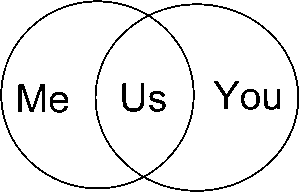
Me, You & Us As A Couple How we are with our self, with our partner, and together as a couple (our different emotions, physical space needs, etc. - see also Being Autonomous Yet Part Of A Couple) can be explored in relationship counselling or marriage therapy (see also States Of Dependence, Codependence, Independence, Interdependence). Any change to improve the relationship or marriage will need loving commitment and patience from both partners, overcoming our difficulties sharing love. Discussing what we need, specific areas that we can both improve upon, supporting each other is these, can bring us closer together as a couple. Sharing with our partner may inspire them to also take action. Evolving together, interdependently as a couple, can be a way of bonding the relationship or marriage as can other bonding strengthening moments through playfulness, laughter and tears, having a sense of humour, a simple kiss, expressing our deep love and affection, a warm hug, intimacy or sexual connection, sexual union (see also Ingredients Of Love, Expressions Of Love, Mutuality - Being Loving In Our Actions - Actively Showing Our Love). And when we are feeling love for our partner, we can tell them with sincerity, without expecting anything back. Saving a marriage or relationship requires personal work and effort from both partners. If we just think it's our partner's responsibility to save marriage or relationship, or that in fact responsibility is all ours (that it is entirely their fault or our fault), then the couple in the marriage or relationship is not considered as one. Once the relationship or marriage is not just seen as about a particular person, but about us as a couple, allowing each other to be touched - moved, then things can be worked out as a couple, when we become companions, beside each other, put a circle of love around both of us.
For one human being to love another human being: that is perhaps the most difficult task that has been given to us, the ultimate, the final problem and proof, the work for which all other work is merely preparation.Rainer Maria Rilke
What We May Need To Learn Through The Dynamics Of Our Relationship System All relationships have a system (e.g. supportive or unsupportive, loving or codependent - see also Relationship Dances - Pushing & Pulling) and the therapy explores the dynamics of our relationship system. Sometimes we can be attracted to the same kind of person or end up in a familiar situation again and again, and it never works out. This may be because we attract each other at a common level of health or woundedness, where even though the relationship seems different to the previous ones, in the end they turn into the same old things (see also Emotional Dependence - Dance Between Emotionally Dismissive, Avoidant & Emotionally Dependent Partner). And the relationship counselling can explore this further with us. The relationship system may be healthy or unhealthy. We can't only look in the mirror to see who we are - we need interactions with others to learn, grow. And when someone becomes important to us, all our unhealed wounds from our family of origin will emerge giving us a challenge and opportunity to learn, grow into a loving human being, challenge unhelpful beliefs about our own self-worth. Relationships mutually educate each other and offer a powerful moment by moment opportunity for us to grow personally, spiritually, triggering fears of conflicts, intimacy, love, loss, rejection, abandonment, engulfment. Relationships teach us who we are and how to be loving to ourselves and others. Relationships and their choreography can reflect back to us reactivity - our shadow, fears, desires, beliefs, jealousy, etc. Being wise, balanced, open to what we personally need to learn may support us, help us with misunderstandings. Loving ourself and being willing to learn through finding our way through struggles may be a helpful attitude. Holding, experiencing, and expressing love, practising our relationship as loving, creative work in progress, may also support us. We may want to explore our attitudes in the relationship or marriage, find our way through challenges, be willing to reflect and learn about what happens between both of us, for example neediness, caretaking, compliance, anger, blame, addictions, so we understand the system that we have both created (including who was pulling, who was resisting, how control is used, how each of us may have abandoned ourselves). The relationship therapy can explore what works, what doesn't (maybe when we are unhelpfully protecting ourselves). Childhood deficit and bonding attachment experiences can affect us now. Whatever the difficult, uncomfortable, or subject is, it is important that in our approach , we have a true desire to learn and resolve issues. One of us may be more interested in controlling our partner, than loving them. Our partner may withdraw, shut down, have other reactions as a way of controlling their pain. We can choose to see our partner's wounded parts and behaviours, or value their true self, essence. And when we are both coming from this place, we can speak our truth with love. When we are in our strong, loving adult, held in love, this can enable the relationship to heal, flourish as we also heal what we need to heal in us, to love, learn to love through and because of our experience in the relationship. The therapy can explore with us how the relationship offers and invaluable experience of healing and growth, especially when both people are willing to be open and learn from challenging times (though sometimes when one person changes, so may the other), so instead of ending the relationship when things are hard, we do our own inner work to heal our end of the relationship system, so we can know whether or not the relationship can heal (yet is also may be important to remember that we don't have to be fully healed to attract loving relationship, because growing and healing is a process that happens throughout our lives and it is the relationship itself that provides fertile ground for healing, because it triggers what needs healing). (See also Relationship Growth, Transformation)
Our Common Ground Finding common ground (including our values), however small, learning to be content with what we have, not holding onto regrets for what we don't have, being sincere and honest without blaming or attacking, may assist, as may not putting our partner down or belittling them. Having good intentions towards each other can support areas of disagreement (see also Toleration In Our Relationship). Being heard, seen and met may become a priority and this can take time. Taking care of ourselves when our partner is unable to do so may be very important, as may the distinct, yet interrelated aspects of a me, you and us. Finding strength in the virtues of each other, being supportive, understanding and calm, reminding us and our partner that we respect and value the relationship or marriage, and that we would like them to know what we are thinking or feeling, can also be helpful, showing this in our actions. Being true and honest, able to open up, enjoy things together, share feelings, kindness, tenderness, vulnerability, needs, desires and wants, may be important, as may learning how to share, give and receive, discuss and compromise. Fostering companionship, nurturing the relationship or marriage as an entity in itself - the couple in the relationship, so it can be alive, co-creative, and not just two individuals - may assist. Owning new ground rules can also form the basis of having a common ground together as a couple, as may exploring our views about gender. These issues can be discussed in the relationship counselling or marriage counselling.
Continuously bringing up the past, what our partner has done, tends to make matters worse (see also How We Let Our Partner's Past Relationships, Sexual Past Affect Us). Forgetting and forgiving the mistakes of our partner, and our own, can be a healing process. Letting go of things can be the biggest gift to our relationship and marriage. Letting our love prevail in the relationship or marriage, despite its problems and conflicts, can help put it back onto the right path, enable it to flourish. If we do decide to make a go of our relationship or marriage, we may also want to ask if we are willing to own our own mistakes, no longer blame, hold grudges or negative feelings, wanting to understand our partner (what they need and their differences), truly listen to them, choosing to live in the present moment, taking loving actions, embracing healing and intimacy. This can present fresh challenges to us, which can be explored in relationship counselling or marriage counselling.
Keeping It Real In Our Relationship, Marriage For some couples a key benefit, that can emerge through a relationship's struggle or crisis, is the potential to grow together, forging a deeper, more meaningful relationship or marriage - less tied by old ways of what didn't work, towards becoming more engaged together as a couple, fluid, so both can be more real, at ease and accepting of each other in companionship, meeting in mind, body and soul. (See also Crisis, Challenges, Changes & Transformations In The Relationship)
Support Networks It may be important to remind ourselves that no matter what, we are OK and we may also need the support of others. The marriage counselling or relationship therapy may find out what other support systems we have in place. Whether we continue the relationship or marriage, or not, may be important for us to review our support networks, being in touch with supportive others. The importance of good, safe supportive friends and family, being with our peers, having other activities and interests, being part of groups, maybe spiritual, religious support may help us.
Towards Break Up, Separation, Divorce & Beyond
When Our Partner Wants To End The Relationship Or Marriage When we first hear the news that our partner wants to separate or divorce it can be such a shock. What we thought or believed was permanent to us, is no longer and may not be able to imagine a life without them. Our trust and belief in others may have been eroded. We may be upset, emotionally raw and it may be hard to think straight or make big decisions. We are likely to be in a very different emotional place than our partner. It can be painful and challenging to accept the choices of others without seeing that nothing is wrong with us. Expressing to our partner what is going on for us may also be important. We may feel abandoned, rejected, as may our partner, even if they are the one who initiates the ending. Just "getting over it" may not always be enough. It takes time. There may be memories, beliefs, confusions, powerful emotions, patterns and even lessons we may learn. Relationship counselling and marriage psychotherapy can be a space to expand upon these.
When We Are Considering Relationship Breakup, Divorce Some of us may be trying to fix the relationship or marriage, which is beyond repair (see also Our Red Flags). This can bring up a lot of strong feelings, and we may want to share or talk about these in relationship counselling or marriage therapy. We may love our partner, yet can't change them. How the relationship currently is, may be destroying us (and negatively affecting our children if we have any). If we do have children we may be face with creatively choosing to make the best of it, or end the relationship because our unhappiness is affecting our children so much (see also Being A Parent, Mutual Parenting, Co-Parenting). In some situations, almost straight away from the very beginning the relationship may not have felt right. We may have based our happiness on our partner, the relationship (or our own unhappiness or fears of being alone). There may be a complete mismatch, unsuitability or the situation may have become intolerable, abusive (see also Negative Aspects Of Our Relationship, Marriage). Each of us has our own tipping points - things which are or have become intolerable, plain wrong, that can destroy the relationship, that aren't aligned to our values, standards. Whether we are both willing to grow and change and for the relationship to grow and change, even in small ways, and emotionally connect, may be an influential factor in determining the future of our relationship, marriage. Our situation may deteriorate further when we or our partner have no desire to change, make sincere apologies when they are necessary, and be willing to develop a new way of making the relationship or marriage thrive, flourish. Getting by or making do can for some be enough, as we choose to nourish it, yet not for others (see also Should I stay or should I leave). Some people may consider it better to be in no relationship than remain in a bad one. Compounded by our promise and expectation to stay together forever (or having loyalty at all costs - even at the cost of our self), alongside any cultural, institutional pressures, we may have worked hard on our relationship, marriage, for many months, years, and know deep down it's in our highest good to leave, that the relationship has run its course. Taking responsibility for the choices we have made (what's not negotiable for our personal happiness, desires) and action for the choices we will make can be daunting. There are no easy answers, and every situation is different. We may be reflecting upon our relationship that has become more regressive than progressive, with little love or motivation to change this. Feeling very lonely in the relationship, having constant fights or conflicts, when nothing gets resolved, may for some be so unhealthy and draining that they want to end the relationship or marriage - even if it puts us through temporary pain. (Yet miserable inside, hanging around someone, hoping to be happy one day, may not b in our best interest.) Having a partner who doesn't "get" us, no longer values us, limits us, doesn't support our freedom and all we can be or what brings us joy may also nudge us towards separation. Some people consider a cooling off period, trial separation or controlled separation, others want to avoid this. Either way taking responsibility for ourself is important. Other important considerations unhealthy situations may include having little intention to heal and our partner (or us):
- Threatening our emotional, physical safety
- Being abusive, brutal, unwilling to change or get professional help
- Is caught in destructive behaviour that can only be stopped by ending the relationship or marriage
- In a situation which has now become intolerable or toxic
- Consistently going out of their way to hurt us, make us feel vulnerable, unloved
- Continuing to behave in ways which are no longer acceptable, tolerable
- Being on the receiving end of silent treatment, disappearing act, ghosting & our partner not taking responsibility for this
- Having lots of unmet basic dependency needs in our relationship, marriage
- Being in a relationship with no mutual support, no sharing of love
- One person gives, the other only takes
- Having a serious addiction & unwilling to have treatment
- Having repeated affairs & we feel so disrespected
- Being deceptive, dishonest, frequently lying, eroding our trust & tolerance
- Counting on changing our partner to be empathic (yet they are not) or for them not be so caught up in their own narcissism
- Being frequently disrespectful, which can wear us down
- Being frequently irresponsible
- Being frequently suffocating
- Being frequently blaming, critical, controlling
- Being overly consumed with jealousy
- Experiencing problems & dynamics in our relationship or marriage, which make us so miserable or unhappy
- Having unreasonable differences in our world view, values
- Having no interest in deeper emotional connection or desire to work on the relationship
- Being completely mismatched
- Is festering away, squandering our life in an unhappy relationship or marriage, which does not seem right from the bottom of our heart
- Having a love for our partner that is unrequited
- Knowing that in our heart of hearts, after much soul-searching, we are not right for each other
- Taking the most right, loving action for our meaningful, happy life
Loving Our Partner Yet Knowing In Our Heart Of Hearts The Relationship Isn't Right For Us Or That We Need To End It It can be challenging to accept that we don't get everything from our relationship, love. Some friendships turn into romance, yet others, despite having a warm, friendly relationship, don't feel the spark between us and them. We may love our partner, yet not be in love with them. And although companionship for some may be acceptable, for others if romance and the spark is absent, we may need to accept the wonderful friendship without romance. For others we may need to stay solid in what we want in a relationship, without searching for the perfection. It isn't easy to walk away from someone we still have feelings for and have put our heart and soul into the relationship. We may have such a strong bond with our partner, gone through a lot together yet realise it's time to end our relationship, or come to the conclusion that we are not a good fit. Sometimes it can be as if we can't leave because we don't want to cause our partner pain, to feel rejected (maybe believing they won't cope without us) that we take responsibility for their feelings (see also Codependency - Giving Us Up For Them). We may feel guilty for hurting them, have our own separation anxiety, fear of our own aloneness. (See also Difficulties Ending)
Finding The Courage To Leave We may believe that if our partner leaves us, or we leave them, we won't manage or never make it. Going through with ending the relationship or marriage can be daunting. When the relationship is unloving, it can be easier to leave than when there is love. Some of us may be trapped, knowing in our heart or hearts we need to end the relationship, leave (see also Difficulties Ending), yet are so fearful of all the consequences (e.g. feeling alone, fearing the unknown) or struggle to disentangle ourself believing we must be loyal at all costs - even to the cost of ourself. Leaving can sometimes take an act of courageous faith, a step into the unknown, supported by positively envisioning our new life, more fulfilling.
Death ends a life, not a relationship.Morrie Schwartz
Learning Not To Take Rejection Personally Whatever we experience is personal and when someone breaks up with us it is also personal to them and does not mean we are a bad person (see also Taking Things So Personally). The therapy can also explore the aspect of our Self, beyond our ego, defensive roles, where from this disidentified essence of who we are, nothing is personal. Some may find it hard to see that maybe the ingredients weren't right for our relationship. It can be challenging to accept that rejection is rarely personal and appreciate our own courage to put ourself out there, acknowledge and process all our emotions, affirm our value and self-worth while keeping our spirit alive and strong, remain centred, grounded in our personal power. Rejections, refusals happen throughout our life. Some of these feelings of rejection may be connected to how we dealt with separation, loss and rejection in our early years (see also Coming To Terms With Our Past). Taking rejection personally often comes from our wounded self. Our relationship may have failed, and it doesn't mean we are a failure. Sometimes all we (our loving self) can do is appreciate our own courage to make the relationship out work in the first place, acknowledge and process all our associated emotions, own value, worth, remain resilient. Rejection needs not to be so personal, unless we (or often our wounded self) choose to see it that way. Yet it may take many years, tears, to accept others' choices without believing there is something wrong with us, before we realise that rejection is not so personal as our ego may imagine - that it's actually not about us and more about the person who leaves - their decision. So, if a partner (or parent in our past, maybe through separation or divorce) leaves, it's not because of some lack in us (or that somehow it was our fault), it's because of their own inner issues. Something may not have been right for the person who ended the relationship, and it doesn't mean it's about us. And despite who initiates the leaving, we may feel rejected or even hurt (we too have likely "hurt" others). The need to separate or divorce may mean we (or they) have grown out, or away, from something, or that parts of us are now seeking something different, that the way it was is not working for us. And if we experience the deep pain of loneliness, it's understandable that our thoughts go to the person who was able to take that loneliness away, so when we feel this huge absence, our heart only wants one thing - to be with the person who was able to eliminate our fearful emotions. Yet it is the absence itself, the emptiness within us, that when we are willing to experience this (and not the person who could temporarily take it away) that it becomes part of our healing, as we stay with our own loneliness, without escaping into fantasies about people who would take it away, so we emerge stronger, resilient through it. All relationships, whatever their length, have some sort of purpose, as the quote below refers. (See also Responding To Experience Of Loss, Separation, Rejection, Abandonment)
People come into your life for a reason, a season or a lifetime.Unknown
When you figure out which one it is, you will know what to do for each person.
Separation - Relationship Break-Up, Marriage Break-Up - What We May Be Going Through Separating from our partner or divorcing is not just a practical or legal event, but also a psychological process where we may need to stay strong. With the best will in the world, relationships cannot always be saved - nor, in some cases, should they be. Throughout the relationship breakup we may fear loneliness, panic, yet in our heart of hearts this doesn't seem enough to save the relationship or marriage (see also Learning Not To Take Rejection Personally). Endings are rarely perfect or ideal and can be messy. All of us are sensitive to rejection, abandonment (whoever is doing the leaving) and if our relationship meant anything to us, then the parting will have an impact on us. Separating from our partner often carries some acrimony, pain, hurt, anger, denial, deep sadness, grief, despair, anxiety, trauma or even relief. We may be lost, confused, insecure, especially if we have based all our worth or loving on our partner. Our emotions may spill out and can be felt by both parties. One of us may wonder if we've done the right thing. It can be as if we are on an emotional roller-coaster. As the tensions of separation, divorce emerge, we can be in touch with very primitive emotions including separation anxiety. Each has their own pace and one of you may be in a different emotional place. Healing takes time. And the therapy can be a space to explore what is the wound we need to heal. The therapy and divorce counselling can be "a container" when emotions and expectations run high. Needing a safety net, some of us may question if we will survive the relationship breakdown, thrive again, or ever be in a loving long-term relationship in the future. We may have lost hope, the vision for our life. Therapy and divorce counselling can support you in this process.
When you experience the deep pain of loneliness, it is understandable that your thoughts go out to the person who was able to take that loneliness away, even if only for a moment. When you feel a huge absence that makes everything look useless, your heart wants only one thing — to be with the person who once was able to dispel these frightful emotions. But it is the absence itself, the emptiness within you, that you have to be willing to experience, not the one who could temporarily take it away. It is not easy to stay with your loneliness. The temptation is to nurse your pain or to escape into fantasies about people who will take it away. But when you can acknowledge your loneliness in a safe, contained place, you make your pain available for healing.Henri Nouwen
Separation - Relationship Break-Up, Marriage Break-Up - What We Make Of It One of us may have concluded that if we remained together, we may be in a different place in our life, and the relationship or marriage may become sterile or bitter. Some of us may love our partner - they may be lovely in many ways, yet still we may want to move on, know we need to let go, grieve the loss of our relationship yet feel it's right for us to move forward. We may hold a place in our heart for them, even continuing loving or cherishing them after the separation. Some may know that now is the time to end it. We may have ambivalent feelings. Others may feel no love for our partner and can't wait to leave, celebrate this. It can be a daunting prospect to separate or divorce. Sometimes it can take great courage to accept the suffering of the parting, as a sacrifice to a greater good in order to set us free. And remembering that in this confusing time it can be hard to reflect, see the whole picture. We may wonder what was our role, what was it all about, what we can learn about our journey in life (without being critical or blaming ourself), how we find forgiveness and heal. We may have lost, given away or mistrusted parts ourself we want to recover and rediscover our strengths, independence, existence. We may have beliefs around love - that it should be eternal. In therapy or divorce counselling we can discuss these important concerns.
How We Break Up With Acrimony Or In A More Conciliatory Way Certain things about our relationship, marriage can consume us, and it can be hard to cope at times. Separation is painful for some of us. Tough though it can be to move on decisively, we can choose to close this passage of our life in a hostile, undignified or respectful, graceful way. Over the course of our relationship breakdown, one or both of us may have stopped talking to the other. We may find the loss almost too much to bear. We may feel betrayed, vindictive or like punishing our partner, yet don't have to act our feelings out. We may also choose to part in a mature and graceful, conciliatory way, with mutual respect and dignity. Mourning the loss of our relationship or marriage separately and together can bring some couples closer together towards kindness, friendship. This may not always be easy or possible (and doesn't mean that we or our partner may not feel hurt, pain, anger, upset). Yet taking responsibility for our responses may be challenging. Keeping the door open to dialogue, ensuring the interactions are light, may be helpful. People may want to clarify and reflect upon the consequences of an adversarial or conciliatory parting. Once we have decided to separate, we may want to think about when and how to tell our children, friends (especially mutual friends) and family. Finding ways not to be ostracised, negotiating and settling disputes, e.g. child access, financial, housing, legal matters, precious possessions, alongside adapting to different living arrangements, can produce their own anxiety, stresses or sense of loneliness. The divorce counsellor or divorce therapy can also offer a place where you can make the way you separate as constructive as possible.
After The Separation Or Divorce During and after the separation or divorce, it is usually a confusing time, so it can be a hard to think clearly, especially if the closure doesn't seem complete or if the person we want to turn to for solace, understanding, support and love is the very person we are leaving. Vulnerable inside, we may become stuck or overwhelmed with anxiety and by what our future holds. Our body may be out of sorts, affecting our sleep, appetite. It can be tempting to turn to unhelpful habits or addictions. We may worry about children, living arrangements, finance, loss of certain friends, who will look after us when we are unwell, the things we relied on our partner for, etc. In turmoil at times, we may need support with our powerful emotions and the psychological impact of separation or ending marriage through divorce (and having a "label" of being divorced). Lost pride may be an experience for some. We may question if we did something wrong or if something is wrong with us. The pain can seem unbearable, and it is understandable that we may feel bad or temporarily sorry for ourselves. Licking our wounds takes time. We have suffered a loss, which can seem impossible to bear, and mourning this for a while can be entirely appropriate, as can taking time to heal and stand on our own two feet. The divorce counsellor or divorce counselling offers support in this difficult process.
Healing Ourself After A Breakup It is normal to experience pain, heartache, after a breakup - that we are human able to love, yet feel hurt and often time is the healer, although it can be hard to believe this when we are in it. We may be unsure about who we are any more. Others may have feelings of anger, betrayal, rejection, and there is usually no way pass our pain rather than to feel it. Surrounding ourself with supportive people, getting in touch with what energises our mind and body, asking ourselves what we need to learn about ourself, letting go of what we need to let go of, can support our healing. The relationship counselling can also be a space to explore what is the wound that has happened in us that needs to be healed.
Recovering From The Breakup Or Divorce It can take time to recover from a break up. On a practical or physical level, the relationship may have ended but emotionally we may still be affected by it. Some may want to get over things without healing our pain. For others, it can seem as if not only is the companionship, relationship or marriage broken, but so are we. The separation may have happened some while back, yet the trauma, heartbreak or heartache of it all can feel like yesterday. The therapy and divorce counselling can be an important space for us to talk about things. One minute we can feel OK, the next not. We may experience pangs of emotion - moments of heightened despair, even relief, release. It can be a time of guilt, shame, loss, deep sadness, grief, loneliness, shock, denial, hurt, pain, resentment, anger, disappointment (especially when children are involved). Emotionally vulnerable, we may feel down, despairing at times. Memories of how it was with our partner - the good, bad and ugly bits, may stir. We may not only grieve the loss of them but also people and connections we made in the relationship alongside our roles, patterns, plans and aspirations in it. Our esteem, confidence may sink at times. We may blame ourselves (or them), feel ashamed for failing, being in love in the first place. It can be a time of reflection on our life for our hopes, dreams, where we are from, where we are heading towards. Adjusting to the loss of our familiar routines and habits may also take time, as may letting go and developing new ones for us now. We may have given a part of ourself away and now want to get back to being the person we want to be. We may feel lost inside. Recovering our own sense of identity may be important. Accompanying ourselves in this process can be painfully challenging. Coming to terms with things, integration back to who we are - all aspects of us - may be important, as may healing our wounds, building ourself back up.
Letting Go Of Our Relationship Or Marriage
Getting Over Our Ex How do you get your ex back may be a preoccupation for some and we may be constantly wondering what they are thinking (what we could have done differently). Some of us can have a tough time, truly letting go of our ex as if they still loom over us (also past relationships), as if we can't seem to let go and this may reverberate into future commitment issues. The very person we want to talk to, turn to, give or receive comfort is also the person who we left or is leaving. We may really miss them, pine for them. Some of us may frequently wonder about our ex, replaying things in our minds (maybe romanticising what was), having flashbacks - even starting up imaginary conversations with them and be preoccupied with monitoring what they are doing or who they might be with (compounded by keeping looking them up on social media). We may not understand why they are the way they are, what they have done, not done. Sometimes we may allow our ex to consume our thoughts, as if they are doing something to us and we can't get them out of our head. We may have trouble sleeping, be daydreaming, have unhelpful fantasies about our ex. Obsessing about them or our regrets, may be a way to defer our own painful feelings of letting go. Some of us may end up feeling like a victim, believing that our partner is the cause of these feelings, rather than the way we treat ourself. It may be hard for us to experience our powerlessness over what our ex says, does, or to embrace the depths of our own grief, heartbreak, loneliness. We may hold on to the belief that we need to speak to them to find closure. Having deep compassion for the part of us that misses the relationship (and reminding ourself about aspects of the relationship that were not ideal - that things weren't right), being OK and in our own ground again, finding our own momentum, gratitude, rediscovering what gives us joy and what we want in our life may help us heal, grow.
And you begin againBarry Manilow, "You Begin Again"
Sometimes you lose, sometimes you win
But you begin again
Even though you're heart is breaking
In time, the sun will shine
And you'll begin again
You'll begin again
Getting Over Our Ex - What We May Unhelpfully Tell Ourselves Some breakups are amicable; however, many break-ups are challenging, often hard and painful. On top of our powerful feelings and confusion we may tell ourselves unhelpful things: "I will always be alone and never meet someone else", "I'm a loser, I failed, there is something wrong with me and therefore I will never have a good relationship", "I'm not worthy of another relationship". While we continue to hold to the self-blaming beliefs, we may struggle to get back to our self, and no longer abandon ourself, take care of our inner child.
Just Being Friends Separation is rarely 100% amicable, and it takes time on our own and with supportive others to find a space to heal, recover, regain perspective, be in touch with our self more. One or both of us may want to remain friends or at least amicable with each other (which may certainly be important if there are children involved). Being friends eventually may have many pluses, yet this for some may be premature if we are holding each other back to recover, move on. If we continue to engage with our ex, this can harm our self-esteem. We may not be fully able to respond to the possibility of becoming friends if our wounds are unhealed, our abandonment, rejection issues are powerfully triggered or if we are continually thinking about our ex, because of unfinished business, which can inhibit our readiness for the possibility of a new relationship. This can be discussed further in the breakup counselling.
Relationship Breakup Or Divorce - A Period Of Readjustment & Adaptation Any broken relationship leaves its mark, breaking up is sad and often messy but we do survive. (Healing from a broken heart takes time. It can hurt, we can feel lonely, resentment or anger, confused, sad, lost. We may feel vulnerable, insecure, blaming ourself. Yet the separation can also be the time for fresh possibilities, which can accelerate when we forgive ourself, our ex, enabling us to move on.) And the break-up therapy and divorce counselling offers a personal space and opportunity to self-reflect and re-evaluate our life. Moving forward, adjusting, and adapting to new lifestyles, exploring new interests, reconnecting to our wellbeing can be important. This may include our general wellbeing - taking care of our emotional and psychological health, how we look after ourself in terms of diet, exercising, sleep and relating with others. We may also come up against existential concerns and this too can be discussed further with the break-up counsellor. Breakup therapy supports us in building a healthy relationship with ourself and how we care for ourself (e.g. journalling, practising appreciation, treating ourself, having positive affirmations), reconnecting to our dreams and what we want to achieve in life.
Letting Go Of Our Partner, Relationship, Marriage We may have left our partner, or they left us and either way our sense of esteem can be affected. One or both of us may have physically moved out. Yet emotionally and online we may still be tied to them. Struggling to let go, a part of us may want to move ahead without them, be happy again and another part may not want to or be ready to do so and still want to be with them. We may be stuck in-between half leaving them, half moving on, unable to fully let go (as if we are clinging on), and this can take time as the world moves on and we do. We may feel stuck in the middle looking back, struggling to look forward, finding it hard to focus on the present, enjoy things. Our normal distractions just don't seem to help. We may have strong feelings towards our partner, love or heartbreak, grief. We may have negative reactions, like resentment, disappointment. We may have spoken to our friends about what's going on inside, or kept it in, but nothing seems to help. We may experience waves of hurt, pain, confusion, anxiety, depression. We may have touched emotions, needs, areas of vulnerability we never thought we had. Grieving over the relationship or marriage and our partner has its own pace, and the therapy can support you in this. Some of us may not yet come to terms with the permanency of the separation (where separating some of our digital life may be challenging). Letting go of some old routines or habits may not be easy, especially if they remind us of our ex (sometimes having a cleaning ritual of certain possessions can be a symbolic way of washing away the old). Avoiding some triggers which continue to remind us of our ex, e.g. redundant possessions, photographs, music, places and exploring new avenues can support us, alongside being in contact with supportive people who care about us and believe in us. Letting go of our relationship, civil partnership or marriage may be quite complex. There may have been some very difficult or dark times, yet we may have fond memories of our partner - they may have had lots of positive aspects, and there probably were some good and memorable times together alongside mutual interest. They may have had some loving and endearing qualities. They may have given us things or taught us things, which we appreciate, as well as some things we didn't. These issues can be discussed with the divorce counsellor in the divorce counselling.
Crossing A New Threshold - Time For Reflection What was once, becomes no longer. Separating or divorcing can be like a rite of passage. This rite of passage may include: relief from anything that was toxic in our relationship or marriage, going through our fears, uncertainties, sense of alienation and loss (including the notion that the partnership was supposed to be permanent), redefining, maybe rediscovering who we are, reaching out for freedom, acquiring a sense of happiness and peace of mind. Whether the separation was amicable or antagonistic, we may be left with a sense of failure, guilt or stigma, overlooking that it wasn't us that has failed, even though the relationship has. We may be asking ourselves some difficult yet important questions. We may have viewed endings only as bad, shameful, or full of sorrow. They don't have to be. Not only is the separation or divorce an ending, yet it is also a new beginning. Separating can also be a transformative, a positive step in moving forward, as if part of the ebb and flow of our life, as we regain our own sense of self, purpose and free will, as we gain a sense of perspective and control. It can be a time to honour our own changes, transformation, wisdom, maturity, limitations, gifts and individual development, and to acknowledge what matters to us, what we value. We can now explore the things we've always wanted to do, get back into contact with who we are, living to our full potential, be able to love again. The therapy and divorce counselling can also be used to reflect upon these issues and others, alongside what is ours and what belongs to our ex-partner.
Role of Counselling in Relationship Resilience

- Responds to the specific issues you bring & if appropriate ...
- Reviews what, for you, will make the relationship work
- Addresses assumptions, perspectives, expectations, needs, belief systems & behaviour patterns
- Reflects upon communication, any emotional difficulties, commitment issues & the way we act
- Focuses on conflict de-escalation
- Investigates redundant patterns of responding which may no longer work
- Acknowledges the paradox of being separate, yet part of a couple
- Examines the different relationship phases
- Assists in managing any disillusionment
- Looks at intimacy avoidance projected onto work, stimulants, possessions, affairs, etc
- Looks at the risking of intimacy or finding the courage to love
- Considers the effects of being a parent
- Embraces the role of passion, arousal & sex in the relationship
- Respects the search for a deeper soul connection
- Enquires into the role of forgiveness, trust & acceptance
- Pinpoints where changes & transformation may be helpful
- Acknowledges how for some "making do" may not be enough
- Allows for different relational possibilities.
Role of Counselling In Separating Or Divorcing
- The divorce counsellor responds to the specific issues you bring & if appropriate ...
- Facilitates in distinguishing between what's reaction & what's choice
- Helps clarify your feelings & the choices you make
- Helps unfold entrenched views, positions, hostilities, entitlements, expectations & any demonisation
- The divorce counsellor assists in working through very specific concerns & unresolved issues: e.g. mutual parenting & child access, grievances, anger diffusion, outrage, aggression, depression, hurt, pain, anxiety, stress, loneliness, grief
- Helps mourn the loss of the relationship
- Considers how to manage any powerful, overwhelming or heightened emotions
- Acknowledges the impact of the separation / divorce (e.g. anxiety, self-image, esteem or confidence)
- Investigates the "roles" we've played & any redundant ways of responding, which may no longer work
- Discusses how communication has been & how different it may need to be in the future (e.g. how to be resilient, keeping the door open to dialogue, making reasonable decisions, role of compromise)
- Aides improving clarity of thought & future focus
- The divorce counsellor examines how to manage any impending circumstances
- Examines ways to adjust & adapt to a new lifestyle
- Enables moving on emotionally, psychologically & practically at your own pace
- Assists in gaining a deeper understanding of what is happening for you & what your life is all about
- Considers what else might be emerging or transforming
- The divorce counsellor allows for self-reflection of life patterns, re-evaluation & seeking to Iive to your full potential
FAQs about the break-up, divorce Counselling London practice based in Kings Cross, Camden:
- What is the frequency of break-up, divorce counselling in London, Kings Cross?
- How many break-up, divorce counselling in London sessions do I need?
- How much does break-up, divorce counselling London cost?
- Must I visit your London counselling practice in Camden or do you offer Skype counselling, online counselling or Telephone counselling?
- What are the advantages and disadvantages of offering online counselling, Skype counselling or in-person counselling in London, Camden, Kings Cross
- Do you only offer relationship counselling in London, Camden or Kings Cross?
- What times do you offer break-up, divorce counselling in London, Kings Cross or Camden?
- How do I contact a relationship counsellor in London, Camden, or near Kings Cross?
- How effective is relationship counselling in London, Kings Cross, Camden?
- What can I expect from the initial session of relationship counselling London?
- What to expect from the other break-up, divorce counselling London sessions?
- What is the typical duration of the London counselling services in Camden, Kings Cross
... back to Relationship Counselling, Marriage Counselling & Relationship Problems - Index

